Thursday, September 13, 2012

Tuesday, April 10, 2012
How Do We Enlarge the Great Circle of Compassion?
For delivery April 15, 2012
St. Andrew’s Episcopal Church
Compassion
How Do We Enlarge the Great Circle of Compassion?
A Homily Originally Prepared for Delivery
January 17, 2010
National Coalition to Abolish the Death Penalty Annual Meeting
Louisville, KY
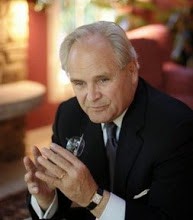
By: Donald Vish
***
Note: 4-15-12: In January 2010, the National Coalition to Abolish the Death Penalty asked me to deliver a homily at an interfaith worship service organized by our Terry Taylor of Interfaith Paths to Peace. At the conclusion of all NCADP meetings the participants join hands and form what they call the great circle of compassion. They asked me to address the topic: “How do we expand the great circle of compassion.” Here’s what I said:
** ** ** **
Thank you for staying for this part of the program--the homily. All the religions of the world agree on one thing for sure: there’s no thief worse than a bad sermon. So special thanks to each of you for your trust and your faith in remaining in this room.
When I was first asked to preach a homily on compassion I said "No. I am willing to preach to the choir but I'm not willing to preach to the pope. What can I possibly say about compassion to an audience that's got Sister Helen and my patron saint Bud Welsh in it? The only thing Sister Helen is going to like about me is that I don't talk with an accent." So, "No way" I said.
But my friend Fr. Delahanty would not take no and cajoled and flattered me into ‘yes.’
So, here I am.
My invitation to speak so to speak included specific instructions to answer the question:
How Do We Enlarge the Great Circle of Compassion?
I’m going to answer that question. I’m just not going to answer it very quickly. I wouldn’t be a very good preacher if I got to the point too soon.
The Golden Rule: (Say it. You know the words): do unto others as you would have others do unto you.
That’s a good rule of good sense. It’s valuable as a cornerstone of justice. It’s a solid metric for fairness. It’s true in the same way it’s true to say: whoever smiles will always have a reason to smile.
But the Golden Rule is not an expression of compassion.
First, it affirms otherness, thee and me that leads to thine and mine. Secondly, it is ever so slightly animated with self-interest expressing in Elizabethan language what the 3-card Monte dealer says more plainly about the arc of justice: what goes around comes around.
Plato’s dictum comes closer to compassion: be kind, everyone you meet is fighting a hard battle.
Plato’s sermon is built on empathy not compassion. Empathy is based on perception, understanding. Empathy is neither sympathy nor pity each of which relates to the adverse impact someone else’s suffering has on us!
Sympathy means ‘fellow feeling’ and requires a certain degree of equality. Pity, on the other hand, regards its object as weak and hence as inferior. We have place in Kentucky we call down home. Everybody knows where it is. Down home they like to say pity don't cost nothing 'cause pity ain't worth nothing.
Compassion is the selfless disposition to relieve human suffering. It soars above empathy and sympathy and pity. Compassion is the noblest trait of human nature. Dante would call it caritas, pure love with no expectation of a quid pro quo.
Make no mistake: many good works are built on the Golden Rule, on empathy, on sympathy, on pity and on lesser motives like fame and glory and vanity and self-interest. They all count. But compassion is in a class by itself.
When General Agamemnon was ready to launch 1000 ships to invade Troy, he had two problems: the first one is so typical of blood vengeance—no one knew how to get to Troy. They attacked the wrong country.
Blood vengeance is always ready to act before its ready to act. Vengeance never misses an opportunity to miss an opportunity. It is ever and always aimless and misdirected even though its arc is predictable and certain: it comes around then goes around.
Like Macbeth’s vaulting ambition, vengeance o’erleaps itself and then falls on itself.
Agamemnon’s second problem was the lack of wind. The ships could not sail. The man had 1000 sail boats and no wind. So he made a bargain with the gods—he sacrificed his daughter for a favorable breeze. Then the ships sailed for Troy and war began.
Agamemnon’s murder of his daughter ensured that he would return home from war to more war. Under the law of blood vengeance, his daughter’s mother was obligated to murder him—and she did; and under the law of blood vengeance her son was obligated to murder her—and he did; and under the law of blood vengeance, her daughter was obligated to murder her brother…and so it goes.
The arc of vengeance is as sure and as certain as the laws of mathematics: a series ending where it begins, and repeating itself.
Those words are the dictionary definition of a circle—as well as a complete treatise on blood vengeance.
Like a pebble dropped into a pond, vengeance sends out ripple after ripple each extending its sphere until it runs out of space or spends itself.
Vengeance is a circle. A circle delineates, it defines and separates the inside from the outside. The circle is closed. Any segment of a circle is a curved line.
In architecture, a curved line is pretty but it’s weak. Leonardo reflected on the weakness of curved lines and made an astounding observation: two curved lines when propped up against each other form an arch: one of the strongest formations in architecture. So an arch is a strength created by two weaknesses.
Here’s the answer to the question—enlarge the circle of compassion by never closing it.
Keep the circle open. Reach out, join hands with one another in a tangible display of unity, solidarity and connectedness; but let those on each end extend an open hand to the world at-large as an invitation to others to join hands.
Let the circle of compassion be like Leonardo’s arch, a strength comprised of many weaknesses.
As delivered
January 17, 2010
971 words
St. Andrew’s Episcopal Church
Compassion
How Do We Enlarge the Great Circle of Compassion?
A Homily Originally Prepared for Delivery
January 17, 2010
National Coalition to Abolish the Death Penalty Annual Meeting
Louisville, KY
By: Donald Vish
***
Note: 4-15-12: In January 2010, the National Coalition to Abolish the Death Penalty asked me to deliver a homily at an interfaith worship service organized by our Terry Taylor of Interfaith Paths to Peace. At the conclusion of all NCADP meetings the participants join hands and form what they call the great circle of compassion. They asked me to address the topic: “How do we expand the great circle of compassion.” Here’s what I said:
** ** ** **
Thank you for staying for this part of the program--the homily. All the religions of the world agree on one thing for sure: there’s no thief worse than a bad sermon. So special thanks to each of you for your trust and your faith in remaining in this room.
When I was first asked to preach a homily on compassion I said "No. I am willing to preach to the choir but I'm not willing to preach to the pope. What can I possibly say about compassion to an audience that's got Sister Helen and my patron saint Bud Welsh in it? The only thing Sister Helen is going to like about me is that I don't talk with an accent." So, "No way" I said.
But my friend Fr. Delahanty would not take no and cajoled and flattered me into ‘yes.’
So, here I am.
My invitation to speak so to speak included specific instructions to answer the question:
How Do We Enlarge the Great Circle of Compassion?
I’m going to answer that question. I’m just not going to answer it very quickly. I wouldn’t be a very good preacher if I got to the point too soon.
The Golden Rule: (Say it. You know the words): do unto others as you would have others do unto you.
That’s a good rule of good sense. It’s valuable as a cornerstone of justice. It’s a solid metric for fairness. It’s true in the same way it’s true to say: whoever smiles will always have a reason to smile.
But the Golden Rule is not an expression of compassion.
First, it affirms otherness, thee and me that leads to thine and mine. Secondly, it is ever so slightly animated with self-interest expressing in Elizabethan language what the 3-card Monte dealer says more plainly about the arc of justice: what goes around comes around.
Plato’s dictum comes closer to compassion: be kind, everyone you meet is fighting a hard battle.
Plato’s sermon is built on empathy not compassion. Empathy is based on perception, understanding. Empathy is neither sympathy nor pity each of which relates to the adverse impact someone else’s suffering has on us!
Sympathy means ‘fellow feeling’ and requires a certain degree of equality. Pity, on the other hand, regards its object as weak and hence as inferior. We have place in Kentucky we call down home. Everybody knows where it is. Down home they like to say pity don't cost nothing 'cause pity ain't worth nothing.
Compassion is the selfless disposition to relieve human suffering. It soars above empathy and sympathy and pity. Compassion is the noblest trait of human nature. Dante would call it caritas, pure love with no expectation of a quid pro quo.
Make no mistake: many good works are built on the Golden Rule, on empathy, on sympathy, on pity and on lesser motives like fame and glory and vanity and self-interest. They all count. But compassion is in a class by itself.
When General Agamemnon was ready to launch 1000 ships to invade Troy, he had two problems: the first one is so typical of blood vengeance—no one knew how to get to Troy. They attacked the wrong country.
Blood vengeance is always ready to act before its ready to act. Vengeance never misses an opportunity to miss an opportunity. It is ever and always aimless and misdirected even though its arc is predictable and certain: it comes around then goes around.
Like Macbeth’s vaulting ambition, vengeance o’erleaps itself and then falls on itself.
Agamemnon’s second problem was the lack of wind. The ships could not sail. The man had 1000 sail boats and no wind. So he made a bargain with the gods—he sacrificed his daughter for a favorable breeze. Then the ships sailed for Troy and war began.
Agamemnon’s murder of his daughter ensured that he would return home from war to more war. Under the law of blood vengeance, his daughter’s mother was obligated to murder him—and she did; and under the law of blood vengeance her son was obligated to murder her—and he did; and under the law of blood vengeance, her daughter was obligated to murder her brother…and so it goes.
The arc of vengeance is as sure and as certain as the laws of mathematics: a series ending where it begins, and repeating itself.
Those words are the dictionary definition of a circle—as well as a complete treatise on blood vengeance.
Like a pebble dropped into a pond, vengeance sends out ripple after ripple each extending its sphere until it runs out of space or spends itself.
Vengeance is a circle. A circle delineates, it defines and separates the inside from the outside. The circle is closed. Any segment of a circle is a curved line.
In architecture, a curved line is pretty but it’s weak. Leonardo reflected on the weakness of curved lines and made an astounding observation: two curved lines when propped up against each other form an arch: one of the strongest formations in architecture. So an arch is a strength created by two weaknesses.
Here’s the answer to the question—enlarge the circle of compassion by never closing it.
Keep the circle open. Reach out, join hands with one another in a tangible display of unity, solidarity and connectedness; but let those on each end extend an open hand to the world at-large as an invitation to others to join hands.
Let the circle of compassion be like Leonardo’s arch, a strength comprised of many weaknesses.
As delivered
January 17, 2010
971 words
Saturday, April 7, 2012
#12 Class--Law & Social Policy Review for Final Exam 4-9-12
In process Saturday 8:00 a.m.
Draft
4-9-12
Lecture # 12: Law & Social Policy: Review & Preparation for Final
***
1. Readings:
The scissors adorn by taking away. A French motto.
Literature is the art of sorting though. A French motto.
2. Summary of Classes #1 through #11: How Do You Prepare for the Final Exam?
Materials:
• The Syllabus—look at the four-page introduction and summary. Pay attention to the course objective, what is the course about and the ultimate questions posed by the course. Is justice the aim of both law and social policy? Look at all the quotes. Review broadly the class plans especially where I have made editorial comments in Lecture #1 and # 2 and # 5 and #11 and anything that describes the text, Democracy in America.
• Class # 5 Student Assignments on the big themes of the book functions as an index to the book as does the Class Plan # 4 in the Syllabus).
• Class summaries posted to Blackboard should be helpful. The substantive lectures are EXAMPLES of a broader topic: how law and social policy interact.
• The Text: Democracy in America---chapter 2: page 39: “The readers of this book will therefore discover in this chapter the seed of what follows and the key to almost the whole book”. Also page 816: “ I shall conclude with one general idea which comprises not only all the individual ideas expressed in the present chapter but also most of those which this whole book has aimed to highlight.” Chapters 3 & 4 are also important. Every question will allow you to use some of Tocqueville. While first two questions are about Tocqueville the others will allow you to use his text. I have read the book for you. In the book, pay attention to comments about the book: For example, the main idea of the book is to reveal American laws: see pages 335, 816-817, 49, 57, 58, 71, 319, 335, 357.
• Text: Federalist Papers: two main areas---war powers and how the government is structured. # 47 and #51 on checks and balance and separation of powers. #10 is the most famous (on factions, nature of constitution, dangers of majority rule).
The Big Ideas
• Equality,
• Freedom
• Judicial Review//Independent Judiciary
• Lawyers
• Free Press
• Threats of Majority Rule//Tyranny of Majority
• Liberty and Religion,
• War Powers
• Social Conditions and the Law (Sources of Law)
• The social //civic profile of America: Materialism, love of money, love of comfort, security, conformity, individuality, order, practicality, associations (factions).
3. Final Exam—specific questions considered
4. Administrative Time to allow students to complete written review of course//professor
Draft
4-9-12
Lecture # 12: Law & Social Policy: Review & Preparation for Final
***
1. Readings:
The scissors adorn by taking away. A French motto.
Literature is the art of sorting though. A French motto.
2. Summary of Classes #1 through #11: How Do You Prepare for the Final Exam?
Materials:
• The Syllabus—look at the four-page introduction and summary. Pay attention to the course objective, what is the course about and the ultimate questions posed by the course. Is justice the aim of both law and social policy? Look at all the quotes. Review broadly the class plans especially where I have made editorial comments in Lecture #1 and # 2 and # 5 and #11 and anything that describes the text, Democracy in America.
• Class # 5 Student Assignments on the big themes of the book functions as an index to the book as does the Class Plan # 4 in the Syllabus).
• Class summaries posted to Blackboard should be helpful. The substantive lectures are EXAMPLES of a broader topic: how law and social policy interact.
• The Text: Democracy in America---chapter 2: page 39: “The readers of this book will therefore discover in this chapter the seed of what follows and the key to almost the whole book”. Also page 816: “ I shall conclude with one general idea which comprises not only all the individual ideas expressed in the present chapter but also most of those which this whole book has aimed to highlight.” Chapters 3 & 4 are also important. Every question will allow you to use some of Tocqueville. While first two questions are about Tocqueville the others will allow you to use his text. I have read the book for you. In the book, pay attention to comments about the book: For example, the main idea of the book is to reveal American laws: see pages 335, 816-817, 49, 57, 58, 71, 319, 335, 357.
• Text: Federalist Papers: two main areas---war powers and how the government is structured. # 47 and #51 on checks and balance and separation of powers. #10 is the most famous (on factions, nature of constitution, dangers of majority rule).
The Big Ideas
• Equality,
• Freedom
• Judicial Review//Independent Judiciary
• Lawyers
• Free Press
• Threats of Majority Rule//Tyranny of Majority
• Liberty and Religion,
• War Powers
• Social Conditions and the Law (Sources of Law)
• The social //civic profile of America: Materialism, love of money, love of comfort, security, conformity, individuality, order, practicality, associations (factions).
3. Final Exam—specific questions considered
4. Administrative Time to allow students to complete written review of course//professor
Thursday, April 5, 2012
#11 Class--Marriage and Sexuality 4-2-12
4-2-12
Lecture # 11: Law & Social Policy: Family & Marriage
***
1. Readings: none
2. Summary of Class #10: War Powers
In the first class we examined the Power of the People; the second, the Power of the Judiciary; the third the Power of the Legislature; the fourth the Power of the Executive Branch in the fifth we reviewed social, political and governance themes and issues treated by Tocqueville in his classic work, Democracy in America. The sixth class concerned the Death Penalty, the seventh class considered Race. In the Eight we covered libel, the Ninth Corporate Political Activity and the last class, the Tenth, we reviewed War Powers. Here’s what we’ve learned:
The ‘war powers’ class brings us to a new place----The invitation for conflict about the scope, operation and meaning of the war power is built into the constitution itself. Article I of the Constitution gives Congress the power to declare war but Article II makes the president the commander in chief. Our textbook writer says this feature of the constitution is an invitation to struggle over control and conduct of war. The judiciary has rarely intervened in the struggle mainly because of the political question doctrine—that doctrine declares off limits judicial review of issues that are essentially political decisions.
What is the evolutionary process by which laws come to reflect changing social policies (short of outright amendment to the law or adoption of new statues)? What’s the algebraic equation, what are the metrics, how do we track it, measure it, quantify it? The substantive lectures on the death penalty, libel, school segregation, corporate political activity, war powers, marriage are not the text—they are the footnotes to the text, illustrations of the various METHODS by which changing social policies impacted the law. Here is a list:
1. Judicial review (interpretation by its very nature is an evolutionary process). When a court is guided by broad principles, constitutional principals, change is built into the model. Examples:
2. The 8th Amendment, evolving standard of decency. Example: the death penalty. This was relatively easy concept for us to grasp. Changing mores are actually consulted to reach a result. The process is direct, deliberate and open although the steps may be open to contention (for example, whether foreign law or the opinions of experts is a legitimate consideration).
3. Racial separation in public education presented a more difficult challenge. Here the conduct that would be disapproved of was actually authorized by law. So social science was used to prove that the law’s requirement of equality could not be met through separation. Science, or more particularly social science, was used
4. Unlike the death penalty case where the was in place a constitutional concept to deal with the change in social policy or the race cases where science was used to give new meaning to old language, the libel case was somewhat of a blank slate. The defamation case didn’t fit any specific provision and there was no helpful legislative history; in fact, what little history was available was not helpful because private tort cases didn’t seems to involve state action. So here the social policy was reflected in overarching purposes of free speech and the important role it plays in democracy. Perhaps we might say the result was ‘necessary’ to vindicate broader values.
5. We learned the ‘commerce clause’ was the legislative entre into new fields and, if you will, new ways of thinking; that ‘cruel and unusual punishment’, ‘due process of law’ and ‘equal protection’ of the law were the concepts that allowed judicial review to enter new fields and new ideas about the law, justice and social policy.
3. Summary of Class #11: Sexuality and Marriage
Tonight we consider something new: FUNDAMENTAL RIGHTS. Unlike the death penalty cases that invoked an evolving standard of decency or the school segregations cases that used social science to define the parameters of equal protection of the law or the laws of necessity and implication to animate the meaning of free speech in the libel context and war powers, the issues regarding marriage and sexuality are no where mentioned in the constitution---we’re dealing with a blank slate.
4. Student Assignments Class # 11 Family & Marriage
Lecture #11: Family
[April 2, 2012]
I hold it to be an impious and detestable maxim that, politically speaking, the people have a right to do anything; and yet I have asserted that all authority originates in the will of the majority. Am I, then, in contradiction with myself? Tocqueville 292.
It is the very essence of democratic government that the power of the majority should be absolute. –Tocqueville 287
___________________________
Assignments for Class #11: Marriage, Procreation and Sexual Orientation
1. Meyer v. Nebraska 262 U.S. 390 (1923).
2. Loving v. Virginia 388 U.S. 1 (1967).
3. Goodrich v. Dept. of Pub. Health 790 N.E.2d 941 (MA. 2003).
4. Buck v. Bell 274 U.S. 200 (1927).
5. Skinner v. Oklahoma 316 U.S. 535 (1942).
6. Bowers v. Hardwick 478 U.S. 186 (1986).
7. Romer v. Evans 517 U.S. 620 (1996).
8. Lawrence v. Texas 539 U. S. 558 (2003).
9. Chemerinsky Chapter 9 Section 9.7.4 “Discrimination Based on Sexual Orientation” pp.807-809.
10. Chemerinsky Chapter 10, Section 10.2 “The Right to Marry” pp. 818-821 (and cases cited in Section 10.2.1 on Defense of Marriage Act and California’s Proposition 8) (Give special thought to whether the executive branch can refuse to defend a congressional law); Section 10.3 “The Right to Procreate” pp. 829, 833-834; Section 10.4 “Sexual Activity and Orientation” pp. 866-868
___________________________
Assignments for Class #11: Marriage, Procreation and Sexual Orientation
1. Meyer v. Nebraska 262 U.S. 390 (1923). JOSH PORTER
2. Loving v. Virginia 388 U.S. 1 (1967). NATHAN BATEY
3. Goodrich v. Dept. of Pub. Health 790 N.E.2d 941 (MA. 2003). BRANDI
MELVIN (Can’t attend).
4. Buck v. Bell 274 U.S. 200 (1927). BRAD CORBIN (Can’t attend).
5. Skinner v. Oklahoma 316 U.S. 535 (1942). ZAC RICHARDS
6. Bowers v. Hardwick 478 U.S. 186 (1986). SARA THOMSON
7. Romer v. Evans 517 U.S. 620 (1996). LU JESSEE
8. Lawrence v. Texas 539 U. S. 558 (2003). JASMINE HARDIN
9. Chemerinsky Chapter 9 Section 9.7.4 “Discrimination Based on Sexual
Orientation” pp.807-809. LAUREN REYNOLDS
10. Chemerinsky Chapter 10, Section 10.2 “The Right to Marry” pp. 818-821 (and
cases cited in Section 10.2.1 on Defense of Marriage Act and California’s
Proposition 8) (Give special thought to whether the executive branch can refuse
to defend a congressional law);Section 10.3 “The Right to Procreate” pp. 829,
833-834; Section 10.4 “Sexual Activity and Orientation” pp. 866-868. CHRIS ROBERT
Lecture # 11: Law & Social Policy: Family & Marriage
***
1. Readings: none
2. Summary of Class #10: War Powers
In the first class we examined the Power of the People; the second, the Power of the Judiciary; the third the Power of the Legislature; the fourth the Power of the Executive Branch in the fifth we reviewed social, political and governance themes and issues treated by Tocqueville in his classic work, Democracy in America. The sixth class concerned the Death Penalty, the seventh class considered Race. In the Eight we covered libel, the Ninth Corporate Political Activity and the last class, the Tenth, we reviewed War Powers. Here’s what we’ve learned:
The ‘war powers’ class brings us to a new place----The invitation for conflict about the scope, operation and meaning of the war power is built into the constitution itself. Article I of the Constitution gives Congress the power to declare war but Article II makes the president the commander in chief. Our textbook writer says this feature of the constitution is an invitation to struggle over control and conduct of war. The judiciary has rarely intervened in the struggle mainly because of the political question doctrine—that doctrine declares off limits judicial review of issues that are essentially political decisions.
What is the evolutionary process by which laws come to reflect changing social policies (short of outright amendment to the law or adoption of new statues)? What’s the algebraic equation, what are the metrics, how do we track it, measure it, quantify it? The substantive lectures on the death penalty, libel, school segregation, corporate political activity, war powers, marriage are not the text—they are the footnotes to the text, illustrations of the various METHODS by which changing social policies impacted the law. Here is a list:
1. Judicial review (interpretation by its very nature is an evolutionary process). When a court is guided by broad principles, constitutional principals, change is built into the model. Examples:
2. The 8th Amendment, evolving standard of decency. Example: the death penalty. This was relatively easy concept for us to grasp. Changing mores are actually consulted to reach a result. The process is direct, deliberate and open although the steps may be open to contention (for example, whether foreign law or the opinions of experts is a legitimate consideration).
3. Racial separation in public education presented a more difficult challenge. Here the conduct that would be disapproved of was actually authorized by law. So social science was used to prove that the law’s requirement of equality could not be met through separation. Science, or more particularly social science, was used
4. Unlike the death penalty case where the was in place a constitutional concept to deal with the change in social policy or the race cases where science was used to give new meaning to old language, the libel case was somewhat of a blank slate. The defamation case didn’t fit any specific provision and there was no helpful legislative history; in fact, what little history was available was not helpful because private tort cases didn’t seems to involve state action. So here the social policy was reflected in overarching purposes of free speech and the important role it plays in democracy. Perhaps we might say the result was ‘necessary’ to vindicate broader values.
5. We learned the ‘commerce clause’ was the legislative entre into new fields and, if you will, new ways of thinking; that ‘cruel and unusual punishment’, ‘due process of law’ and ‘equal protection’ of the law were the concepts that allowed judicial review to enter new fields and new ideas about the law, justice and social policy.
3. Summary of Class #11: Sexuality and Marriage
Tonight we consider something new: FUNDAMENTAL RIGHTS. Unlike the death penalty cases that invoked an evolving standard of decency or the school segregations cases that used social science to define the parameters of equal protection of the law or the laws of necessity and implication to animate the meaning of free speech in the libel context and war powers, the issues regarding marriage and sexuality are no where mentioned in the constitution---we’re dealing with a blank slate.
4. Student Assignments Class # 11 Family & Marriage
Lecture #11: Family
[April 2, 2012]
I hold it to be an impious and detestable maxim that, politically speaking, the people have a right to do anything; and yet I have asserted that all authority originates in the will of the majority. Am I, then, in contradiction with myself? Tocqueville 292.
It is the very essence of democratic government that the power of the majority should be absolute. –Tocqueville 287
___________________________
Assignments for Class #11: Marriage, Procreation and Sexual Orientation
1. Meyer v. Nebraska 262 U.S. 390 (1923).
2. Loving v. Virginia 388 U.S. 1 (1967).
3. Goodrich v. Dept. of Pub. Health 790 N.E.2d 941 (MA. 2003).
4. Buck v. Bell 274 U.S. 200 (1927).
5. Skinner v. Oklahoma 316 U.S. 535 (1942).
6. Bowers v. Hardwick 478 U.S. 186 (1986).
7. Romer v. Evans 517 U.S. 620 (1996).
8. Lawrence v. Texas 539 U. S. 558 (2003).
9. Chemerinsky Chapter 9 Section 9.7.4 “Discrimination Based on Sexual Orientation” pp.807-809.
10. Chemerinsky Chapter 10, Section 10.2 “The Right to Marry” pp. 818-821 (and cases cited in Section 10.2.1 on Defense of Marriage Act and California’s Proposition 8) (Give special thought to whether the executive branch can refuse to defend a congressional law); Section 10.3 “The Right to Procreate” pp. 829, 833-834; Section 10.4 “Sexual Activity and Orientation” pp. 866-868
___________________________
Assignments for Class #11: Marriage, Procreation and Sexual Orientation
1. Meyer v. Nebraska 262 U.S. 390 (1923). JOSH PORTER
2. Loving v. Virginia 388 U.S. 1 (1967). NATHAN BATEY
3. Goodrich v. Dept. of Pub. Health 790 N.E.2d 941 (MA. 2003). BRANDI
MELVIN (Can’t attend).
4. Buck v. Bell 274 U.S. 200 (1927). BRAD CORBIN (Can’t attend).
5. Skinner v. Oklahoma 316 U.S. 535 (1942). ZAC RICHARDS
6. Bowers v. Hardwick 478 U.S. 186 (1986). SARA THOMSON
7. Romer v. Evans 517 U.S. 620 (1996). LU JESSEE
8. Lawrence v. Texas 539 U. S. 558 (2003). JASMINE HARDIN
9. Chemerinsky Chapter 9 Section 9.7.4 “Discrimination Based on Sexual
Orientation” pp.807-809. LAUREN REYNOLDS
10. Chemerinsky Chapter 10, Section 10.2 “The Right to Marry” pp. 818-821 (and
cases cited in Section 10.2.1 on Defense of Marriage Act and California’s
Proposition 8) (Give special thought to whether the executive branch can refuse
to defend a congressional law);Section 10.3 “The Right to Procreate” pp. 829,
833-834; Section 10.4 “Sexual Activity and Orientation” pp. 866-868. CHRIS ROBERT
Friday, March 30, 2012
Fighting for Peace
July 8, 2011 As delivered
The Temple
Interfaith Paths to Peace Annual “Recipes for Peace” dinner.
Fighting for Peace
My presentation is entitled “Fighting for Peace.” If you like the thesis, come back tomorrow when I will discuss “Having Sex for Chastity.” The idea that war makes peace is as silly as the idea that sex makes virgins.
We are witnessing remarkable progress in the modern world of peacemaking made possible through the art of artful language. War is all but gone—replaced by ‘self-defense,’ ‘police actions’ and most recently by ‘humanitarian interventions.’
But peace is not made through the quiddities and quibbles of lawyers or the rhetorical magic of diplomats. Peace is not linguistics and sex is not chastity.
Nevertheless, on a personal level, the mouth IS the first instrument of peace: but be careful. The difference between the sickle and the sword is the hand of the holder. The way up and the way down are the same.
Sometimes the best thing to do with the mouth is to keep it shut. And the very best way to open the mouth is by smiling.
Thích Nhất Hạnh [tʰǐk ɲə̌t hâːˀɲ] (TICK NYAT HAHN) the Zen Buddhist monk and peace activist said the most basic kind of peace work is the smile—and a compelling bit of folk wisdom holds whoever smiles will always have a reason to smile.
The English say fine words butter no parsnips but the Holy Book and our own experience teaches that a gentle answer turns away wrath as a harsh word stirs up anger. Proverbs 15:1.
I have a one-word recipe for peace: “hello” or if you’re less talkative “hi” works as well. The key is acknowledging people as people, ever mindful of Plato’s insight: be kind, everyone you meet is fighting a hard battle.
A story from the Native American tradition fits well into this night of eating and feeding and feasting in the name of peace.
The tribal elder warned young people of the tribe: inside each of us lives two wolves: one wants peace the other wants war.
Which prevails a youngster asked? The elder’s answer was: that depends on which one we feed.
That’s a good segue into my own recipe for peace: I’ve cast it in ballad rhyme:
Look inside yourself for peace//
and if you find none there//
Quit your search and rest assured//
You won’t find it anywhere.
380 words
July 8, 2011 as delivered: The Temple
Interfaith Paths to Peace Annual Recipes for Peace program
3 minutes
RECIPE FOR PEACE
INGREDIENTS
Egg
Salt
Pepper
Water
INSTRUCTIONS
Submerge the egg in boiling water for ninety seconds, remove, peel, slice and serve with salt, pepper and a smile.
Donald Vish
July 2011
The Temple
Interfaith Paths to Peace Annual “Recipes for Peace” dinner.
Fighting for Peace
My presentation is entitled “Fighting for Peace.” If you like the thesis, come back tomorrow when I will discuss “Having Sex for Chastity.” The idea that war makes peace is as silly as the idea that sex makes virgins.
We are witnessing remarkable progress in the modern world of peacemaking made possible through the art of artful language. War is all but gone—replaced by ‘self-defense,’ ‘police actions’ and most recently by ‘humanitarian interventions.’
But peace is not made through the quiddities and quibbles of lawyers or the rhetorical magic of diplomats. Peace is not linguistics and sex is not chastity.
Nevertheless, on a personal level, the mouth IS the first instrument of peace: but be careful. The difference between the sickle and the sword is the hand of the holder. The way up and the way down are the same.
Sometimes the best thing to do with the mouth is to keep it shut. And the very best way to open the mouth is by smiling.
Thích Nhất Hạnh [tʰǐk ɲə̌t hâːˀɲ] (TICK NYAT HAHN) the Zen Buddhist monk and peace activist said the most basic kind of peace work is the smile—and a compelling bit of folk wisdom holds whoever smiles will always have a reason to smile.
The English say fine words butter no parsnips but the Holy Book and our own experience teaches that a gentle answer turns away wrath as a harsh word stirs up anger. Proverbs 15:1.
I have a one-word recipe for peace: “hello” or if you’re less talkative “hi” works as well. The key is acknowledging people as people, ever mindful of Plato’s insight: be kind, everyone you meet is fighting a hard battle.
A story from the Native American tradition fits well into this night of eating and feeding and feasting in the name of peace.
The tribal elder warned young people of the tribe: inside each of us lives two wolves: one wants peace the other wants war.
Which prevails a youngster asked? The elder’s answer was: that depends on which one we feed.
That’s a good segue into my own recipe for peace: I’ve cast it in ballad rhyme:
Look inside yourself for peace//
and if you find none there//
Quit your search and rest assured//
You won’t find it anywhere.
380 words
July 8, 2011 as delivered: The Temple
Interfaith Paths to Peace Annual Recipes for Peace program
3 minutes
RECIPE FOR PEACE
INGREDIENTS
Egg
Salt
Pepper
Water
INSTRUCTIONS
Submerge the egg in boiling water for ninety seconds, remove, peel, slice and serve with salt, pepper and a smile.
Donald Vish
July 2011
Monday, March 26, 2012
# 10 Class--War Powers: 3-26-12
3-26-12
Lecture # 10: Law & Social Policy: War Powers
***
1. Readings
There are two things it will always be difficult for a democratic nation to do: beginning and ending a war. Tocqueville 755
A lengthy war in a democratic country places freedom under threat. Tocqueville 755
In America, conscription is unknown; men are enlisted for payment. Compulsory recruitment is so alien to the idea and so foreign to the customs of the people of the United States that I doubt whether they would ever dare to introduce it into the law. Tocqueville 260
In a time of war, the law falls silent. --Cicero
“…the Constitution is an invitation for a struggle between the president and Congress over control of the war power.” Erwin Chemerinsky p. 381.
2. Summary of Class #9: Corporate Political Activity
In the first class we examined the Power of the People; the second, the Power of the Judiciary; the third the Power of the Legislature; the fourth the Power of the Executive Branch in the fifth we reviewed social, political and governance themes and issues treated by Tocqueville in his classic work, Democracy in America. The sixth class concerned the Death Penalty, the seventh class considered Race. In the Eight we covered libel and the Ninth Corporate Political Activity. Here’s what we’ve learned about corporations and their right to influence the outcome of elections.
Corporate Political Activity
Since the 19th century, corporations have been prohibited from attempting to influence the outcome of elections. Kentucky’s prohibition is ensconced in its constitution. In the 9th class we examined the current state of state laws that restrict corporations from attempting to impact elections and determined that the 2010 case of Citizens United v. Federal Election Commission broke with past court decisions (saying stare decisis was not a method to compound and carry forward errors) and allowed corporations—legally deemed to be ‘persons’—to spend money—an exercise in political speech—to influence the outcome of elections (but could not make direct political contributions to campaigns). From the perspective of this class—where our principal focus is how the law evolves as a reflection of social policy---we are left with a nagging question. What is the status, the nature, the extent, the scope and purpose of stare decisis? This is the chief object of the concurring opinion by the Chief Justice. Here are some excerpts:
Justice Roberts Concurrence in Citizens United & Stare Decisis
"... if adherence to a precedent actually impedes the stable and orderly adjudication of future cases, its stare decisis effect is also diminished. This can happen in a number of circumstances, such as when the precedent’s validity is so hotly contested that it cannot reliably function as a basis for decision in future cases, when its rationale threatens to upend our settled jurisprudence in related areas of law, and when the precedent’s underlying reasoning has become so discredited that the Court cannot keep the precedent alive without jury-rigging new and different justifications to shore up the original mistake." (slip op., pp. 7-8).
And:
"To the extent that the Government’s case for reaffirming Austin depends on radically reconceptualizing its reasoning, that argument is at odds with itself. Stare decisis is a doctrine of preservation, not transformation. It counsels deference to past mistakes, but provides no justification for making new ones. There is therefore no basis for the Court to give precedential sway to reasoning that it has never accepted, simply because that reasoning happens to support a conclusion reached on different grounds that have since been abandoned or discredited.
Doing so would undermine the rule-of-law values that justify stare decisis in the first place. It would effectively license the Court to invent and adopt new principles of constitutional law solely for the purpose of rationalizing its past errors, without a proper analysis of whether those principles have merit on their own. This approach would allow the Court’s past missteps to spawn future mistakes, undercutting the very rule-of-law values that stare decisis is designed to protect."
http://www.cato.org/pubs/articles/shapiro-nexus-vol16.pdf Excellent article on stare decisis prompted by Citizens United
3. Lecture #10: War Powers: A Debate. Did the President Commit an Impeachable Act by Attacking Libya?
What is the evolutionary process by which laws come to reflect changing social policies (short of outright amendment to the law or adoption of new statues)? What’s the algebraic equation, what are the metrics, how do we track it, measure it, quantify it? The substantive lectures on the death penalty, libel, school segregation, corporate political activity, war powers, marriage are not the text—they are the footnotes to the text, illustrations of the various METHODS by which changing social policies impacted the law. Might we actually list the methods:
1. Judicial review (interpretation by its very nature is an evolutionary process. When a court is guided by broad principles, constitutional principals, change is built into the model. Examples:
2. The 8th Amendment, evolving standard of decency. Example: the death penalty. This was relatively easy concept for us to grasp. Changing mores are actually consulted to reach a result. The process is direct, deliberate, open although the steps may be open to contention ( for example, whether foreign law or the opinions of experts is a legitimate )…..
3. Racial separation in public education presented a more difficult chalange. Here the conduct that would be disapproved of was actually authorized by law. So social science was used to prove that the law’s requirement of equality could not be met through separation. Science, or more particularly social science, was used
4. Unlike the death penalty case where the was in place a constitutional concept to deal with the change in social policy or the race cases where science was used to give new meaning to old language, the libel case was somewhat of a blank slate. The defamation case didn’t fit any specific provision and there was no helpful legislative history; in fact, what little history was available was not helpful because private tort cases didn’t seems to involve state action. So here the social policy was reflected in overarching purposes of free speech and the important role it plays in democracy. Perhaps we might say the result was ‘necessary’ to vindicate broader values.
5. The ‘war powers; class brings us to a new place----The invitation for conflict as to the scope, operation and meaning of the war power is built into the constitution itself; Article I of the Constitution gives Congress the power to declare war but Article II makes the president the commander in chief. Our textbook writer says this feature of the constitution is an invitation to struggle over control and conduct of war. The judiciary has rarely intervened in the struggle mainly because of the political question doctrine—that doctrine declares off limits judicial review of issues that are essentially political decisions.
4. Student Assignments Class # 10, War Powers
Assignments for Class #10:
Debate: Jonathan and Nicolas: “Patriots Debate: The Meaning of the Constitution in a Time of Terror.” ABA Journal, February 2012 pp.29-40 by Louis Fisher (only Congress Can Declare War), Richard Brust (Constitutional Dilemma) and John Woo (War Powers Belong to the President).
1. Brad Corbin: Chemerinsky Chapter 3 Section 3.5.1 “War Powers” pp.
290-291; Chapter 4 Section 4.1 “Inherent Powers” pp.343-348;
2. Zac Richards: Chapter 4 Section 4.3 “Executive Privilege” p.362; Section 6.3 “War Powers” pp. 381—392 (including presidential power and the war on terrorism, detentions, military tribunals).
3. Sarah Thompson: Tocqueville Vol. 2 Part 3 Chapter 22 “Why Democratic Nations Have a Natural Desire for Peace and Why Democratic Armies Naturally Seek War” pp. 750—757;
4. Cathy Barnes:Tocqueville Vol. 2, Part 3 Chapter 23 “A Few Remarks on War in Democracies” pp. 767-773.
5 & 6. Molly Isaacs McLeod and Judith Peoples ( you decide how to divide the work): The Federalist Papers No. 23, 24, 25, 26, 27 (Hamilton) pp. 148-173.
7. Stephanie Carr: The Federalist Papers No. 69 (Hamilton) on executive
branch power pp.414-416 only; and No. 74 (Hamilton) pp. 445-446.
Lecture #10: War Powers
[March 26, 2012]
___________________________
Assignments for Class #10:
1. Chemerinsky Chapter 3 Section 3.5.1 “War Powers” pp. 290-291; Chapter 4 Section 4.1 “Inherent Powers” pp.343-348; 4 Section 4.3 “Executive Privilege” p.362; Section 6.3 “War Powers” pp. 381—392 (including presidential power and the war on terrorism, detentions, military tribunals).
2. Tocqueville Vol. 2 Part 3 Chapter 22 “Why Democratic Nations Have a Natural Desire for Peace and Why Democratic Armies Naturally Seek War” pp. 750—757; Chapter 23 “A Few Remarks on War in Democracies” pp. 767-773.
3. The Federalist Papers No. 23, 24, 25, 26, 27 (Hamilton) pp. 148-173.
4. The Federalist Papers No. 69 (Hamilton) on executive branch power pp.414-416 only; and No. 74 (Hamilton) pp. 445-446.
Montesquieu was cited more by the American founders than any source except the Bible. He was a powerful influence on James Madison, the “Father of the Constitution” persuading him that freedom and stability required a clearly defined and balanced separation of governmental powers.
Lecture # 10: Law & Social Policy: War Powers
***
1. Readings
There are two things it will always be difficult for a democratic nation to do: beginning and ending a war. Tocqueville 755
A lengthy war in a democratic country places freedom under threat. Tocqueville 755
In America, conscription is unknown; men are enlisted for payment. Compulsory recruitment is so alien to the idea and so foreign to the customs of the people of the United States that I doubt whether they would ever dare to introduce it into the law. Tocqueville 260
In a time of war, the law falls silent. --Cicero
“…the Constitution is an invitation for a struggle between the president and Congress over control of the war power.” Erwin Chemerinsky p. 381.
2. Summary of Class #9: Corporate Political Activity
In the first class we examined the Power of the People; the second, the Power of the Judiciary; the third the Power of the Legislature; the fourth the Power of the Executive Branch in the fifth we reviewed social, political and governance themes and issues treated by Tocqueville in his classic work, Democracy in America. The sixth class concerned the Death Penalty, the seventh class considered Race. In the Eight we covered libel and the Ninth Corporate Political Activity. Here’s what we’ve learned about corporations and their right to influence the outcome of elections.
Corporate Political Activity
Since the 19th century, corporations have been prohibited from attempting to influence the outcome of elections. Kentucky’s prohibition is ensconced in its constitution. In the 9th class we examined the current state of state laws that restrict corporations from attempting to impact elections and determined that the 2010 case of Citizens United v. Federal Election Commission broke with past court decisions (saying stare decisis was not a method to compound and carry forward errors) and allowed corporations—legally deemed to be ‘persons’—to spend money—an exercise in political speech—to influence the outcome of elections (but could not make direct political contributions to campaigns). From the perspective of this class—where our principal focus is how the law evolves as a reflection of social policy---we are left with a nagging question. What is the status, the nature, the extent, the scope and purpose of stare decisis? This is the chief object of the concurring opinion by the Chief Justice. Here are some excerpts:
Justice Roberts Concurrence in Citizens United & Stare Decisis
"... if adherence to a precedent actually impedes the stable and orderly adjudication of future cases, its stare decisis effect is also diminished. This can happen in a number of circumstances, such as when the precedent’s validity is so hotly contested that it cannot reliably function as a basis for decision in future cases, when its rationale threatens to upend our settled jurisprudence in related areas of law, and when the precedent’s underlying reasoning has become so discredited that the Court cannot keep the precedent alive without jury-rigging new and different justifications to shore up the original mistake." (slip op., pp. 7-8).
And:
"To the extent that the Government’s case for reaffirming Austin depends on radically reconceptualizing its reasoning, that argument is at odds with itself. Stare decisis is a doctrine of preservation, not transformation. It counsels deference to past mistakes, but provides no justification for making new ones. There is therefore no basis for the Court to give precedential sway to reasoning that it has never accepted, simply because that reasoning happens to support a conclusion reached on different grounds that have since been abandoned or discredited.
Doing so would undermine the rule-of-law values that justify stare decisis in the first place. It would effectively license the Court to invent and adopt new principles of constitutional law solely for the purpose of rationalizing its past errors, without a proper analysis of whether those principles have merit on their own. This approach would allow the Court’s past missteps to spawn future mistakes, undercutting the very rule-of-law values that stare decisis is designed to protect."
http://www.cato.org/pubs/articles/shapiro-nexus-vol16.pdf Excellent article on stare decisis prompted by Citizens United
3. Lecture #10: War Powers: A Debate. Did the President Commit an Impeachable Act by Attacking Libya?
What is the evolutionary process by which laws come to reflect changing social policies (short of outright amendment to the law or adoption of new statues)? What’s the algebraic equation, what are the metrics, how do we track it, measure it, quantify it? The substantive lectures on the death penalty, libel, school segregation, corporate political activity, war powers, marriage are not the text—they are the footnotes to the text, illustrations of the various METHODS by which changing social policies impacted the law. Might we actually list the methods:
1. Judicial review (interpretation by its very nature is an evolutionary process. When a court is guided by broad principles, constitutional principals, change is built into the model. Examples:
2. The 8th Amendment, evolving standard of decency. Example: the death penalty. This was relatively easy concept for us to grasp. Changing mores are actually consulted to reach a result. The process is direct, deliberate, open although the steps may be open to contention ( for example, whether foreign law or the opinions of experts is a legitimate )…..
3. Racial separation in public education presented a more difficult chalange. Here the conduct that would be disapproved of was actually authorized by law. So social science was used to prove that the law’s requirement of equality could not be met through separation. Science, or more particularly social science, was used
4. Unlike the death penalty case where the was in place a constitutional concept to deal with the change in social policy or the race cases where science was used to give new meaning to old language, the libel case was somewhat of a blank slate. The defamation case didn’t fit any specific provision and there was no helpful legislative history; in fact, what little history was available was not helpful because private tort cases didn’t seems to involve state action. So here the social policy was reflected in overarching purposes of free speech and the important role it plays in democracy. Perhaps we might say the result was ‘necessary’ to vindicate broader values.
5. The ‘war powers; class brings us to a new place----The invitation for conflict as to the scope, operation and meaning of the war power is built into the constitution itself; Article I of the Constitution gives Congress the power to declare war but Article II makes the president the commander in chief. Our textbook writer says this feature of the constitution is an invitation to struggle over control and conduct of war. The judiciary has rarely intervened in the struggle mainly because of the political question doctrine—that doctrine declares off limits judicial review of issues that are essentially political decisions.
4. Student Assignments Class # 10, War Powers
Assignments for Class #10:
Debate: Jonathan and Nicolas: “Patriots Debate: The Meaning of the Constitution in a Time of Terror.” ABA Journal, February 2012 pp.29-40 by Louis Fisher (only Congress Can Declare War), Richard Brust (Constitutional Dilemma) and John Woo (War Powers Belong to the President).
1. Brad Corbin: Chemerinsky Chapter 3 Section 3.5.1 “War Powers” pp.
290-291; Chapter 4 Section 4.1 “Inherent Powers” pp.343-348;
2. Zac Richards: Chapter 4 Section 4.3 “Executive Privilege” p.362; Section 6.3 “War Powers” pp. 381—392 (including presidential power and the war on terrorism, detentions, military tribunals).
3. Sarah Thompson: Tocqueville Vol. 2 Part 3 Chapter 22 “Why Democratic Nations Have a Natural Desire for Peace and Why Democratic Armies Naturally Seek War” pp. 750—757;
4. Cathy Barnes:Tocqueville Vol. 2, Part 3 Chapter 23 “A Few Remarks on War in Democracies” pp. 767-773.
5 & 6. Molly Isaacs McLeod and Judith Peoples ( you decide how to divide the work): The Federalist Papers No. 23, 24, 25, 26, 27 (Hamilton) pp. 148-173.
7. Stephanie Carr: The Federalist Papers No. 69 (Hamilton) on executive
branch power pp.414-416 only; and No. 74 (Hamilton) pp. 445-446.
Lecture #10: War Powers
[March 26, 2012]
___________________________
Assignments for Class #10:
1. Chemerinsky Chapter 3 Section 3.5.1 “War Powers” pp. 290-291; Chapter 4 Section 4.1 “Inherent Powers” pp.343-348; 4 Section 4.3 “Executive Privilege” p.362; Section 6.3 “War Powers” pp. 381—392 (including presidential power and the war on terrorism, detentions, military tribunals).
2. Tocqueville Vol. 2 Part 3 Chapter 22 “Why Democratic Nations Have a Natural Desire for Peace and Why Democratic Armies Naturally Seek War” pp. 750—757; Chapter 23 “A Few Remarks on War in Democracies” pp. 767-773.
3. The Federalist Papers No. 23, 24, 25, 26, 27 (Hamilton) pp. 148-173.
4. The Federalist Papers No. 69 (Hamilton) on executive branch power pp.414-416 only; and No. 74 (Hamilton) pp. 445-446.
Montesquieu was cited more by the American founders than any source except the Bible. He was a powerful influence on James Madison, the “Father of the Constitution” persuading him that freedom and stability required a clearly defined and balanced separation of governmental powers.
Saturday, March 17, 2012
# 9 Class--Corporate Political Activity as Protected Speech--3-19-12
3-19-12
Lecture # 9: Law & Social Policy: Corporate Political Activity: Social policy, public policy or legal policy?
***
JUDITH: When gold talks all other tongues are silent. –Anonymous
MOLLY: Money is the world’s best deodorant—Dorothy Parker
JOSH PORTER: Money doesn’t stink--Vespasian, the Roman emperor to his son who objected to the vulgarity of his father’s proposal to tax the use of urinals in Rome.
LAUREN: Money is like manure. If you spread it around it does a lot of good. But if you pile it up in one place it stinks like hell--Clint Murchison Jr., former owner of the Dallas Cowboys and one of the country’s first billionaires.
JONATHAN RAYMON: He has an ox on his tongue—A proverbial Greek saying, used to describe the words or the silence of a judge or public official who has been bought. An ‘ox’ is a unit of currency, a coin, in ancient Greece.
NICOLE MADDOX: Pecuniae obediunt omnia—money answereth all things. The Holy Bible Ecclesiastes
NATALIE HUMPHREY: Money often costs too much—Ralph Waldo Emerson
1. Reading (student assignment carried over from Lecture # 8)
CHRIS MONCRIEF: Chemerinsky “First Amendment Limits on Tort Liability” pp. 1078-1088, 1090-1091; Section 6.3.1 “Rejection of Application Before Civil War” pp. 503-509.
2. Summary of Class #8: Libel (in 450 Words or Less) 450 words--- 4 minutes
In the first class we examined the Power of the People; the second, the Power of the Judiciary; the third the Power of the Legislature; the fourth the Power of the Executive Branch in the fifth we reviewed social, political and governance themes and issues treated by Tocqueville in his classic work, Democracy in America. The sixth class concerned the Death Penalty and the seventh class considered Race. In the Eight we covered libel. Here’s what we’ve learned about libel:
Libel—Law & Social Policy or Social Policy & Law?
Tocqueville thought the two most important powers in the United States were the power of the judiciary and the power of the press. In the 8th class we saw them both on display.
The purpose of the First Amendment is twofold: to prohibit the state (here the emphasis on ‘state’) from (1) licensing publications (as had been the practice in England) and 2) conducting prosecutions for seditious libel.
Other than these two purposes, we know nothing about intent behind the adoption of the First Amendment or the meaning of the words ‘freedom of speech.’ Consequently, there is no original meaning or original intent for courts to discern and apply in First Amendment cases. There are, however, four general theories that may be used to explain the cases although no single one explains everything. The four theories about the purpose of the First Amendment are to promote or facilitate: 1) self-governance; 2) truth (J.S. Mill); 3) autonomy of persons and 4) tolerance. No one case explains them all.
In the cases we considered we learned that public figures and public officials must prove ‘actual malice’ in order to recover damages for defamation and related theories of recovery such as infliction of emotional distress.
3. Lecture #9: Corporate Political Activity: Social Policy, Public Policy or Legal Policy?
Since the 19th century, corporations have been prohibited from attempting to influence the outcome of elections. Kentucky’s prohibition is ensconced in its constitution. In this class we shall examine the current state of state laws that restrict corporations from attempting to impact elections. We shall discuss the concept of speech as money, corporations as persons and ‘freedom of speech’ in the context of corporate political objectives.
Lecture #9: Corporate Political Activity: Class Plan, Student Assignments
[March 19, 2012]
The business aristocracy seldom lives among the industrial population it manages; it aims not to rule them but to use them. –Tocqueville 648
Assignments for Class #9:
CHRIS MONCRIEF: Chemerinsky “First Amendment Limits on Tort Liability” pp. 1078-1088, 1090-1091; Section 6.3.1 “Rejection of Application Before Civil War” pp. 503-509.
1. PAIGE: Tocqueville, “How An Aristocracy May Emerge from Industry,” Vol. 2, Chapter 20, pp. 645-648.
2. JASMINE: Austin v. Michigan Chamber of Commerce 494 U.S. 652 (1990): corporate wealth can unfairly influence elections [494 U.S. at 660]. REVERSED
in….
3. JACOB: Citizens United v. Federal Election Commission 130 S. Ct. 876
(2010).
4. JOHN BROWN: Kentucky Constitution (1890) Section 151 (Corporation not to use money or other thing of value to influence election).
5. JENN: Chemerinsky, Chapter 11, Section 11.3 “Is Corporate Spending
Protected” pp. 1117-1121; “Spending Money as Political Speech pp.1103-1116. Is money speech? Is spending by a corporation protected political speech? Justice Steven’s dissent in Citizens United v. Federal Election Commission. Criticism of Buckley v. Valeo (1976) holding that spending money is a form of political speech.
1. Tocqueville, “How An Aristocracy May Emerge from Industry,” Vol. 2, Chapter 20, pp. 645-648.
2. Austin v. Michigan Chamber of Commerce 494 U.S. 652 (1990): corporate wealth can unfairly influence elections [494 U.S. at 660]. REVERSED in….
3. Citizens United v. Federal Election Commission 130 S. Ct. 876 (2010).
4. Kentucky Constitution (1890) Section 151 (Corporation not to use money or other thing of value to influence election).
5. Chemerinsky, Chapter 11, Section 11.3 “Is Corporate Spending Protected” pp. 1117-1121; “Spending Money as Political Speech pp.1103-1116.
Generally speaking, I think the industrial aristocracy which we see rising before our eyes is one of the most harsh ever to appear on the earth; but at the same time, it is one of the most restrained and least dangerous. However, this is the direction in which the friends of democracy should constantly fix their gaze; for if ever aristocracy and the permanent inequality of social conditions were to infiltrate the world once again, it is predictable that this is the door by which they would enter. –Tocqueville 648
***
Land Shark (1000+ posts) Sat Jan-23-10 11:23 PM
Original message
Citizens United Overrules KY Constitution Outlawing Corporate Influence on Elections
Edited on Sat Jan-23-10 11:35 PM by Land Shark
It is not just federal statutes of recent decades that fall to Citizens United, but state constitutional provisions like the ones in Kentucky below. You can decide for yourself how much of Kentucky's current constitution -- in force for nearly 120 years -- must fall before this single 5-4 vote by the US Supreme Court.
The key provision on Suffrage (I've appended a few on corporations as well) is one prohibiting corporations from "indirectly" or directly "influencing voters." As a penalty for corporate direct or indirect influencing of elections, it provides for revocation of their corporate charter (aka the "corporate death penalty")
The most recent KY Constitution was adopted in 1891, has had 78 amendments sent to voters, but the key provision below, Section 150, has stood unscathed since 1891.
Kentucky Constitution of 1891 (current) SECTION 150
{...} if any corporation shall, directly or indirectly, offer, promise
or give, or shall authorize, directly or indirectly, any person to
offer, promise or give any money or any thing of value to influence
the result of any election in this State, or the vote of any voter
authorized to vote therein, or who shall afterward reimburse or
compensate, in any manner whatever, any person who shall have offered,
promised or given any money or other thing of value to influence the
result of any election or the vote of any such voter, such
corporation, if organized under the laws of this Commonwealth, shall,
on conviction thereof, forfeit its charter and all rights, privileges
and immunities thereunder; and if chartered by another State and doing
business in this State, whether by license, or upon mere sufferance,
such corporation, upon conviction of either of the offenses aforesaid,
shall forfeit all right to carry on any business in this State {...} The
privilege of free suffrage shall be supported by laws regulating
elections, and prohibiting, under adequate penalties, all undue
influence thereon, from power, bribery, tumult or other improper
practices.
Full text at:
http://www.lrc.ky.gov/legresou/constitu/150.htm (adopted in 1891 and
never since amended)
Additional Provisions of Kentucky Constitution Re Corporations
SEC. 190. No corporation in existence at the time of the adoption of
this Constitution shall have the benefit of future legislation without
first filing in the office of the Secretary of State an acceptance of
the provisions of this Constitution.
SEC. 192. No corporation shall engage in business other than that
expressly authorized by its charter, or the law under which it may
have been or hereafter may be organized, nor shall it hold any real
estate, except such as may be proper and necessary for carrying on its
legitimate business, for a longer period than five years, under
penalty of escheat.
SEC. 195. The Commonwealth, in the exercise of the right of eminent
domain, shall have and retain the same powers to take the property and
franchises of incorporated companies for public use which it has and
retains to take the property of individuals, and the exercise of the
police powers of this Commonwealth shall never be abridged, nor so
construed as to permit corporations to conduct their business in such
manner as to infringe upon the equal rights of individuals.
SEC. 205. The General Assembly shall, by general laws, provide for the
revocation or forfeiture of the charters of all corporations guilty of
abuse or misuse of their corporate powers, privileges or franchises,
or whenever said corporations become detrimental to the interest and
welfare of the Commonwealth or its citizens.
See http://www.lrc.state.ky.us/legresou/constitu/intro.htm
Lecture # 9: Law & Social Policy: Corporate Political Activity: Social policy, public policy or legal policy?
***
JUDITH: When gold talks all other tongues are silent. –Anonymous
MOLLY: Money is the world’s best deodorant—Dorothy Parker
JOSH PORTER: Money doesn’t stink--Vespasian, the Roman emperor to his son who objected to the vulgarity of his father’s proposal to tax the use of urinals in Rome.
LAUREN: Money is like manure. If you spread it around it does a lot of good. But if you pile it up in one place it stinks like hell--Clint Murchison Jr., former owner of the Dallas Cowboys and one of the country’s first billionaires.
JONATHAN RAYMON: He has an ox on his tongue—A proverbial Greek saying, used to describe the words or the silence of a judge or public official who has been bought. An ‘ox’ is a unit of currency, a coin, in ancient Greece.
NICOLE MADDOX: Pecuniae obediunt omnia—money answereth all things. The Holy Bible Ecclesiastes
NATALIE HUMPHREY: Money often costs too much—Ralph Waldo Emerson
1. Reading (student assignment carried over from Lecture # 8)
CHRIS MONCRIEF: Chemerinsky “First Amendment Limits on Tort Liability” pp. 1078-1088, 1090-1091; Section 6.3.1 “Rejection of Application Before Civil War” pp. 503-509.
2. Summary of Class #8: Libel (in 450 Words or Less) 450 words--- 4 minutes
In the first class we examined the Power of the People; the second, the Power of the Judiciary; the third the Power of the Legislature; the fourth the Power of the Executive Branch in the fifth we reviewed social, political and governance themes and issues treated by Tocqueville in his classic work, Democracy in America. The sixth class concerned the Death Penalty and the seventh class considered Race. In the Eight we covered libel. Here’s what we’ve learned about libel:
Libel—Law & Social Policy or Social Policy & Law?
Tocqueville thought the two most important powers in the United States were the power of the judiciary and the power of the press. In the 8th class we saw them both on display.
The purpose of the First Amendment is twofold: to prohibit the state (here the emphasis on ‘state’) from (1) licensing publications (as had been the practice in England) and 2) conducting prosecutions for seditious libel.
Other than these two purposes, we know nothing about intent behind the adoption of the First Amendment or the meaning of the words ‘freedom of speech.’ Consequently, there is no original meaning or original intent for courts to discern and apply in First Amendment cases. There are, however, four general theories that may be used to explain the cases although no single one explains everything. The four theories about the purpose of the First Amendment are to promote or facilitate: 1) self-governance; 2) truth (J.S. Mill); 3) autonomy of persons and 4) tolerance. No one case explains them all.
In the cases we considered we learned that public figures and public officials must prove ‘actual malice’ in order to recover damages for defamation and related theories of recovery such as infliction of emotional distress.
3. Lecture #9: Corporate Political Activity: Social Policy, Public Policy or Legal Policy?
Since the 19th century, corporations have been prohibited from attempting to influence the outcome of elections. Kentucky’s prohibition is ensconced in its constitution. In this class we shall examine the current state of state laws that restrict corporations from attempting to impact elections. We shall discuss the concept of speech as money, corporations as persons and ‘freedom of speech’ in the context of corporate political objectives.
Lecture #9: Corporate Political Activity: Class Plan, Student Assignments
[March 19, 2012]
The business aristocracy seldom lives among the industrial population it manages; it aims not to rule them but to use them. –Tocqueville 648
Assignments for Class #9:
CHRIS MONCRIEF: Chemerinsky “First Amendment Limits on Tort Liability” pp. 1078-1088, 1090-1091; Section 6.3.1 “Rejection of Application Before Civil War” pp. 503-509.
1. PAIGE: Tocqueville, “How An Aristocracy May Emerge from Industry,” Vol. 2, Chapter 20, pp. 645-648.
2. JASMINE: Austin v. Michigan Chamber of Commerce 494 U.S. 652 (1990): corporate wealth can unfairly influence elections [494 U.S. at 660]. REVERSED
in….
3. JACOB: Citizens United v. Federal Election Commission 130 S. Ct. 876
(2010).
4. JOHN BROWN: Kentucky Constitution (1890) Section 151 (Corporation not to use money or other thing of value to influence election).
5. JENN: Chemerinsky, Chapter 11, Section 11.3 “Is Corporate Spending
Protected” pp. 1117-1121; “Spending Money as Political Speech pp.1103-1116. Is money speech? Is spending by a corporation protected political speech? Justice Steven’s dissent in Citizens United v. Federal Election Commission. Criticism of Buckley v. Valeo (1976) holding that spending money is a form of political speech.
1. Tocqueville, “How An Aristocracy May Emerge from Industry,” Vol. 2, Chapter 20, pp. 645-648.
2. Austin v. Michigan Chamber of Commerce 494 U.S. 652 (1990): corporate wealth can unfairly influence elections [494 U.S. at 660]. REVERSED in….
3. Citizens United v. Federal Election Commission 130 S. Ct. 876 (2010).
4. Kentucky Constitution (1890) Section 151 (Corporation not to use money or other thing of value to influence election).
5. Chemerinsky, Chapter 11, Section 11.3 “Is Corporate Spending Protected” pp. 1117-1121; “Spending Money as Political Speech pp.1103-1116.
Generally speaking, I think the industrial aristocracy which we see rising before our eyes is one of the most harsh ever to appear on the earth; but at the same time, it is one of the most restrained and least dangerous. However, this is the direction in which the friends of democracy should constantly fix their gaze; for if ever aristocracy and the permanent inequality of social conditions were to infiltrate the world once again, it is predictable that this is the door by which they would enter. –Tocqueville 648
***
Land Shark (1000+ posts) Sat Jan-23-10 11:23 PM
Original message
Citizens United Overrules KY Constitution Outlawing Corporate Influence on Elections
Edited on Sat Jan-23-10 11:35 PM by Land Shark
It is not just federal statutes of recent decades that fall to Citizens United, but state constitutional provisions like the ones in Kentucky below. You can decide for yourself how much of Kentucky's current constitution -- in force for nearly 120 years -- must fall before this single 5-4 vote by the US Supreme Court.
The key provision on Suffrage (I've appended a few on corporations as well) is one prohibiting corporations from "indirectly" or directly "influencing voters." As a penalty for corporate direct or indirect influencing of elections, it provides for revocation of their corporate charter (aka the "corporate death penalty")
The most recent KY Constitution was adopted in 1891, has had 78 amendments sent to voters, but the key provision below, Section 150, has stood unscathed since 1891.
Kentucky Constitution of 1891 (current) SECTION 150
{...} if any corporation shall, directly or indirectly, offer, promise
or give, or shall authorize, directly or indirectly, any person to
offer, promise or give any money or any thing of value to influence
the result of any election in this State, or the vote of any voter
authorized to vote therein, or who shall afterward reimburse or
compensate, in any manner whatever, any person who shall have offered,
promised or given any money or other thing of value to influence the
result of any election or the vote of any such voter, such
corporation, if organized under the laws of this Commonwealth, shall,
on conviction thereof, forfeit its charter and all rights, privileges
and immunities thereunder; and if chartered by another State and doing
business in this State, whether by license, or upon mere sufferance,
such corporation, upon conviction of either of the offenses aforesaid,
shall forfeit all right to carry on any business in this State {...} The
privilege of free suffrage shall be supported by laws regulating
elections, and prohibiting, under adequate penalties, all undue
influence thereon, from power, bribery, tumult or other improper
practices.
Full text at:
http://www.lrc.ky.gov/legresou/constitu/150.htm (adopted in 1891 and
never since amended)
Additional Provisions of Kentucky Constitution Re Corporations
SEC. 190. No corporation in existence at the time of the adoption of
this Constitution shall have the benefit of future legislation without
first filing in the office of the Secretary of State an acceptance of
the provisions of this Constitution.
SEC. 192. No corporation shall engage in business other than that
expressly authorized by its charter, or the law under which it may
have been or hereafter may be organized, nor shall it hold any real
estate, except such as may be proper and necessary for carrying on its
legitimate business, for a longer period than five years, under
penalty of escheat.
SEC. 195. The Commonwealth, in the exercise of the right of eminent
domain, shall have and retain the same powers to take the property and
franchises of incorporated companies for public use which it has and
retains to take the property of individuals, and the exercise of the
police powers of this Commonwealth shall never be abridged, nor so
construed as to permit corporations to conduct their business in such
manner as to infringe upon the equal rights of individuals.
SEC. 205. The General Assembly shall, by general laws, provide for the
revocation or forfeiture of the charters of all corporations guilty of
abuse or misuse of their corporate powers, privileges or franchises,
or whenever said corporations become detrimental to the interest and
welfare of the Commonwealth or its citizens.
See http://www.lrc.state.ky.us/legresou/constitu/intro.htm
Subscribe to:
Posts (Atom)

 Posts
Posts