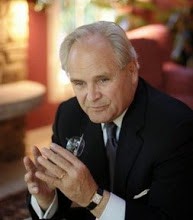
From Kentucky Law Review
Thursday, November 19, 2009
OP-ED: Atty Donld Vish's special to the CJ re death penalty
The death penalty has put the Constitution on a collision course with itself.
The path to collision was cut and cleared in 1976, when the Supreme Court allowed states to reinstate the death penalty based on statutes that used a ‘guided discretion' template proposed by the Model Penal Code (MPC).
The ‘guided discretion' approach was designed to (1) eliminate the arbitrary and discriminatory administration of the death penalty that caused the court to invalidate all state death penalty statues in 1972 and (2) balance the competing constitutional demands of even-handed administration of the law and individual consideration of each case.
Rhetoricians have a name for rubrics like “guided discretion”: enantiosis, the yoking together of opposites to teach a poetic truth by contrast. An example is make haste slowly (which has also risen to a constitutional standard in death penalty cases).
The precise place where justice fits between “guided” and “discretion” is different in each capital case and always difficult to find. Unlike other criminal law cases where the acceptable margin of accuracy or error is reasonably wide, the legal target in death penalty cases is especially narrow. The structural and theoretical obstacles to finding, then reaching, the perfect balance between uniform administration of the law and individualized consideration of each case is the reason why so many death penalty cases take so long to resolve.
As the Supreme Court has continued to track and groom the path to justice in death penalty cases by using evolving standards of due process that mark the progress of a civilized society's search for justice, competing constitutional values get in the way of one another and, like Virgil's army, crowd the field so totally that none has room to do its work.
The sponsor of the MPC, The American Law Institute, has now withdrawn the guided discretion template and its legal consultants, Professors Carol S. Steiker, Harvard Law School, and Jordan M. Steiker, University of Texas Law school, have declared the “guided discretion experiment” unsuccessful in eliminating the arbitrariness and discrimination that figured so prominently in the decision to invalidate state death penalty laws in 1972. But the failure does not inhere in the model. The template is merely a mirror for what is required by the Constitution in death penalty cases: objective guidance and wise discretion. But the more there is of one, the less there is of the other.
As courts grapple with the balance between the two, justice in death penalty cases is becoming to the Constitution what absolute zero is to the laws of thermodynamics: a place one can progress toward but never reach.
Before the political process abolishes the death penalty in Kentucky, it will have been abolished by Kentucky juries that decline to impose it and appellate courts that can't uphold it because the applicable legal standards collide with each other.
Donald Vish is the director of advocacy and education for the Kentucky Coalition to Abolish the Death Penalty and an elected life member of the American Law Institute.
Posted on Thursday, November 19, 2009 at 10:44 PM in Apple, Criminal, Opinions and Editorials (Op-Ed) | Permalink
TrackBack
Showing posts with label death penalty. Show all posts
Showing posts with label death penalty. Show all posts
Friday, September 10, 2010

Ky. governor holding off on some executions due to shortage of key drug
Ky. governor holding off on some executions due to shortage of key drug
WHAS TV News Report: August 26, 2010
by Claudia Coffey
WHAS11.com
Posted on August 26, 2010 at 6:34 PM
Related:
•Condemned Ky. inmate asks judge to halt execution
(WHAS11) - Kentucky Governor Steve Beshear has set a September 16 execution date for a rapist and murderer but held off on two others because of a shortage of a key drug used in the execution.
Beshear said he signed only one warrant because the state has enough sodium thiopental for just one execution.
Kentucky's stock expires October 1 and a new supply of the drug is not expected until early in 2011.
It's raising a number of ethical questions; the biggest is whether one dose for one execution even safe to use so close to the date it expires.
The person facing execution? Gregory Wilson. Wilson was sentenced to die October 31, 1988, for his part in the 1987 kidnapping and murder of Deborah Pooley a year earlier in Kenton County in Northern Kentucky.
53-year-old Gregory Wilson will face an execution chamber similar to this one on September 16.
The last person executed in Kentucky was Marco Chapman back in 2008.
Wilson is one of three death row inmates for which death penalty is being sought but the state doesn't have enough chemicals on hand to execute the other two.
"I can't make anything of any of this," says Donald Vish with the KY Coalition to Abolish the Death Penalty.
Donald Vish, the Director of Advocacy for the Kentucky Coalition to Abolish the Death Penalty, says his organization has asked the governor to stay the execution until the entire system can be reviewed especially now given a key chemical is set to expire just two weeks after the Wilson execution.
"I think it creates a substantial risk of a botched execution or a substantial risk of lingering pain if the efficacy of those drugs has been diminished in any way," says Donald Vish with the KY Coalition to Abolish the Death Penalty.
The Department of Corrections has a sufficient amount of a drug called sodium thiopental, that amount expire October 1. The drug is a sedative.
"In this setting they use three different drugs. This drug is used first to make the person unaware of the effects of the other drugs," says George Bosse of the KY Regional Poison Control Center.
George Bosse - the medical director of the Kentucky Regional Poison Control Center - says like all drugs this too has an expiration date and it’s likely to remain effective until that date.
It should last until the expiration date and what happens after that is somewhat controversial and there is some concern it could lose its effectiveness and there is concern that it could cause toxicity which is less likely but the bigger concern is it could be less effective," says Bosse.
end--
The Death Penalty: Guest Editorial, WAVE TV 6-3-10
June 3, 2010
Guest Editorial: WAVE-TV
The Death Penalty
By Donald Vish
Kentucky Coalition to Abolish the Death Penalty
Aggravated murder cases in Kentucky show a disparity in treatment so inexplicable and so extreme that the legitimacy of the death penalty must be called into question.
In the last two years a serial killer, a child-killer rapist and a $1,000 hit man got life sentences while over the years some aggravated murderers got death. Why: A bad crime; a bad lawyer or bad luck?
Similar punishment for similar crimes is a cornerstone of criminal justice. Without it justice looks random and lacks credibility.
The governor needs to get to the bottom of this dysfunction before signing any death warrants. Confidence in our justice system depends on getting an explanation for a disparity that is now inexplicable-and unacceptable.
Copyright 2010 WAVE News. All rights reserved.
Guest Editorial: WAVE-TV
The Death Penalty
By Donald Vish
Kentucky Coalition to Abolish the Death Penalty
Aggravated murder cases in Kentucky show a disparity in treatment so inexplicable and so extreme that the legitimacy of the death penalty must be called into question.
In the last two years a serial killer, a child-killer rapist and a $1,000 hit man got life sentences while over the years some aggravated murderers got death. Why: A bad crime; a bad lawyer or bad luck?
Similar punishment for similar crimes is a cornerstone of criminal justice. Without it justice looks random and lacks credibility.
The governor needs to get to the bottom of this dysfunction before signing any death warrants. Confidence in our justice system depends on getting an explanation for a disparity that is now inexplicable-and unacceptable.
Copyright 2010 WAVE News. All rights reserved.
Eliminate the Death Penalty
(Lexington Herald Leader
Sunday, September 5, 2010)
Eliminate the Death Penalty
by
Donald Vish
The death penalty has become an embarrassment. Its administration has undermined public confidence in the way the justice system works. The best thing its supporters can say about is it’s not used very much.
The modern history of the death penalty in Kentucky undercuts its credibility as a just, legitimate and effective instrument of public policy. Since 1956, there have been thousands of murders committed in Kentucky. Many were eligible for a death sentence. Today there are 34 people on death row. Four people have been executed in the last 53 years. Infrequent use of the death penalty in Kentucky is not proof that executions are reserved for the worst of the worst.
In the last two years a serial killer, a child-killer rapist and a $1000 dollar hit man got life sentences while over the years some aggravated murderers got death. Why? A bad crime or a bad lawyer or bad luck?
The disparity in treatment of aggravated murder cases is so inexplicable and so extreme that the legitimacy of the death penalty must be called into question. An honest and impartial examination of aggravated murders in Kentucky would lead one to conclude that it is impossible to discern the legal criteria by which some are sentenced to death and others are not. The gravity of the crime does not appear to be the determining factor.
Similar punishment for similar crimes is a cornerstone of criminal justice. Without it justice looks random and lacks credibility. Within the universe comprised of heinous crimes and brutal perpetrators administration of the laws governing executions resembles the equivalent of Russian roulette: most of the time nothing happens but every now and then someone gets killed in accordance with the laws of chance.
Last fall, The American Law Institute, the organization that created the blueprint for modern death penalty laws in this country, concluded that the system it created does not work and cannot be fixed because the constitutional imperatives of consistency in sentencing and the need for individualized sentencing cannot be reconciled. In the context of death penalty jurisprudence, the Constitution is at war with itself and has lost.
The current order scheduling for September 16 the execution Gregory Wilson, 53, for the brutal murder and rape of a popular restaurant worker Deborah Pooley, necessitated in part by the need to complete the execution before the sleep drug used in the lethal injection mix expires in October is an example of a broken system. Since there is not enough of the drug on hand to execute the other two inmates whose death warrants are on Governor Beshear’s desk, he had to ask his justice secretary to come up with a selection process. While the process may be formulated in utmost good faith, any process that selects one of three under these circumstances more resembles the verdict of chance than the verdict of justice.
The death penalty is riddled with contradictions and contradictory imperatives.
Using a deadly chemical employed in both lethal injection and euthanasia, executions serve the contradictory goals of
* retribution and a humane death imposed after a
* legal process that applies contradictory legal mandates of even-handed administration of the law and personal consideration of each case and
* all in a special time warp that hurries along slowly.
There are too many pieces to the death penalty puzzle. It’s impossible to make them fit because they don’t. Add accidents of geography, race, demographics and wrong convictions to the lethal mix that capital punishment law has become and you get a justice system that’s killing itself.
Donald Vish is a lawyer, a life member of the American Law Institute and the Director of Advocacy and Education for the Kentucky Coalition to Abolish the Death Penalty
Sunday, September 5, 2010)
Eliminate the Death Penalty
by
Donald Vish
The death penalty has become an embarrassment. Its administration has undermined public confidence in the way the justice system works. The best thing its supporters can say about is it’s not used very much.
The modern history of the death penalty in Kentucky undercuts its credibility as a just, legitimate and effective instrument of public policy. Since 1956, there have been thousands of murders committed in Kentucky. Many were eligible for a death sentence. Today there are 34 people on death row. Four people have been executed in the last 53 years. Infrequent use of the death penalty in Kentucky is not proof that executions are reserved for the worst of the worst.
In the last two years a serial killer, a child-killer rapist and a $1000 dollar hit man got life sentences while over the years some aggravated murderers got death. Why? A bad crime or a bad lawyer or bad luck?
The disparity in treatment of aggravated murder cases is so inexplicable and so extreme that the legitimacy of the death penalty must be called into question. An honest and impartial examination of aggravated murders in Kentucky would lead one to conclude that it is impossible to discern the legal criteria by which some are sentenced to death and others are not. The gravity of the crime does not appear to be the determining factor.
Similar punishment for similar crimes is a cornerstone of criminal justice. Without it justice looks random and lacks credibility. Within the universe comprised of heinous crimes and brutal perpetrators administration of the laws governing executions resembles the equivalent of Russian roulette: most of the time nothing happens but every now and then someone gets killed in accordance with the laws of chance.
Last fall, The American Law Institute, the organization that created the blueprint for modern death penalty laws in this country, concluded that the system it created does not work and cannot be fixed because the constitutional imperatives of consistency in sentencing and the need for individualized sentencing cannot be reconciled. In the context of death penalty jurisprudence, the Constitution is at war with itself and has lost.
The current order scheduling for September 16 the execution Gregory Wilson, 53, for the brutal murder and rape of a popular restaurant worker Deborah Pooley, necessitated in part by the need to complete the execution before the sleep drug used in the lethal injection mix expires in October is an example of a broken system. Since there is not enough of the drug on hand to execute the other two inmates whose death warrants are on Governor Beshear’s desk, he had to ask his justice secretary to come up with a selection process. While the process may be formulated in utmost good faith, any process that selects one of three under these circumstances more resembles the verdict of chance than the verdict of justice.
The death penalty is riddled with contradictions and contradictory imperatives.
Using a deadly chemical employed in both lethal injection and euthanasia, executions serve the contradictory goals of
* retribution and a humane death imposed after a
* legal process that applies contradictory legal mandates of even-handed administration of the law and personal consideration of each case and
* all in a special time warp that hurries along slowly.
There are too many pieces to the death penalty puzzle. It’s impossible to make them fit because they don’t. Add accidents of geography, race, demographics and wrong convictions to the lethal mix that capital punishment law has become and you get a justice system that’s killing itself.
Donald Vish is a lawyer, a life member of the American Law Institute and the Director of Advocacy and Education for the Kentucky Coalition to Abolish the Death Penalty
Friday, June 4, 2010
Tuesday, May 25, 2010
Review Needed Before Death Warrants Signed
Fom the Frankfort State Journal, May 25, 2010: Donald Vish
Review Needed Before Death Warrants Signed
Similar punishments for similar crimes committed by similar people acting under similar circumstances are the foundation of the criminal justice system. On this foundation stand essential constitutional and public policy pillars of due process, equal protection and proportional punishment.
Recent aggravated murder cases show a disparity in death penalty cases so divergent, so inexplicable and so extreme that the death penalty is called into question as a matter of public policy.
In the last two years, for example, a serial killer, a child-killer rapist and a $1000 dollar hit man got life sentences rather than death. One prosecutor immediately changed a death penalty case to a life without parole case simply because the prosecuting attorney made a mistake requiring a new trial.
To determine the proper symmetry of aggravated murder cases and capital punishment it is necessary to look at a universe of cases in which
Similar crimes got the death penalty
Similar crimes did not get the death penalty
Similar crimes were not prosecuted as death penalty cases.
While this three-pronged method of review is not required under Kentucky statutory law mandating proportionality reviews of all death sentences or the United State Constitution as interpreted by the United States Supreme, the extraordinary disparity in outcome of potential death penalty cases is troubling enough to justify a broad inquiry by the governor before signing a death warrant.
The governor has vast clemency powers without constraints and virtually beyond review. The drafters of Kentucky's constitution made a plenary grant of executive power to enable the chief magistrate do justice on a plane beyond the minimum required by statute. Confidence in the justice system can only be achieved by finding a reasonable explanation for a disparity that is now inexplicable.
May 25, 2010
Donald Vish, Kentucky Coalition to Abolish the Death Penalty, Louisville
Friday, February 26, 2010
Remarks to Libertarian Party of Kentucky Annual Convention
The Death Penalty is Killing Itself
Text of Remarks
To the
Kentucky Libertarian Party
February 27, 2010
Lexington, KY
The Death Penalty is Killing Itself
By
Donald Vish
Kentucky Coalition to Abolish the Death Penalty
Thank you for entrusting your podium to me. We all know there’s no thief worse than a bad speech to a captive audience. A wise old stump speaker from that place I’ll just call ‘down-home’ once told me that the worst speakers make speeches that are always fixin’ to get ready to get started. I am not going to do that. I’m going to get to the point right away which is this: the death penalty is too broke to fix, to risky to use and too expensive to keep. It is the penal equivalent of Russian roulette: most of the time nothing happens but every now and then somebody gets killed.
But we may be on the verge of a lot happening. The attorney general has requested three death warrants from the governor. Before the governor could act on the request in November, the Kentucky Supreme Court suspended executions in Kentucky until the Kentucky Department of Corrections published the details of the procedures it uses for executions and took public comments on the procedures. Those steps have been taken and the execution protocols are on their way to the governor’s desk for signature. On their way to the governor’s desk, the procedures must go through a legislative committee. The governor has said he will sign the protocols when they arrive. So execution procedures could be back on the books by April or May which means Kentucky could have multiple executions in 2010: at least three and this in a state that has executed only four people in the last 53 years.
Lethal Injection: Humane Executions
The Holy Grail of modern civilized executions is to have someone dead, not to make someone dead much less to actually kill anyone. The civilized execution seeks to perfect a process that has only a past tense, a protocol that takes the dying out of death and the killing out of killed. Civilized killing aspires to be a sentence without a verb. In a perfect execution, nothing happens, there is no beginning or middle and the end is always in the remote past. The coroner has to announce later that it happened earlier. The civilized execution is a perfect demonstration of the proverb: nothing produces nothing made all the more remarkable by having done it with nobody.
In the humane execution the actual executioner is merely unknown but in the perfect execution lethal injection strives to achieve, there is no executioner, a perfect illustration of the dictum: everybody’s business is nobody’s business.
The humane execution is choreographed to occlude its entanglement with brutality, barbarism, violence or a freakish and lingering death, to silence the voice of pain. So the body sleeps in muscular paralysis so one knows if it wakes up.
The execution is disguised to resemble a medical procedure. Trappings of humanitarianism, healing and kindness conceal the reality: there’s a noose in the needle.
Death Penalty History Condemns Itself
The modern history of death penalty in Kentucky undermines its own credibility as a just, legitimate and effective instrument of public policy. Since 1956, there have been thousands of murders committed in Kentucky and many were eligible for a death sentence.
Today, there are 35 people on death row and four people have been executed in the last 53 years.
Kelly Moss was electrocuted against his will in 1962; Harold McQueen was electrocuted against his will in 1997; Eddie Lee Harper decided to stop his legal appeals and requested execution by lethal injection in 1999; Marco Chapman dismissed his lawyers and his legal appeals and was executed by lethal injection in 2008.
The modern history of the death penalty in Kentucky mocks itself as a penal option that is intended to deter crime, exact retribution for heinous murders and provide society with the comfort and closure that comes from knowing that justice will be done though the heavens may fall.
How can four executions in 53 years deter anyone from doing anything? What does it say to victims’ families, friends and society at-large that out of thousands of murders in 53 years only 4 were deemed sufficiently heinous to merit execution? What is the citizenry to make of a system that can take up to thirty years to conclude its official deliberations?
What are judges, law enforcement officials and citizens to make of a justice system that seems to select for execution only those murderers that share, shall we say, certain similar demographics and even ‘geographics’? And how shall we reconcile our social and civic and legal commitment to fairness and the even-handed administration of the law with the knowledge that innocent people have been sent to death row?
The Death Penalty Doesn’t Work
The death penalty is a failure on every level: legal, social, political, penal, financial and moral.
First, there is no way to kill humanely.
Secondly, there is no way to kill in compliance with constitutional procedures.
Thirdly, there is no way to kill without the risk that innocent people will be executed.
Fourthly, administration of the death penalty has failed to deter heinous murders in Kentucky and to exact proportional retribution for and from the worst of the worst.
Finally, the people are not getting their money’s worth from an unnecessary system that serves no penological purpose.
In Kentucky, the death penalty makes nothing happen.
Nationally, it is sanctioned by the law of the land but seems to be ruled by the law of unintended consequences when it is not being ruled by the Fourth Law of Thermodynamics (also known as Murphy’s Law). A recent example of Murphy’s law is furnished by a lethal injection attempt in Ohio where a prisoner in the death chamber was repeatedly stuck with a needle to administer the lethal drugs but was eventually sent back to his cell when the prison personnel simply could not find a vein to use. And a recent example of the law of unintended consequences is furnished by an FBI report that showed states with high death penalty usage have a higher murder rate!
Law of Lightening
Imposition of the death penalty has been analogized to the capriciousness of lightening. The comparison is unfair. It is much easier to predict WHERE the death penalty will be used than to predict where lightening might strike. The death penalty has a measurable geographic vortex. The geography of the death penalty is so pronounced that it is an exercise of poetic license to say the United States endorses the death penalty. Actually, most places in the United States do not use the death penalty.
Since the death penalty was reinstated in 1977
• more than two-thirds of American counties have never imposed it and
• Only 3 percent (92 out of 3,066) of the nation’s counties have generated 50 percent of its death sentences.
Death Penalty Use is Limited and in Decline
The death penalty has become an embarrassment to our legal system. Its administration has undermined public confidence in the way the law works. The best thing its supporters can say about it is the best thing its opponents can say about it: it’s not used very much.
In fact, in some precincts, both social and geographic, it’s not used at all.
In 2009, eighty-seven percent of executions in the United States were in the south, and over half of those were in Texas. A single county in Texas has furnished more than 33 percent of the state’s death row population.
While 35 states have the death penalty, executions are clustered in just a few. There have been 1,188 executions since 1977and 54 percent of those have come from three states:Texas,with 447 (37.6 percent),Virginia with 105 and Oklahoma with 91.
Even where the death penalty is used, its use is declining. There were fewer death sentences in 2009 than any year since executions resumed in 1977. Death sentences reached a high point in 1994, 328, and since then have declined 63 percent. 2009 is the seventh straight year the number of death sentences has declined .
Deterrence
Justification for the death penalty has been based on the penal goals of deterrence and retribution. But in 10 of the 12 states without capital punishment, the homicide rates are below the national average and FBI data shows that half of the states with the death penalty have murder rates above the national average. A New York Times analysis found that over the last 20 years, states with the death penalty have murder rates between 48 percent to 101 percent HIGHER than states without the death penalty (December 14, 2009 New York Times.)
Retribution
Gallup polls show that among those who support the death penalty, retribution is most often cited as the reason. A June 30, 2006 Gallup poll, citing a 2003 Gallup study stated:
The reason is very likely their concept of justice. According to a 2003 Gallup study, close to half of Americans who supported the death penalty cited some aspect of retribution for the crime as the reason. [An October 13, 2009 Gallup Poll updates public opinion on the death penalty reporting 65% of Americans continue to support the use of the death penalty for persons convicted of murder, while 31% oppose it -- continuing a trend that has shown little change over the last six years. ]
The most recent 2009 Gallup poll on death penalty support does not update the 2003 findings about the reasons for support of capital punishment nor does it update the 2006 finding, quoted in the 2009 study:
An Explicit Alternative to the Death Penalty? Gallup research has found that support for the death penalty is lower if Americans are offered an explicit alternative -- "life imprisonment, with absolutely no possibility of parole." In May 2006, for example, 65% of Americans supported the death penalty in general (matching the current figure), while, separately, 47% said they preferred the death penalty to life imprisonment as a penalty for murder when given that choice (48% favored life imprisonment).
The Gallop finding is consistent with a 2006 University of Kentucky poll that found 67% of Kentucky residents questioned preferred a long prison sentence over execution for those convicted of murder. As part of a larger statewide survey in August and September, 2006 the University of Kentucky Survey Research Center asked 836 randomly selected Kentuckians over age 18 which of five possible punishments was most appropriate for someone convicted of aggravated murder.
Findings include:
• 36.2 percent favored life with no possibility of parole.
• 31.4 percent favored one of three other prison sentences: life without parole for 20 years, life without parole for 25 years, 20 to 50 years with no parole possible until 85 percent of the sentence is served.
• 30.5 percent favored the death penalty.
Balancing Retribution with Risk of Executing the Innocent
Gallop surveys have stated the retribution case in four ways: 1) the punishment fits the crime (37%); 2) the criminal deserves the punishment(13%); 3)it is fair 3%) and 4) it serves justice(4%)Gallop Poll June 30, 2006 citing a 2003 Gallop survey most of which may be summed up in the dictum ‘an eye for an eye.’
So the retribution case has two overarching formulations: (1) the punishment fits the crime(37%)and(2)the criminal deserves the punishment(20%).
When New Mexico abolished the death penalty in 2009, Governor Richardson acknowledged the retribution theory. But he rejected the practice because of the possibility of executing an innocent person. He concluded that life in prison without possibility of parole was a just penalty and adequate retribution perhaps even worse than death.
Governor Richardson’s concern about executing the innocent is well founded. Since 1977, 139 death row prisoners have been exonerated (in most cases ‘exonerated’ means the defendant was acquitted upon retrial and in a handful of cases ‘exoneration’ means the defendant was declared innocent based on DNA evidence). And now there is a 2009 report commissioned by the Texas Forensic Science Commission that points toward the conclusion that Texas executed an innocent man in 1991. Cameron Todd Willingham was electrocuted in 1991 for the arson murder of his three children. The new report finds that the arson claims were not sustainable (although this finding is hotly contested by some law enforcement officials). Resolution of the matter awaits adjudication by the State of Texas but progress is on hold since the Governor recently changed the composition of the committee assigned to sort out the facts and findings.
In Kentucky, the very recent Louisville case of Edwin A. Chandler is cause for grave concern. The judge that released Chandler in 2009 apologized to him from the bench (he was not the original sentencing judge) and called his case a miscarriage of justice. Chandler served nine years in prison for a murder he did not commit during a robbery he had nothing to do with. He could have received the death penalty.
Chandler’s innocence claims were corroborated by an eye witness that called the police and said that Chandler was not the shooter (but the witness was never called to testify at trial), by a fingerprint and DNA sample at the crime scene that was not found until years later and by a convenience store surveillance tape that the police lost before Chandler’s trial. The jury that convicted Chandler was ‘death qualified’ during voir dire meaning the state could have asked for the death penalty. But by closing argument it did not even though Chandler was convicted. The jury decision was based in part on the strength of Chandler’s actual confession to the crime which he said he made it in response to a threat by police to prosecute his family for being criminal accessories to murder if he did not.
Policy Conundrums
Retribution with Kindness
Administration of capital punishment requires navigating between the separate worlds of too much and not enough. The dual imperatives of getting more blood for blood in a humane way while at the same time satisfying the sense of equivalence that distinguishes retributive justice are impossible to reconcile.
How can a punishment informed by a sense of justice that imposes retributive equivalence be harmonized with the quest for a painless execution? How can the state methodically kill a person as an act of just retribution and at the same time comport with standards of decency that distinguish a civilized society? How can killing be kindness? How does the state reconcile the conflicting imperatives of retributive equivalence and humane execution?
Dr. Alfred P. Southwick thought he had the answer to the question in 1890 after ten years of work on his invention: the electric chair. Upon witnessing its first jolt in 1890 on killer William Kemmler, Dr. Southwick exclaimed:
There is the culmination of ten years work and study! We live in a higher civilization from this day.
Dr. Southwick didn’t know it when he spoke but the first jolt failed to kill Kemmler and George Westinghouse later said of the messy execution that ensued: It could have been done better with an ax.
Lethal injection is the direct successor to Dr. Southwick’s 19th search for a method of premeditated, ritualized and efficient killing that demonstrates that we live in a higher civilization. Other methods have proved to have too much potential for misadventure to compete for the oxymoronic title of humane killing.
Legal Conundrums
Capital punishment has placed the constitution on a collision course with itself. On the one hand the constitution requires wise discretion applied to the special facts of every death penalty case and on the other hand the use of an objective, uniform standard consistently applied to all persons in all death penalty cases. In reinstating the death penalty in 1976, the U. S. Supreme Court approved state death penalty laws that yoked together the two disparate requirements under a due process template of the Model Penal Code called "guided discretion." But guided discretion is a contradiction of terms: the more there is of one, the less there is of the other. As a result, the 'guided discretion' templates aims for a very narrow target, perhaps a theoretical target, and is always in danger of erring either on the side of arbitrariness or on the side of inflexibility. The difficulty in applying the guided discretion standard is the reason why so many death penalty cases are reversed and retired and why the appeals are so protracted.
In 2009 The American Law Institute (ALI), the author of the Model Penal Code withdrew the standard from the model penal code … in light of the current intractable institutional and structural obstacles to ensuring a minimally adequate system for administering capital punishment.
The reauthorization of the death penalty by the Supreme Court was predicated on this standard which the ALI has now withdrawn. The ALI legal consultants that evaluated how the template has fared since 1976 have declared it a failure.
At some point, the courts will have to confirm the ALI’s conclusion.
Conclusion
The death penalty has failed as a matter of law and social policy.
The death penalty is not compatible with central values of our constitution: justice and basic fairness. It is impossible to formulate workable procedural rules in harmony with substantive legal requirements of eliminating arbitrariness and discrimination while achieving fundamental fairness through individualized sentencing.
The mere possibility of prosecutorial misfeasance or malfeasance in a death penalty case or the possibility of executing the innocent together with evidence of discrimination, including geographic discrimination, protracted litigation that seems to turn on technicalities collectively damages the legitimacy of the law and the credibility of the legal system.
No combination of procedural rules, substantive regulations, death protocols and eventless executions can save the death penalty from the genealogy from which it derives its inherent barbarism, its humane deficiencies, its premeditated cruelty and its costly failures.
The death penalty is killing itself.
DV
2968 words/ 25 minutes
February 26, 2010
Facts about the Death Penalty
(As of December, 2009)
35 states have the death penalty
15 do not
New Mexico and New Jersey abolished the death penalty in 2009 and 2006.
1170-- Number of executions since resumption of executions in 1976
1999-- Stands as the year with the most executions—98
2009—34
2008—37
2007—42
2006 – 53
Race of defendants: W-57%, B-34%, H-7%
Race of victims: W-79%, B-14%
Race of death row inmates: B-42%, W-45%
Exonerations through 2009 in 26 states—139
Since 1999, number of death sentences has dropped dramatically:
1999 2000 2001 2002 2003 2004 2005 2006 2007 2008
Sentences 284 235 167 169 153 140 138 121 115 111 (2008 is projected)
Kentucky Death Row 36 (includes one woman)
Gallup Poll: October 2008 Gallup Poll found overall support for death penalty was 64% (80% in 1994). Poll also revealed when respondents are given choice of life without parole as alternate sentencing option, more choose life without parole (48%) than death penalty (47%). http://www.gallup.com/poll/111931/americans-hold-firm-support-death-penalty.aspx (11-17-2008).
Number of Executions before 1976 424
Current Kentucky Death Row Population 36
Women on Death Row (Kentucky) 1
Southern states accounted for 95 percent of the executions in 2008. Texas accounted for 16 of 32 executions as of August 2009 and over 37 % of all executions in the U.S since 1977. Over 33% of the prisoners on Texas Death Row come from the county where Houston is located. In 2007 (the last year for which statistics are available), juries throughout the United State returned 115 death sentences. Over 60 % were in the South. A 2002 study found that 2/3rds of American counties have never imposed the death penalty since 1977. Only 3 % (92 out of 3,066) of the nation’s counties account for 50 percent of its death sentences in that 32 year period. When the U.S. resumed executions in 1977, only 16 nations had abolished the death penalty; the number has since grown to 135 (60 retain) (FL Bar 10-01-09—11). Five nations are responsible for +90% of the world’s executions: Iran, Pakistan, Saudi Arabia, China - and the United States.

Text of Remarks
To the
Kentucky Libertarian Party
February 27, 2010
Lexington, KY
The Death Penalty is Killing Itself
By
Donald Vish
Kentucky Coalition to Abolish the Death Penalty
Thank you for entrusting your podium to me. We all know there’s no thief worse than a bad speech to a captive audience. A wise old stump speaker from that place I’ll just call ‘down-home’ once told me that the worst speakers make speeches that are always fixin’ to get ready to get started. I am not going to do that. I’m going to get to the point right away which is this: the death penalty is too broke to fix, to risky to use and too expensive to keep. It is the penal equivalent of Russian roulette: most of the time nothing happens but every now and then somebody gets killed.
But we may be on the verge of a lot happening. The attorney general has requested three death warrants from the governor. Before the governor could act on the request in November, the Kentucky Supreme Court suspended executions in Kentucky until the Kentucky Department of Corrections published the details of the procedures it uses for executions and took public comments on the procedures. Those steps have been taken and the execution protocols are on their way to the governor’s desk for signature. On their way to the governor’s desk, the procedures must go through a legislative committee. The governor has said he will sign the protocols when they arrive. So execution procedures could be back on the books by April or May which means Kentucky could have multiple executions in 2010: at least three and this in a state that has executed only four people in the last 53 years.
Lethal Injection: Humane Executions
The Holy Grail of modern civilized executions is to have someone dead, not to make someone dead much less to actually kill anyone. The civilized execution seeks to perfect a process that has only a past tense, a protocol that takes the dying out of death and the killing out of killed. Civilized killing aspires to be a sentence without a verb. In a perfect execution, nothing happens, there is no beginning or middle and the end is always in the remote past. The coroner has to announce later that it happened earlier. The civilized execution is a perfect demonstration of the proverb: nothing produces nothing made all the more remarkable by having done it with nobody.
In the humane execution the actual executioner is merely unknown but in the perfect execution lethal injection strives to achieve, there is no executioner, a perfect illustration of the dictum: everybody’s business is nobody’s business.
The humane execution is choreographed to occlude its entanglement with brutality, barbarism, violence or a freakish and lingering death, to silence the voice of pain. So the body sleeps in muscular paralysis so one knows if it wakes up.
The execution is disguised to resemble a medical procedure. Trappings of humanitarianism, healing and kindness conceal the reality: there’s a noose in the needle.
Death Penalty History Condemns Itself
The modern history of death penalty in Kentucky undermines its own credibility as a just, legitimate and effective instrument of public policy. Since 1956, there have been thousands of murders committed in Kentucky and many were eligible for a death sentence.
Today, there are 35 people on death row and four people have been executed in the last 53 years.
Kelly Moss was electrocuted against his will in 1962; Harold McQueen was electrocuted against his will in 1997; Eddie Lee Harper decided to stop his legal appeals and requested execution by lethal injection in 1999; Marco Chapman dismissed his lawyers and his legal appeals and was executed by lethal injection in 2008.
The modern history of the death penalty in Kentucky mocks itself as a penal option that is intended to deter crime, exact retribution for heinous murders and provide society with the comfort and closure that comes from knowing that justice will be done though the heavens may fall.
How can four executions in 53 years deter anyone from doing anything? What does it say to victims’ families, friends and society at-large that out of thousands of murders in 53 years only 4 were deemed sufficiently heinous to merit execution? What is the citizenry to make of a system that can take up to thirty years to conclude its official deliberations?
What are judges, law enforcement officials and citizens to make of a justice system that seems to select for execution only those murderers that share, shall we say, certain similar demographics and even ‘geographics’? And how shall we reconcile our social and civic and legal commitment to fairness and the even-handed administration of the law with the knowledge that innocent people have been sent to death row?
The Death Penalty Doesn’t Work
The death penalty is a failure on every level: legal, social, political, penal, financial and moral.
First, there is no way to kill humanely.
Secondly, there is no way to kill in compliance with constitutional procedures.
Thirdly, there is no way to kill without the risk that innocent people will be executed.
Fourthly, administration of the death penalty has failed to deter heinous murders in Kentucky and to exact proportional retribution for and from the worst of the worst.
Finally, the people are not getting their money’s worth from an unnecessary system that serves no penological purpose.
In Kentucky, the death penalty makes nothing happen.
Nationally, it is sanctioned by the law of the land but seems to be ruled by the law of unintended consequences when it is not being ruled by the Fourth Law of Thermodynamics (also known as Murphy’s Law). A recent example of Murphy’s law is furnished by a lethal injection attempt in Ohio where a prisoner in the death chamber was repeatedly stuck with a needle to administer the lethal drugs but was eventually sent back to his cell when the prison personnel simply could not find a vein to use. And a recent example of the law of unintended consequences is furnished by an FBI report that showed states with high death penalty usage have a higher murder rate!
Law of Lightening
Imposition of the death penalty has been analogized to the capriciousness of lightening. The comparison is unfair. It is much easier to predict WHERE the death penalty will be used than to predict where lightening might strike. The death penalty has a measurable geographic vortex. The geography of the death penalty is so pronounced that it is an exercise of poetic license to say the United States endorses the death penalty. Actually, most places in the United States do not use the death penalty.
Since the death penalty was reinstated in 1977
• more than two-thirds of American counties have never imposed it and
• Only 3 percent (92 out of 3,066) of the nation’s counties have generated 50 percent of its death sentences.
Death Penalty Use is Limited and in Decline
The death penalty has become an embarrassment to our legal system. Its administration has undermined public confidence in the way the law works. The best thing its supporters can say about it is the best thing its opponents can say about it: it’s not used very much.
In fact, in some precincts, both social and geographic, it’s not used at all.
In 2009, eighty-seven percent of executions in the United States were in the south, and over half of those were in Texas. A single county in Texas has furnished more than 33 percent of the state’s death row population.
While 35 states have the death penalty, executions are clustered in just a few. There have been 1,188 executions since 1977and 54 percent of those have come from three states:Texas,with 447 (37.6 percent),Virginia with 105 and Oklahoma with 91.
Even where the death penalty is used, its use is declining. There were fewer death sentences in 2009 than any year since executions resumed in 1977. Death sentences reached a high point in 1994, 328, and since then have declined 63 percent. 2009 is the seventh straight year the number of death sentences has declined .
Deterrence
Justification for the death penalty has been based on the penal goals of deterrence and retribution. But in 10 of the 12 states without capital punishment, the homicide rates are below the national average and FBI data shows that half of the states with the death penalty have murder rates above the national average. A New York Times analysis found that over the last 20 years, states with the death penalty have murder rates between 48 percent to 101 percent HIGHER than states without the death penalty (December 14, 2009 New York Times.)
Retribution
Gallup polls show that among those who support the death penalty, retribution is most often cited as the reason. A June 30, 2006 Gallup poll, citing a 2003 Gallup study stated:
The reason is very likely their concept of justice. According to a 2003 Gallup study, close to half of Americans who supported the death penalty cited some aspect of retribution for the crime as the reason. [An October 13, 2009 Gallup Poll updates public opinion on the death penalty reporting 65% of Americans continue to support the use of the death penalty for persons convicted of murder, while 31% oppose it -- continuing a trend that has shown little change over the last six years. ]
The most recent 2009 Gallup poll on death penalty support does not update the 2003 findings about the reasons for support of capital punishment nor does it update the 2006 finding, quoted in the 2009 study:
An Explicit Alternative to the Death Penalty? Gallup research has found that support for the death penalty is lower if Americans are offered an explicit alternative -- "life imprisonment, with absolutely no possibility of parole." In May 2006, for example, 65% of Americans supported the death penalty in general (matching the current figure), while, separately, 47% said they preferred the death penalty to life imprisonment as a penalty for murder when given that choice (48% favored life imprisonment).
The Gallop finding is consistent with a 2006 University of Kentucky poll that found 67% of Kentucky residents questioned preferred a long prison sentence over execution for those convicted of murder. As part of a larger statewide survey in August and September, 2006 the University of Kentucky Survey Research Center asked 836 randomly selected Kentuckians over age 18 which of five possible punishments was most appropriate for someone convicted of aggravated murder.
Findings include:
• 36.2 percent favored life with no possibility of parole.
• 31.4 percent favored one of three other prison sentences: life without parole for 20 years, life without parole for 25 years, 20 to 50 years with no parole possible until 85 percent of the sentence is served.
• 30.5 percent favored the death penalty.
Balancing Retribution with Risk of Executing the Innocent
Gallop surveys have stated the retribution case in four ways: 1) the punishment fits the crime (37%); 2) the criminal deserves the punishment(13%); 3)it is fair 3%) and 4) it serves justice(4%)Gallop Poll June 30, 2006 citing a 2003 Gallop survey most of which may be summed up in the dictum ‘an eye for an eye.’
So the retribution case has two overarching formulations: (1) the punishment fits the crime(37%)and(2)the criminal deserves the punishment(20%).
When New Mexico abolished the death penalty in 2009, Governor Richardson acknowledged the retribution theory. But he rejected the practice because of the possibility of executing an innocent person. He concluded that life in prison without possibility of parole was a just penalty and adequate retribution perhaps even worse than death.
Governor Richardson’s concern about executing the innocent is well founded. Since 1977, 139 death row prisoners have been exonerated (in most cases ‘exonerated’ means the defendant was acquitted upon retrial and in a handful of cases ‘exoneration’ means the defendant was declared innocent based on DNA evidence). And now there is a 2009 report commissioned by the Texas Forensic Science Commission that points toward the conclusion that Texas executed an innocent man in 1991. Cameron Todd Willingham was electrocuted in 1991 for the arson murder of his three children. The new report finds that the arson claims were not sustainable (although this finding is hotly contested by some law enforcement officials). Resolution of the matter awaits adjudication by the State of Texas but progress is on hold since the Governor recently changed the composition of the committee assigned to sort out the facts and findings.
In Kentucky, the very recent Louisville case of Edwin A. Chandler is cause for grave concern. The judge that released Chandler in 2009 apologized to him from the bench (he was not the original sentencing judge) and called his case a miscarriage of justice. Chandler served nine years in prison for a murder he did not commit during a robbery he had nothing to do with. He could have received the death penalty.
Chandler’s innocence claims were corroborated by an eye witness that called the police and said that Chandler was not the shooter (but the witness was never called to testify at trial), by a fingerprint and DNA sample at the crime scene that was not found until years later and by a convenience store surveillance tape that the police lost before Chandler’s trial. The jury that convicted Chandler was ‘death qualified’ during voir dire meaning the state could have asked for the death penalty. But by closing argument it did not even though Chandler was convicted. The jury decision was based in part on the strength of Chandler’s actual confession to the crime which he said he made it in response to a threat by police to prosecute his family for being criminal accessories to murder if he did not.
Policy Conundrums
Retribution with Kindness
Administration of capital punishment requires navigating between the separate worlds of too much and not enough. The dual imperatives of getting more blood for blood in a humane way while at the same time satisfying the sense of equivalence that distinguishes retributive justice are impossible to reconcile.
How can a punishment informed by a sense of justice that imposes retributive equivalence be harmonized with the quest for a painless execution? How can the state methodically kill a person as an act of just retribution and at the same time comport with standards of decency that distinguish a civilized society? How can killing be kindness? How does the state reconcile the conflicting imperatives of retributive equivalence and humane execution?
Dr. Alfred P. Southwick thought he had the answer to the question in 1890 after ten years of work on his invention: the electric chair. Upon witnessing its first jolt in 1890 on killer William Kemmler, Dr. Southwick exclaimed:
There is the culmination of ten years work and study! We live in a higher civilization from this day.
Dr. Southwick didn’t know it when he spoke but the first jolt failed to kill Kemmler and George Westinghouse later said of the messy execution that ensued: It could have been done better with an ax.
Lethal injection is the direct successor to Dr. Southwick’s 19th search for a method of premeditated, ritualized and efficient killing that demonstrates that we live in a higher civilization. Other methods have proved to have too much potential for misadventure to compete for the oxymoronic title of humane killing.
Legal Conundrums
Capital punishment has placed the constitution on a collision course with itself. On the one hand the constitution requires wise discretion applied to the special facts of every death penalty case and on the other hand the use of an objective, uniform standard consistently applied to all persons in all death penalty cases. In reinstating the death penalty in 1976, the U. S. Supreme Court approved state death penalty laws that yoked together the two disparate requirements under a due process template of the Model Penal Code called "guided discretion." But guided discretion is a contradiction of terms: the more there is of one, the less there is of the other. As a result, the 'guided discretion' templates aims for a very narrow target, perhaps a theoretical target, and is always in danger of erring either on the side of arbitrariness or on the side of inflexibility. The difficulty in applying the guided discretion standard is the reason why so many death penalty cases are reversed and retired and why the appeals are so protracted.
In 2009 The American Law Institute (ALI), the author of the Model Penal Code withdrew the standard from the model penal code … in light of the current intractable institutional and structural obstacles to ensuring a minimally adequate system for administering capital punishment.
The reauthorization of the death penalty by the Supreme Court was predicated on this standard which the ALI has now withdrawn. The ALI legal consultants that evaluated how the template has fared since 1976 have declared it a failure.
At some point, the courts will have to confirm the ALI’s conclusion.
Conclusion
The death penalty has failed as a matter of law and social policy.
The death penalty is not compatible with central values of our constitution: justice and basic fairness. It is impossible to formulate workable procedural rules in harmony with substantive legal requirements of eliminating arbitrariness and discrimination while achieving fundamental fairness through individualized sentencing.
The mere possibility of prosecutorial misfeasance or malfeasance in a death penalty case or the possibility of executing the innocent together with evidence of discrimination, including geographic discrimination, protracted litigation that seems to turn on technicalities collectively damages the legitimacy of the law and the credibility of the legal system.
No combination of procedural rules, substantive regulations, death protocols and eventless executions can save the death penalty from the genealogy from which it derives its inherent barbarism, its humane deficiencies, its premeditated cruelty and its costly failures.
The death penalty is killing itself.
DV
2968 words/ 25 minutes
February 26, 2010
Facts about the Death Penalty
(As of December, 2009)
35 states have the death penalty
15 do not
New Mexico and New Jersey abolished the death penalty in 2009 and 2006.
1170-- Number of executions since resumption of executions in 1976
1999-- Stands as the year with the most executions—98
2009—34
2008—37
2007—42
2006 – 53
Race of defendants: W-57%, B-34%, H-7%
Race of victims: W-79%, B-14%
Race of death row inmates: B-42%, W-45%
Exonerations through 2009 in 26 states—139
Since 1999, number of death sentences has dropped dramatically:
1999 2000 2001 2002 2003 2004 2005 2006 2007 2008
Sentences 284 235 167 169 153 140 138 121 115 111 (2008 is projected)
Kentucky Death Row 36 (includes one woman)
Gallup Poll: October 2008 Gallup Poll found overall support for death penalty was 64% (80% in 1994). Poll also revealed when respondents are given choice of life without parole as alternate sentencing option, more choose life without parole (48%) than death penalty (47%). http://www.gallup.com/poll/111931/americans-hold-firm-support-death-penalty.aspx (11-17-2008).
Number of Executions before 1976 424
Current Kentucky Death Row Population 36
Women on Death Row (Kentucky) 1
Southern states accounted for 95 percent of the executions in 2008. Texas accounted for 16 of 32 executions as of August 2009 and over 37 % of all executions in the U.S since 1977. Over 33% of the prisoners on Texas Death Row come from the county where Houston is located. In 2007 (the last year for which statistics are available), juries throughout the United State returned 115 death sentences. Over 60 % were in the South. A 2002 study found that 2/3rds of American counties have never imposed the death penalty since 1977. Only 3 % (92 out of 3,066) of the nation’s counties account for 50 percent of its death sentences in that 32 year period. When the U.S. resumed executions in 1977, only 16 nations had abolished the death penalty; the number has since grown to 135 (60 retain) (FL Bar 10-01-09—11). Five nations are responsible for +90% of the world’s executions: Iran, Pakistan, Saudi Arabia, China - and the United States.
Tuesday, January 19, 2010
The Death of the Death Penalty
The Deathof the Death Penalty
The death penalty is dead. Killed not by judicial fiat or parliamentary maneuver or executive order but by the people. Juries comprised of citizens who swear they support the death penalty in principle have simply quit imposing it in practice.
There have been four executions in Kentucky since 1956. Two involved inmates who dropped their appeals. Scarcity can be a sign of selectivity but the rarity of executions in Kentucky goes beyond selectivity and enters the realm of freakish oddity.
The death penalty record in Kentucky support two conclusions:
1) It no longer serves a law enforcement purpose;
2) It offends Kentucky’s evolving standard of decency.
The supreme court case that resulted in the upcoming public hearings on execution techniques did not rule that the death penalty is legal--only that its machinery must be tinkered, tuned and tended in public.
The U.S. Supreme Court case that reviewed lethal injection in Kentucky did not rule on the legality of the death penalty but only a particular method of execution based upon a particular limited record about a particular regulation that we now know was not properly adopted.
The Kentucky Supreme Court should next address capital punishment head on not to abolish it on its own authority but by ruling that the people already have, secure in the knowledge that life in prison without parole protects the public and punishes the criminal.
The death penalty is dead. Killed not by judicial fiat or parliamentary maneuver or executive order but by the people. Juries comprised of citizens who swear they support the death penalty in principle have simply quit imposing it in practice.
There have been four executions in Kentucky since 1956. Two involved inmates who dropped their appeals. Scarcity can be a sign of selectivity but the rarity of executions in Kentucky goes beyond selectivity and enters the realm of freakish oddity.
The death penalty record in Kentucky support two conclusions:
1) It no longer serves a law enforcement purpose;
2) It offends Kentucky’s evolving standard of decency.
The supreme court case that resulted in the upcoming public hearings on execution techniques did not rule that the death penalty is legal--only that its machinery must be tinkered, tuned and tended in public.
The U.S. Supreme Court case that reviewed lethal injection in Kentucky did not rule on the legality of the death penalty but only a particular method of execution based upon a particular limited record about a particular regulation that we now know was not properly adopted.
The Kentucky Supreme Court should next address capital punishment head on not to abolish it on its own authority but by ruling that the people already have, secure in the knowledge that life in prison without parole protects the public and punishes the criminal.
Wednesday, November 18, 2009
FLAWED
Bad Design

Missing Pieces
The legal organization responsible for designing the model penal code has withdrawn its support for a key provision of the code that inadvertently served as the cornerstone for modern death penalty statutes.
The American Law Institute intended to remain neutral on capital punishment when it crafted the model penal code in 1962. The code contained, however, a template for considering conflicting constitutional values in death penalty cases that required due process of law based on objective criteria and individual consideration of the special facts and circumstances of each capital case.
The guided discretion construct was ignored by the states until 1972 when the United States Supreme Court invalidated all state death penalty laws for failing to provide due process of law in a nondiscriminatory manner that weighed the competing interests of even-handed administration of law with individual consideration of each capital case.
States attempted to fix the problem by adopting the guided discretion template of the MPC. In 1976 the Supreme Court approved resumption of capital punishment on the strength of the MPC endorsement.
As a result, the ALI gained first-hand experience with the only law beyond its expertise: the law of unintended consequences.
In October 2009, the ALI withdrew its support for the guided discretion template and a legal report evaluating its application over the years said it had not worked.
It’s now time to look at all other legal and administrative aspects of death penalty administration to determine whether the system is merely broken or intrinsically flawed beyond repair.
253 words
dv
11-18-09
Saturday, November 14, 2009
Collision Course

Collision Course
The death penalty has put the constitution on a collision course with itself.
The path to collision was cut and cleared in 1976 when the Supreme Court allowed states to reinstate the death penalty based on statutes that used a ‘guided discretion’ template proposed by the Model Penal Code (MPC). The ‘guided discretion’ approach was designed to (1) eliminate the arbitrary and discriminatory administration of the death penalty that caused the court to invalidate all state death penalty statues in 1972 and (2) balance the competing constitutional demands of even-handed administration of the law and individual consideration of each case.
Rhetoricians have a name for rubrics like ‘guided discretion’: enantiosis, the yoking together of opposites to teach a poetic truth by contrast. An example is make haste slowly (which has also risen to a constitutional standard in death penalty cases).
The precise place where justice fits between ‘guided’ and ‘discretion’ is different in each capital case and always difficult to find. Unlike other criminal law cases where the acceptable margin of accuracy or error is reasonably wide, the legal target in death penalty cases is especially narrow. The structural and theoretical obstacles to finding then reaching the perfect balance between uniform administration of the law and individualized consideration of each case is the reason why so many death penalty cases take so long to resolve.
As the Supreme Court has continued to track and groom the path to justice in death penalty cases by using evolving standards of due process that mark the progress of a civilized society’s search for justice, competing constitutional values get in the way of one another and, like Virgil’s army, crowd the field so totally that none has room to do its work.
The sponsor of the MPC, The American Law Institute (ALI), has now withdrawn the guided discretion template and its legal consultants Professors Carol S. Steiker, Harvard Law School and Jordan M. Steiker, University of Texas Law School, have declared the ‘guided discretion experiment’ unsuccessful in eliminating the arbitrariness and discrimination that figured so prominently in the decision to invalidate state death penalty laws in 1972. But the failure does not inhere in the model---the template is merely a mirror for what is required by the constitution in death penalty cases: objective guidance and wise discretion. But the more there is of one, the less there is of the other.
As courts grapple with the balance between the two, justice in death penalty cases is becoming to the constitution what absolute zero is to the laws of thermodynamics: a place one can progress toward but never reach.
Before the political process abolishes the death penalty in Kentucky, it will have been abolished by Kentucky juries that decline to impose it and appellate courts that can’t uphold it because the applicable legal standards collide with each other.
474 words
Saturday, November 14, 2009
DV
Donald Vish is the director of advocacy and education for the Kentucky Coalition to Abolish the Death Penalty and an elected life member of the American Law Institute.
Wednesday, September 23, 2009
Botched Executions
 New Questions about the Death Penalty
 News of a botched execution attempt in Ohio and a miscarriage of justice in Texas where an innocent man was executed for the arson murder of his three children has raised new questions about the death penalty.
A growing chorus of diverse voices that support the death penalty in principle are turning against it in practice because of risk, cost, unfairness, the availability of a life sentence without parole and a growing realization that the death penalty system takes a toll on victims’ family and friends.
A 2006 University of Kentucky poll showed that 67% favor a penal option other than death in capital murder cases. A 2009 report by the Kentucky Legislative Research Commission stated that 108 cases were potentially eligible for the death penalty in 2007. Public records show that no new inmates have joined the 36 death row inmates since November 2006, the last time a Kentucky jury returned a death sentence.
Some informed observers think a cluster of Kentucky Death Row cases could reach final conclusion in the same year thereby presenting the potential for multiple executions in a narrow time frame.
Since 1962, three death row inmates have been put to death in Kentucky and two of them dropped their court cases and asked to be executed.
A justice system that produces the grim spectacle of multiple executions after only 3 in 47 years is presumptively dysfunctional and suggests the system is regulated by the same laws that govern lightning: no one knows where or when it will strike or whom, if anyone, it will hit or whom, if anyone, it will kill.
DV
Tuesday, August 18, 2009
Sunday, July 19, 2009
Retribution: They Deserve It!

Retribution:
The most common basis for support of the death penalty is retribution. There are two formulations of the retribution case: 1) the punishment fits the crime and 2) the criminal deserves the punishment. A 2003 poll reported that 37% of death penalty supporters endorse the first and 13% cite the second. [Presumably, this case is based on the assumption that the system can actually identify who deserves it with an acceptable degree of legal and social certainty, a proposition under siege as the list of Death Row exonerations grows. New Mexico Governor Bill Richardson said he supports the death penalty and that some people deserve it but since he can’t be sure who they are, he signed a bill abolishing it in 2009.]
Since the resumption of capital punishment in 1976, 1170 people have been executed. Are we to believe this is the entire universe of those ‘who deserved it’?
That not all who deserve it get it supports an unfavorable inference that the selection process is driven by something other than high principles of retributive justice.
What’s fair in theory may be foul in practice.
Whether the reason for selective application of capital punishment is an accident of geography or a studied application of the fine art of plea-bargaining or jury nullification or a sad fortuity of mitigating factors present in the background of one shooter but not the other, the result is the same: application of retributive justice is capricious, governed by the same laws that govern where lightening will strike, who it will hit and who, if anyone, it will kill.
This is bad constitutional law and worse public policy.
Sunday, June 7, 2009
The Death Reward
The Death Reward
 From criminal law, we know the death penalty as a deterrent to crime and the ultimate punishment given only to those who deserve it. But from the Guantanamo Bay Detention Camp we have discovered something new: the Death Reward.
According to the New York Times, various prisoners at the Camp want to confess and be executed now so they can reap the rewards of martyrdom.
So for one person execution is a punishment, for another a reward. Execution deters one, and allures another. More evidence that the death penalty is really simply maddness.
 From criminal law, we know the death penalty as a deterrent to crime and the ultimate punishment given only to those who deserve it. But from the Guantanamo Bay Detention Camp we have discovered something new: the Death Reward.
According to the New York Times, various prisoners at the Camp want to confess and be executed now so they can reap the rewards of martyrdom.
So for one person execution is a punishment, for another a reward. Execution deters one, and allures another. More evidence that the death penalty is really simply maddness.
Wednesday, May 13, 2009
American Law Institute to Vote on Death Penalty
ALI to Vote on Death Penalty
In 1962, the American Law Institute (ALI) promulgated the Model Penal Code (MPC). While saying it did not want to take a position on the death penalty, the MPC incorporates Section 210.6 which seeks to ameliorate concerns about the arbitrary administration of capital punishment and to provide meaningful guidance in drafting death penalty statutes. Section 210.6 was ignored for ten years until the Supreme Court invalidated the death penalty raising concerns about its arbitrary and discriminatory administration.
Thereafter, many states readopted the death penalty using Section 210.6 as the template “hoping in part the prestige of the Institute would help to validate these new efforts.” [Professors Carol S. Steiker (of Harvard Law School) and Jordan M. Steiker (of University of Texas Law School), November 2008 Report to the American Law Institute].
In reauthorizing the death penalty in 1976, the Supreme Court relied on the expertise of the Institute and especially the guided discretion furnished by Section 210.6 in upholding the Georgia, Florida and Texas death penalty statutes.
Each year since then, however, the Supreme Court has continually adjusted the approach to administration of capital punishment. “It is clear that the Court’s attempt to regulate capital punishment—largely on the model provided by the MPC— has been unsuccessful...” [Steiker].
On May, 19 2009 the American Law Institute will vote on a proposal made by ALI leadership to withdraw Section 210.6 from the MPC and take no position pro or con on the issue of capital punishment. [The Steiker Report recommended that the Institute withdraw support for Section 210.6 AND issue a statement calling for rejection of the death penalty as a penal option reflecting its view that the death penalty should not be imposed unless its administration can satisfy a reasonable threshold of fairness and reliability. The Steiker Report says there are currently ‘intractable institutional and structural obstacles to ensuring a minimally adequate system for administering capital punishment’].
The leadership of the ALI believes neutrality is its only option since constitutional law permits capital punishment, the punishment has substantial support among the citizenry, substantial consensus within the Institute is unlikely and the Institute’s views are not likely to influence the views of legal policy makers.
May 13, 2009
In 1962, the American Law Institute (ALI) promulgated the Model Penal Code (MPC). While saying it did not want to take a position on the death penalty, the MPC incorporates Section 210.6 which seeks to ameliorate concerns about the arbitrary administration of capital punishment and to provide meaningful guidance in drafting death penalty statutes. Section 210.6 was ignored for ten years until the Supreme Court invalidated the death penalty raising concerns about its arbitrary and discriminatory administration.
Thereafter, many states readopted the death penalty using Section 210.6 as the template “hoping in part the prestige of the Institute would help to validate these new efforts.” [Professors Carol S. Steiker (of Harvard Law School) and Jordan M. Steiker (of University of Texas Law School), November 2008 Report to the American Law Institute].
In reauthorizing the death penalty in 1976, the Supreme Court relied on the expertise of the Institute and especially the guided discretion furnished by Section 210.6 in upholding the Georgia, Florida and Texas death penalty statutes.
Each year since then, however, the Supreme Court has continually adjusted the approach to administration of capital punishment. “It is clear that the Court’s attempt to regulate capital punishment—largely on the model provided by the MPC— has been unsuccessful...” [Steiker].
On May, 19 2009 the American Law Institute will vote on a proposal made by ALI leadership to withdraw Section 210.6 from the MPC and take no position pro or con on the issue of capital punishment. [The Steiker Report recommended that the Institute withdraw support for Section 210.6 AND issue a statement calling for rejection of the death penalty as a penal option reflecting its view that the death penalty should not be imposed unless its administration can satisfy a reasonable threshold of fairness and reliability. The Steiker Report says there are currently ‘intractable institutional and structural obstacles to ensuring a minimally adequate system for administering capital punishment’].
The leadership of the ALI believes neutrality is its only option since constitutional law permits capital punishment, the punishment has substantial support among the citizenry, substantial consensus within the Institute is unlikely and the Institute’s views are not likely to influence the views of legal policy makers.
May 13, 2009
Thursday, January 29, 2009
Wendell Berry Statement Against Death Penalty 01-23-09
Wendell Berry has made the following statement against the death penalty and has authorized me to use it.
Here it is, word-for word:
[Not to be altered in any way without the approval of Wendell Berry]
“As I am made deeply uncomfortable by the taking of a human life before birth, I am also made deeply uncomfortable by the taking of a human life after birth. Obviously, it can be well argued that the world would be better off if certain people had never been born or if they had been killed in early youth by a fall from a tree. And I certainly can imagine circumstances in which I might kill another person. But I don’t believe that mere humans have the mental or moral capacity to decide rightfully, let alone infallibly, that another human should be killed. As I don’t condone the illegal killing of a human by a human, I cannot condone the legal killing of a human by a human. One killing is not rectified or atoned for by the addition of a second. An illegal killing is in no way made better by a legal killing. A society is not made saner or more morally secure by the deputation in it of legalized killers. Whereas many illegal killings are done in hot blood, legal killings are always done in cold blood and with a procedural deliberation that is horrifying. Hot-blooded killing is of course horrifying also, but to me it is more understandable. Probably we have no choice against illegal killing, which continues to happen against the wishes of nearly everybody. But it is possible, morally and rationally, to choose to withhold one’s approval from legal killing, and I so choose.”
[Not to be altered in any way without the approval of Wendell Berry].
--Wendell Berry
Port Royal, KY
January 23, 2009
Here it is, word-for word:
[Not to be altered in any way without the approval of Wendell Berry]
“As I am made deeply uncomfortable by the taking of a human life before birth, I am also made deeply uncomfortable by the taking of a human life after birth. Obviously, it can be well argued that the world would be better off if certain people had never been born or if they had been killed in early youth by a fall from a tree. And I certainly can imagine circumstances in which I might kill another person. But I don’t believe that mere humans have the mental or moral capacity to decide rightfully, let alone infallibly, that another human should be killed. As I don’t condone the illegal killing of a human by a human, I cannot condone the legal killing of a human by a human. One killing is not rectified or atoned for by the addition of a second. An illegal killing is in no way made better by a legal killing. A society is not made saner or more morally secure by the deputation in it of legalized killers. Whereas many illegal killings are done in hot blood, legal killings are always done in cold blood and with a procedural deliberation that is horrifying. Hot-blooded killing is of course horrifying also, but to me it is more understandable. Probably we have no choice against illegal killing, which continues to happen against the wishes of nearly everybody. But it is possible, morally and rationally, to choose to withhold one’s approval from legal killing, and I so choose.”
[Not to be altered in any way without the approval of Wendell Berry].
--Wendell Berry
Port Royal, KY
January 23, 2009
Wednesday, January 7, 2009
Death Penalty is Costly, Risky, Unfair and Unnecessary
Death Penalty

Declare a Moratorium on Executions in Kentucky Pending a Determination Whether the Death Penalty is Fair, Effective and Necessary
The death penalty is too risky, too costly and too broke to fix. Capital punishment is unfair and out of step with modern thinking. No randomly selected jury in Kentucky would impose it.
The modern history of capital punishment in Kentucky is simple, unusual and cruel. Since 1962, there has been one execution, Harold McQueen (1997) and two state assisted suicides, Eddie Lee Harper (1999) and Marco Chapman (2008). And the prosecutor in the 1962 execution, the distinguished Kentucky Chief Justice William Palmore, 89, said of the death penalty in a 2007 interview:
I'm not so hot for it anymore," "I don't know that it accomplishes anything. [Courier Journal, March 12, 2007).
Kentucky jurors rarely impose the death penalty. Since only jurors who support the death penalty sit on the jury, this sentencing pattern provides a compelling, if not conclusive, indication that capital punishment is contrary to the evolving standard of decency in Kentucky and therefore cruel punishment as a matter or law.
United States Supreme Court Justice Stevens applied his independent judgment, based on his exposure to cases in which the death penalty was authorized, to conclude
… the death penalty represents the pointless and needless extinction of life with only marginal contributions to any discernable social or public purposes. A penalty with such negligible returns to the State [is] patently excessive and cruel and unusual punishment…. Baze v Rees, 2008.
Conclusion
The death penalty is costly, risky, unfair and unnecessary. In the last 46 years, three people have died on death row. Two requested execution. The last study of the death penalty in Kentucky made almost 40 years ago recommended it be abolished.
A moratorium should be declared to determine whether the death penalty is too broke to fix.
DV
January 7, 2009

Declare a Moratorium on Executions in Kentucky Pending a Determination Whether the Death Penalty is Fair, Effective and Necessary
The death penalty is too risky, too costly and too broke to fix. Capital punishment is unfair and out of step with modern thinking. No randomly selected jury in Kentucky would impose it.
The modern history of capital punishment in Kentucky is simple, unusual and cruel. Since 1962, there has been one execution, Harold McQueen (1997) and two state assisted suicides, Eddie Lee Harper (1999) and Marco Chapman (2008). And the prosecutor in the 1962 execution, the distinguished Kentucky Chief Justice William Palmore, 89, said of the death penalty in a 2007 interview:
I'm not so hot for it anymore," "I don't know that it accomplishes anything. [Courier Journal, March 12, 2007).
Kentucky jurors rarely impose the death penalty. Since only jurors who support the death penalty sit on the jury, this sentencing pattern provides a compelling, if not conclusive, indication that capital punishment is contrary to the evolving standard of decency in Kentucky and therefore cruel punishment as a matter or law.
United States Supreme Court Justice Stevens applied his independent judgment, based on his exposure to cases in which the death penalty was authorized, to conclude
… the death penalty represents the pointless and needless extinction of life with only marginal contributions to any discernable social or public purposes. A penalty with such negligible returns to the State [is] patently excessive and cruel and unusual punishment…. Baze v Rees, 2008.
Conclusion
The death penalty is costly, risky, unfair and unnecessary. In the last 46 years, three people have died on death row. Two requested execution. The last study of the death penalty in Kentucky made almost 40 years ago recommended it be abolished.
A moratorium should be declared to determine whether the death penalty is too broke to fix.
DV
January 7, 2009
Friday, October 17, 2008
Ax the Death Penalty

Are you for the death penalty? What would you say to a pollster who asked? If the answer is ‘yes’, would you actually vote to impose it? If so, could you give the order to do it? Would you watch?
The death penalty is carried out in our name. But could you, would you, actually do it? Could you kill? What if the law allowed it? What if the law commanded it? Could you pull the trigger, drop the blade? O.K., let’s make it easier. Could you recruit someone else to do it?
By nature, only a small segment of society can kill. In war, combat troops undergo special training to prepare them to do what is against their nature to do. Troubled veterans home from war are a sad testament to what the business of killing does to its production workers. And this is true even when killing is an act of necessity or self-defense or an act of heroism. Some of the actor dies with the infliction of a mortal blow. I dare say if you eliminate the psychos and the criminals, it would be difficult to find a willing executioner.
This difficulty is illustrated by modern execution protocols that make it difficult to identify the person who actually delivers the death blow. Today, executioners’ push buttons, pull levers, throw switches, make pinpricks and release fluids. That’s all. And those who write execution protocols together with those who carry them out, sooner or later become repulsed by what they do and begin looking for a new, ‘more humane’ way to do it.
First it was the guillotine, then an improved and scientific method of hanging, then the chair followed by the chamber then the needle all for the purpose of making executions more humane. I ask: for whom? I suggest the answer: for us. From the blade to the rope to the chair to the chamber and now to the needle, we are always looking for ways to hide the horror of executions.
There are three justifications for capitol punishment: incapacitation, deterrence and revenge.
The first two are compelling. Society has the right to incapacitate brutal killers. This right is an extension of the right of self-defense. But it is constricted by the iron laws of decency and humanity. For example, could society incapacitate the criminal through lobotomy or amputation? Such actions offend our basic sense of what it means to be human, to be civilized.
Deterrence is also a relative of self-defense although a distant relative. Society has an interest in discouraging the commission of crimes if by showing the harsh consequences that ensue, the would-be criminal forbears.
Modern sentencing and prison security guarantee incapacitation of the murderer. And using executions to deter crime is a chimera. The death penalty deters nothing.
So let’s assume that the condemned prisoner is guilty; that the state has the legal right to execute; that there are no moral laws prohibiting execution; that there are no ethical principals violated by capital punishment.
Does not state-sponsored killing nevertheless violate evolving standards of decency, the quintessence of our humanity and our basic sense of what it means to be civilized?
Is it time to give the death penalty the ax?
537 words
October 17, 2008
Subscribe to:
Posts (Atom)

 Posts
Posts