August 2011 Draft
There is hardly a political question in the United States which does not sooner or later turn into a judicial one.
---Tocqueville
LAW & SOCIAL POLICY
Spring 2012 / Louis D. Brandeis School of Law / University of Louisville
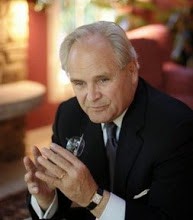
Donald Vish, lecturer
________________________________
Course Description
This course will focus on law as it shapes or reflects social policy not as it facilitates the resolution of disputes between private parties. This course will examine the relationship of law to social, political, cultural and economic conditions in the United States.
Overview of Classes
There will be twelve topics covered in fourteen classes. Here is an overview:
Introduction
1) The People and Social Policy. Tocqueville observations of democracy in America, The Federalist Papers, the antecedents and hallmarks of United States social and legal policy; Separation and balance of powers: the social, civic and political ethos of the United States.
2) The Judiciary and Social Policy
3) The Legislature and Social Policy
4) The President and Social Policy along with twenty one questions about Tocqueville ‘s views on the source of law in a democracy, the role of the legal profession, judicial power, customs, religion, education, race, majority rule, a free press, criminal laws, executive power, possible tyranny of the legislature, individualism, family, material prosperity and love of money, how a new aristocracy may emerge in the United States, how democracy affects wages and why regulation is needed, the equality of men and women, waging war in a democracy, the main objective of law-making in a democracy and the basic social tableaux of the United States.
The Judiciary
5) Capital Punishment and Social Policy: An Evolving Standard of Decency
6) Race, National Origin, School Segregation: Law & Policy, A Pas De Deux
7) Libel: Weaving Together Law and Policy or is it Policy and Law?
8) Corporate Political Activity: Social Policy, Public Policy or Legal Policy?
The Presidency
9) War Powers: Who’s Policy?
10) Enhanced Interrogation: Law or Policy or Neither?
The Legislature
11) Sex, Marriage, Defense of Marriage Act: Limits on Majority Rule
12) The Takings Clause: Economics as Policy
Objective of the Course
The condition of society is normally the result of circumstances, sometimes of laws, more often than not a combination of these two causes; but, once it is established, we can consider it as the fundamental source of most of the laws, customs and ideas which regulate the conduct of nations: whatever it does not produce, it modifies. In order to become acquainted with the legislation and the manners of a nation we must, therefore, start by studying the social condition. –Tocqueville p.58.
What is the objective of the course? This course is designed to introduce the student to the interplay between law and social policy—the civic intersection where culture, social conditions, customs, economics, morals, politics, prejudice and self-interest meet on the way toward formulation of a governing policy that prudently dispenses public and political justice.
Law and social policy encompasses the relationship between customs and statutes, the letter and spirit of the law, the will of the majority and the rights of the minority. It is both current and enduring---the past and present working together.
What is the course about? It is about the sources of law—the confluence of political power, the exigency and temper of the times as well as the more enduring influences of culture, customs, manners and values and priorities of the people. If zeitgeist is the temper of the times law is the temper of the people. The concept of the ‘people’ transcends the numerical majority of the moment.
Social policy may be based on the culture, zeitgeist, necessity of the day, convenience, consent of the governed or popular will. Social policy is more permeable than law.
Law and social policy are engaged in a perpetual a pas de deux—sometimes one leads and at other times follows. While their separate form is distinct, their function is unified. They dance and function as one even though they are clearly two.
The course follows the path mapped by Tocqueville. In order to become acquainted with the law we will study social conditions and manners.
Ultimate Questions Posed by the Course
Every lecture, every class, every case and text considered in the course raises the question (s): What is the relationship between law and social policy? Does law lead or follow? Is law master or servant, shadow or corpus? Is social policy determined by the people or by the judiciary or by the legislature or by the executive branch, the bureaucracy or by the constitution? Might social policy come from experts, customs, culture, social conditions, world opinion or an informed elite?
Class Dates:
January: 9,16, 23, 30
February: 6, 13, 20, and 27
March: 5, 12, and 26
April: 2, 9
Course Syllabus
Basis of grading: There will be a final exam comprised of five essay questions each worth 20 points. The questions will invite straightforward expository prose responses (there are no hidden or subtle issues lurking in the questions). Each question will ask ‘what’ or ‘why’ or both or will begin with instructions to ‘discuss’ or ‘evaluate’ or ‘describe’ or ‘compare’ or ‘provide examples of’. Each question will invite the student to demonstrate both reportorial and analytical skills based on memory, preparation, analysis, critical thinking and command of class presentations. Good reportage will earn a “C” while superb insight and analysis will earn an “A”. [See the attached Appendix for more elaboration on the grading criteria].
You may contact me directly at dvish@middreut.com or you may communicate through a class ombuds committee of three students that will be appointed to facilitate presentation of any complaints, suggestions or requests that an individual student may not want to present directly.
Class plan: There will be fourteen classes beginning January 9 and ending April 9. Twelve class plans have been prepared (unplanned time allows for productivity through flexibility and the opportunity to review, summarize and talk about the final exam): The first four classes are introductory and historical and treat the course resources, the three departments of government and twenty one law and social policy questions considered by Tocqueville in his master work Democracy In America (1835, 1840). The ensuing eight classes will cover (in the sequence in which they will be considered): Capital Punishment, Segregation, Libel, Corporate Political Activity, War Powers, Torture and Terrorism, Family and Governmental Takings.
The first four substantive lectures are animated with a focus on judicial power and social policy, the next two on executive branch power and social policy and the final two on legislative power and social policy. Four broad types of law and policy shape the course: ECONOMIC (Takings and Corporate Political Activity) LIBERTY (Libel and Family), THE STATE (War Powers and Enhanced Interrogation) and SOCIETY (Capital Punishment and Segregation).
Textbooks
1) Erwin Chemerinsky, Constitutional Law: Principles and Policies (4th Edition, Aspen Student Treatise Series, 2011). ISBN 978-0-7355-9808-3.
2) The Federalist Papers, Introduction and Notes by Charles R. Kesler, Edited by Clinton Rossiter (Signet Classic, 1999) First Signet Classic Printing, April 2003.
3) Alexis de Tocqueville, Democracy in America (Penguin Classics, 2003) ISBN-13: 978-0-140-44760-6.
DV
August 7, 2011
Lecture #1: INTRODUCTION: The Power of the People
[January 9, 2012]
The people reign in the American political world like God over the universe. --Tocqueville 71
______________________________________________
Assignments for Class #1: Introduction: The Power of the People, Money and Property
1. Alexis de Tocqueville, Democracy in America (Penguin Classics 2003) (With an Introduction and Notes by Isaac Kramnick) (Cited in the Syllabus as “Tocqueville”). The aim of this book was to reveal American laws. [335]. The discussion of Tocqueville culminates in the 4th Class with a discussion of twenty policy points presented in the book. Read Section III of the Introduction by Kramnick in its entirety, pages xxiv through xxxvii and pages xliii through xlvii, the concluding part of Section IV. Also read the author’s Introduction in part, pages 11-16: A new political science is needed for a totally new world. [16].
2. Tocqueville Chapter 2 pp. 36-58 (always read the introductory head notes at the beginning of each chapter). This chapter is an overview of the social, cultural, religious mix that the United States is. It sets the course for the course. Many of its specific topics will be treated in more detail in the 4th Class: the national character, common language, equality, land, liberty, the cultural differences between north and south, the nature of ‘gold seekers’, the social theory of the United States, the source and object of laws both penal and political, public education, religion, the spirit of religion and liberty (in opposition or support?) the relationship between law and social conditions.
3. Tocqueville Chapter 3 “Social Conditions” and their impact on the laws pp. 58-67 especially the role the laws of inheritance play in the progress of human affairs. I am not even aware of a country where the love of money has a larger place in men’s hearts or where they express a deeper scorn for the theory of a permanent equality of possessions. [64].
4. Tocqueville Chapter 4 pp. 68-71 “The Sovereignty of the People”: The people reign in the American political world like God over the universe. [71]. The collective will of the nation, two impediments to progress before independence, its role in all things.
5. Chemerinsky Chapter 1, Section 1.4 “How Should the Constitution Be Interpreted?” pp.15-26. END
Lecture #2: The Judiciary
[January 16, 2012]
…there is no liberty if the power of judging be not separated from the legislative and executive powers. The Federalist Papers, No. 78: The Judiciary Department (Hamilton)
…an American judge is dragged, despite himself, on to the political field. Tocqueville 121
There is hardly a political question in the United States which does not sooner or later turn into a judicial one. Tocqueville 315
…the idea that gold and silver mines are the source of national wealth: a fatal idea which has done more to impoverish those European nations who were enslaved by it and has destroyed more men in America than the united influence of war and bad laws. Tocqueville 41.
______________________________________
Assignments for Class #2:
1. The Federalist Papers, No. 78: The Judiciary Department (Hamilton) pp. 463-471.
2. Alexis De Tocqueville, Democracy in America (Penguin Classics, 2003) Chapter 6 Judicial Power in the United States…pp. 116-124; The Federal Courts of Justice pp.161-177 (especially the head notes of each section); page 315. The three characteristics of judicial power, the political power of the judge, the power to declare laws unconstitutional [here is the threshold of law and social policy].
3. Tocqueville Chapter 8 “The Federal Courts of Justice” pp. 161-177.
4. Marbury v. Madison 5 U.S. 137 (1803)
5. Erwin Chemerinsky, Constitutional Law: Principles and Policies (4th Edition, Aspen Publishers, New York), Chapter 2, The Federal Judicial Power pages 32-37, 43-45, 52 (Advisory Opinions) 130-135 (Political Questions).
End
Lecture #3: The Legislature
[January 23, 2012]
It is to a legislature thus constituted that almost all the authority of the government has been entrusted. Tocqueville Ch XV
The executive power in our government is not the only, perhaps not even the principal, object of my solicitude. The tyranny of the legislature is really the danger most to be feared, and will continue to be so for many years to come. The tyranny of the executive power will come in its turn, but at a more distant period. Tocqueville quoting Thomas Jefferson Ch. XV
____________________________________________________
Assignments for Class #3:
1. Chemerinsky Chapter 3 The Federal Legislative Power Section 3.1 pp. 238-240; Section 3.3.3—3.3.5 Commerce Clause Before and After 1937 pp. 251-269.
2. U.S. v. Lopez 514 U.S. 549 (1995) (limits of commerce clause found). Confer Chemerinsky pp.269-272.
3. Can Congress overrule the Supreme Court? Chemerinsky Section 3.6.2 “What is the Scope of Congress’s Power?” pp. 299-307.
4. Tocqueville Chapter 8 “The Federal Constitution: Legislative Powers” pp. 137-140.
5. The Federalist Papers No. 10 (Madison) on factions ( *compare with Tocqueville on associations) pp. 700-702; No. 47 (Madison) and No. 51 (Madison) on checks and balances, separation of powers.
End
Lecture #4: The Presidency and Twenty+-Policy Issues Observed by Tocqueville
[January 30 2012]
The love of comfort has become the dominant taste of the nation. Tocqueville 618.
____________________________________________
Assignments for Class #4:
1. The Federalist Papers No. 69 (Hamilton) “The Real Character of the Executive” pp.—414-421.
2. Tocqueville Chapter 8 “The Federal Constitution: The Executive Power” pp.-141-161.
3. Tocqueville commentary on: (1) fear of legislative power (288, 304-305), (2) tyranny of the majority (68, 71, 223-224, 287-304), (3) war (755-757), (4) the law of property and inheritance (60-64, 840-841), (5) a free press (213, 222, 811-812), (6) judicial power (122, 314, 812), (7) love of money (41,64, 616-618, 713, 721-722), (8) how a new aristocracy may emerge in America (645-648), (9) lawyers (…lawyers form the only enlightened class not distrusted by the people. 314, 307-315), (10) wages (675-677), (11) women (687, 692, 696, 700), (12) main objective of legislation and legislator (49, 817), (13) the source of laws (49, 57, 58, 71, 319, 335, 357, 362), (14) freedom and equality (583-587), (15) individualism (583- 586, 587, 589-91, 683), (16) religion (54-55, 336-352), (17) public education American style (53-54, 65 [job preparation], 352-357), (18) the social theory of the United States (42-47), (19) voluntary associations [compare with The Federalist Papers No. 10 ( Madison on Factions] (219-227, 595-609, 700-702), (20) race (398-426); (21) manners (705).
The President may deploy military force preemptively against terrorist organizations or the States that harbor or support them, whether or not they can be linked to the specific terrorist incidents of September 11. John C. Yoo, Deputy Assistant Attorney General, Office of Legal Counsel, September 25, 2001.
End
Lecture #5: Capital Punishment
[February 6, 2012]
Never was the death penalty more frequently prescribed and never more rarely enforced. [On the original 17th century Puritan codes in America] Tocqueville 49.
No Country administers its criminal law with more kindness than the United States. While the English seem bent on carefully preserving in their penal legislation the bloody traces of the Middle Ages, the Americans have almost eliminated the death penalty from their codes. Tocqueville 653 (1840).
___________________________________
Assignments for Class #5:
1. Furman v. Georgia 408 U.S. 238 (1972).
2. Gregg v. Georgia 428 U.S. 153 (1975); Woodson v. North Carolina 428 U.S. 280 (1976).
3. Herrera v. Collins, 506 U.S. 390 (1993) (Justice Blackmun dissenting).
4. Callins v. Collins (Justice Blackmun dissenting) 510 U.S. 1141 (1994).
5. Atkins v. Virginia 536 U.S. 304 (2002). *Give special attention to the METHODS for determining the evolving standard of decency. Is this a template for law and social policy working together?
6. Roper v. Simmons 543 U.S. 551 (2005).
7. Kennedy v. Louisiana 554 U.S. 47 (2008).
8. Baze v. Rees 553 U.S. 35 (2008) see opinions of Justices Stevens, Scalia and Thomas on cruel and unusual punishment.
End
Lecture #6: Race
His son is excluded from the school where the sons of Europeans come to be educated. At the theatre, any amount of gold could not buy him the right to take his seat beside his former master; in hospitals he lies apart. The black is allowed to pray to the same God as whites but not at the same altars. Tocqueville 402.
[February 13, 2012]
Americans have granted their judges the right to base their decisions upon the constitution rather than upon the laws. –Tocqueville 118
A lengthy war in a democratic country places freedom under threat. –Tocqueville 755
_______________________________________
Assignments for Class #6:
1. Dred Scott v. Sandford 60 U.S. 393 (1857).
2. Plessy v. Ferguson 163 U.S. 537 (1896).
3. Brown v. Board of Education 347 U.S. 483 (1954).
4. Korematsu v. U.S. 214 (1944). [Also germane to Lecture #10].
5. Tocqueville “The Position of the Black Race in the United States” pp.398-426.
6. The Federalist Papers No. 54 (Madison) on why slaves are counted in the census for purposes of congressional representation pp. 334-338.
7. Chemerinsky Chapter 9, Section 9.1.1 pp.684-685, 691 (first two paragraphs only), Section 9.3.1 “Race Discrimination” pp. 706-726.
End
Lecture #7: Libel
[February 20, 2012]
In order to enjoy the priceless advantages guaranteed by press freedom, one must submit to the unavoidable evils it produces. --Tocqueville 213
_____________________________
Assignments for Class #7:
1. Tocqueville “The Freedom of Press in the United States” Vol. 2, Chapter 3, pp.209-219.
2. The Federalist Papers No. 84 (Hamilton) (arguing against a bill of rights) on liberty of the press (513).
3. Chemerinsky “First Amendment Limits on Tort Liability” pp. 1078-1088, 1090-1091; Section 6.3.1 “Rejection of Application Before Civil War” pp. 503-509.
4. New York Times v. Sullivan 376 U. S. 254 (1964).
5. Curtis v. Butts 388 U. S. 130 (1967).
6. Gets v. Welch 418 U. S. 323 (1974).
7. Hustler Magazine v. Falwell 485 U. S. 46 (1988).
8. Dun & Bradstreet v. Greenmoss Buildings, Inc. 472 U. S. 749 (1985).
The press is by far the most effective democratic instrument of freedom. –Tocqueville 8 12.
End
Lecture #8: Corporate Political Activity
[February 27, 2012]
The business aristocracy seldom lives among the industrial population it manages; it aims not to rule them but to use them. –Tocqueville 648
Assignments for Class #8:
1. Tocqueville, “How An Aristocracy May Emerge from Industry,” Vol. 2, Chapter 20, pp. 645-648.
2. Austin v. Michigan Chamber of Commerce 494 U.S. 652 (1990): corporate wealth can unfairly influence elections [494 U.S. at 660]. REVERSED in….
3. Citizens United v. Federal Election Commission 130 S. Ct. 876 (2010).
4. Kentucky Constitution (1890) Section
5. Chemerinsky, Chapter 11, Section 11.3 “Is Corporate Spending Protected” pp. 1117-1121; “Spending Money as Political Speech pp.1103-1116.
Generally speaking, I think the industrial aristocracy which we see rising before our eyes is one of the most harsh ever to appear on the earth; but at the same time, it is one of the most restrained and least dangerous. However, this is the direction in which the friends of democracy should constantly fix their gaze; for if ever aristocracy and the permanent inequality of social conditions were to infiltrate the world once again, it is predictable that this is the door by which they would enter. –Tocqueville 648.
End
Lecture #9: War Powers
[March 5, 2012]
There are two things it will always be difficult for a democratic nation to do: beginning and ending a war. Tocqueville 755
A lengthy war in a democratic country places freedom under threat. Tocqueville 755
In America, conscription is unknown; men are enlisted for payment. Compulsory recruitment is so alien to the idea and so foreign to the customs of the people of the United States that I doubt whether they would ever dare to introduce it into the law. Tocqueville 260
___________________________
Assignments for Class #9:
1. Chemerinsky Chapter 3 Section 3.5.1 “War Powers” pp. 290-291; Chapter 4 Section 4.1 “Inherent Powers” pp.343-348; 4 Section 4.3 “Executive Privilege” p.362; Section 6.3 “War Powers” pp. 381—392 (including presidential power and the war on terrorism, detentions, military tribunals).
2. Tocqueville Vol. 2 Part 3 Chapter 22 “Why Democratic Nations Have a Natural Desire for Peace and Why Democratic Armies Naturally Seek War” pp. 750—757; Chapter 23 “A Few Remarks on War in Democracies” pp. 767-773.
3. The Federalist Papers No. 23, 24, 25, 26, 27 (Hamilton) pp. 148-173.
4. The Federalist Papers No. 69 (Hamilton) on executive branch power pp.414-416 only; and No. 74 (Hamilton) pp. 445-446.
(in process August 5, 2011)
Lecture #10: Enhanced Interrogation
[March 12, 2012]
All those who wish to destroy freedom within a democratic nation should realize that the most reliable and the most rapid means of achieving it is war. Tocqueville p.756
The clatter of arms drowns out the voice of the law. Thoreau
____________________________
Assignments for Class #10:
1. Federalist Papers No. 34 and No. 41 (Hamilton) cited by John Yoo.
1. Memorandum of John C. Yoo for the President (this memo has been withdrawn by the current Administration as not reflective of law or policy of the United States).
THE PRESIDENT'S CONSTITUTIONAL AUTHORITY TO CONDUCT MILITARY OPERATIONS AGAINST TERRORISTS AND NATIONS SUPPORTING THEM
The President has broad constitutional power to take military action in response to the terrorist attacks on the United States on September 11, 2001. Congress has acknowledged this inherent executive power in both the War Powers Resolution and the Joint Resolution passed by Congress on September 14, 2001.
The President has constitutional power not only to retaliate against any person, organization, or State suspected of involvement in terrorist attacks on the United States, but also against foreign States suspected of harboring or supporting such organizations.
The President may deploy military force preemptively against terrorist organizations or the States that harbor or support them, whether or not they can be linked to the specific terrorist incidents of September 11.
September 25, 2001
MEMORANDUM OPINION FOR THE DEPUTY COUNSEL TO THE PRESIDENT
By John C. Yoo, Deputy Assistant Attorney General, Office of Legal Counsel
(In process 8-7-11)
Lecture #11: Family
[March 26, 2012]
___________________________
Assignments for Class #11: Marriage, Procreation and Sexual Orientation
1. Meyer v. Nebraska 262 U.S. 390 (1923).
2. Loving v. Virginia 388 U.S. 1 (1967).
3. Goodrich v. Dept. of Pub. Health 790 N.E.2d 941 (MA. 2003).
4. Buck v. Bell 274 U.S. 200 (1927).
5. Skinner v. Oklahoma 316 U.S. 535 (1942).
6. Bowers v. Hardwick 478 U.S. 186 (1986).
7. Romer v. Evans 517 U.S. 620 (1996).
8. Lawrence v. Texas 539 U. S. 558 (2003).
9. Chemerinsky Chapter 9 Section 9.7.4 “Discrimination Based on Sexual Orientation” pp.807-809.
10. Chemerinsky Chapter 10, Section 10.2 “The Right to Marry” pp. 818-821 (and cases cited in Section 10.2.1 on Defense of Marriage Act and California’s Proposition 8) **(Give special thought to whether the executive branch can refuse to defend a congressional law); Section 10.3 “The Right to Procreate” pp. 829, 833-834; Section 10.4 “Sexual Activity and Orientation” pp. 866-868.
I hold it to be an impious and detestable maxim that, politically speaking, the people have a right to do anything; and yet I have asserted that all authority originates in the will of the majority. Am I, then, in contradiction with myself? Tocqueville 292.
In process 8-7-11
Lecture #12: The Takings Clause
[April 2, 2012]
Thus it is that the effect of democracy is not to impose certain manners on men but, in a sense, to stop them having any at all. –Tocqueville p. 705
…usually the love of wealth lies at the heart of Americans’ actions…--Tocqueville p. 713
_________________________________
Assignments for Class #12:
1. Pennsylvania Coal v. Mahon 260 U.S. 415 (1922).
2. Keystone Bit. Coal v. Benedictus 480 U.S. 470 (1987).
3. Eastern Industries v. Apfel 524 U.S. 498 (1998) (Coal Act).
4. Berman v. Parker 348 U.S. 26 (1954).
5. Kelo v. City of New London 125 S. Ct. 2655 (2005) (economic development).
6. Nollan v. California Coastal Comm. 483 U.S. 825 (1987) (beach access).
7. Chemerinsky Chapter 8, Section 8.4 “The Takings Clause” p. 656, “What is a Taking for Public Use” pp.678-681.
End. August 7, 2011.
Sunday, August 7, 2011

Saturday, January 8, 2011
Sunday, December 19, 2010
2011 Syllabus Law and Literature Brandeis School of Law
December 19, 2010
Poets are the unacknowledged legislators of the world.
---Percy Bysshe Shelley
LAW & LITERATURE
Spring 2011 / Louis D. Brandeis School of Law / University of Louisville
Donald Vish, lecturer
___________________________________________________________________________
Course Description
The course presents insights into the nature of law and justice through the prism of literature. Each class explores timely and timeless topics arising out of the search for justice. How can Orestes extricate himself from the duty to avenge the murder of his father by killing his own mother? How shall Captain Vere punish Billy Budd’s reflexive act resulting in the death of a superior officer aboard ship in wartime? How is Antigone to obey the religious law requiring her to bury her brother and the state’s decree that she may not bury a traitor in the city? Is justice a pendulum that swings between the letter of the law and the spirit of equity? Through the eyes of art and the imagination of storytellers we shall considerer the question over and over again: What is justice?
Objective: saper vedere
If at the end of a class a student is able to say: “Now I know something I didn’t know before’ then the CLASS has been successful. If at the conclusion of class a student is able to say “I have something to think about’ then the TEACHER and the STUDENT have been successful. Leonardo said the secret to knowledge is saper vedere, to know how to see.
If at the completion of the entire Law & Literature course a student can say:
“I know HOW to see” then the course has set the course for dealing with the question: What is justice?
Law is not algebra. Justice cannot be codified according the rules of calculus. The path of justice is often littered with obstacles, conundrums, paradox, conflicting values, distractions, mirages and poor signage.
The use of art and poetry to engage justice issues is not intended to provide the student with a cohesive and comprehensive philosophy of law and jurisprudence. The successful student is invited to experience, question, theorize and think.
The course material illustrates rather than instructs. The course is a journey not a destination, a beginning not a conclusion. The course is about learning how to travel not about making a map after the journey is over.
Jan: 6, 13, 20, 27,
Feb: 3, 10, 17, 24,
Mar: 3, 10, 24, 31,
April: 7, 14
Break: Mar: 14 20
___________________________________________________________________
Lecture #1: INTRODUCTION
[January 6, 2011]
________________________________________________________________________
Course Syllabus
Basis of grading: Three papers for each of the three or four principal literary assignments will be weighted 20% for the first, 30% for the second and 50 % for the third. Each paper may be 750 words and relate the story line or a character to the important legal principles you discern in the text. We are interested in the story line ONLY as it impacts law and justice issues. The paper is due at the class scheduled two weeks AFTER the literary work is discussed in class. Good reportage is a “C” and superb insight and analysis is an “A”. See the attached Appendix for more elaboration on grading. You may contact me directly at dvish@middreut.com to discuss the class or your paper. A class ombuds committee of three will be appointed to present any complaints, suggestions or requests that an individual student may not want to present personally to the lecturer.
Class plan: There will be fourteen classes beginning January 6 and ending April 14. Three or four key literary works will be considered in lectures: #4 (January 27), #7 (February 17), #10 (March 10, this is the week before Spring break. We may defer discussion of Billy Budd scheduled for March 10 until AFTER the break), and #12 (March 31, subject to completion of Billy Budd). Other literary works and fragments treating law and justice themes and selected to enhance your insights into the principal literary works will be discussed in the intervening lectures. It is NOT necessary for you to read or read about any item marked with an asterisk (*). The material marked with an asterisk (*) will be referenced and described by the lecturer during the class.
Facebook: A class Group Page has been created under the title: Law & Literature @ Louis D. Brandeis School of Law. Weekly assignments will be posted along with discussion opportunities.
Textbooks: Richard A. POSNER, Law and Literature, Third Edition [Harvard University Press, 20090]. (Referred to as POSNER in this Syllabus).
Major Resource on line: LAW & HUMANITIES: a Bibliography of Law and Literature, Professor Daniel L. Solove, The George Washington University Law School (this is a tour de force, consult it before each class to see if there is anything that interests you or helps you with the assignment). http://docs.law.gwu.edu/facweb/dsolove/Law-Humanities/writers.htm
Reading assignments: many can be accessed online. The following works may be purchased from Amazon.com and delivered for less than $100.00 or may be read through excerpts available in the two textbooks. Only Billy Budd, Sailor must be read in its entirety. Here are the major literary works:
1. William Shakespeare, The Merchant of Venice (Oxford World's Classics: the Oxford Shakespeare) Jay L. Halio (Paperback - 2008). POSNER pages 92, 139-163. Also read the plot outline or story synopsis of Measure for Measure by POSNER pages 154-163 and pay special attention to the chart “Legal Antinomies’ on page 162. Lecture # 4, January 27, 2011.
2. Aeschylus, The Orestia (Paperback) Agamemnon, The Libation Bearers and The Eumenides (525-456 B.C.E). (Penguin Classics) by Aeschylus, W. B. Stanford, and Robert Fagles (Paperback - Feb 7, 1984) and see POSNER pages 86-92 also http://en.wikipedia.org/wiki/The_Oresteia Lecture # 7, February 17, 2011.
3. Herman Melville, Billy Budd, Sailor (An Inside Narrative) (1924) (Harrison Hayford & Merton Seals, eds. U. Chicago Press 1962). Use of the Hayford & Seals edition is mandatory. Read the work in its entirety along with the essays, commentary and observations about the story. Lecture #10, March 10 2011 (this is the week before Spring break. We may decide, with advice and counsel of the entire class, to defer this important work until AFTER the Spring break). In addition, see POSNER pp. 211-222.
4. Albert Camus, The Stranger (1942) [Student Guide, Landmarks of World Literature] by Patrick McCarthy, Paperback 2004. (Especially Part Two, the trial) or see POSNER pp. 60-70. Lecture # 12, March 31 2011: subject to completion of Billy Budd lectures.
5. Franz Kafka, The Trial [introduction by George Steiner] A. A. Knopf, Inc. Schocken Books, Inc. ISBN 0-8052-1040-7 or see POSNER pp. 172-187 Lecture # 15, [Provisional lecture, if needed. Classes end April 14, 2011].
Literary fragments, excerpts and the expository prose and poetry are identified in the assignments section of each lecture plan. If you have trouble finding the text online, please let me know by email. If you elect to write one paper you can begin right away and proceed during the semester at your own pace. If you elect to write five papers, one on each of the principal literary works, the paper is due at the beginning of the lecture at which the work will be considered.
The Study of Law and Literature
The law and literature movement focuses on the interdisciplinary connection between law and literature. This field has roots in two major developments in the intellectual history of law -- first, the growing doubt about whether law in isolation is a source of value and meaning, or whether it must be plugged into a large cultural or philosophical or social-science context to give it value and meaning; and, second, the growing focus on the mutability of meaning in all texts, whether literary or legal. Those who work in the field stress one or the other of two complementary perspectives: law in literature (understanding enduring issues as they are explored in great literary texts) and law as literature (understanding legal texts by reference to methods of literary interpretation, analysis, and critique). From Wikipedia http://en.wikipedia.org/wiki/Law_and_literature
Journals: Law and Literature
The Cardozo Studies in Law and Literature, a leading journal on the subject for many years, has changed its name and is now part of the University of California Press (access requires subscription): http://www.ucpressjournals.com/journal.asp?j=lal
Lawyers and Literature
Website created by James Elkins, Professor of Law, West Virginia University, for his course on lawyers and literature. Various readings, links and suggestions for students and bibliographies included
Assignments for Class #1:
1. Book of Genesis: 4:1-24 The Story of Cain and Abel: 9:6, the law as explained to Noah.
Is the judge fair? Is the punishment just? Where does it come from and who imposes it? What is the nature of the justice system in the story? Identify all of Cain’s crimes. Which is the most serious? What does it mean to be avenged sevenfold? Is Lamech a murderer? Is he punished or protected?
2. Psalm 19, 7-11. What are the elements of a good legal system according to Psalm 19? Where does the law originate? What is its source, its authority? Does the source of the law in Psalm 19 have anything in common with the United States Constitution or the Declaration of Independence? Does crime pay?
3. Dante, The Divine Comedy Canto V, XX, XXVIII line 142, XXXIV [Google the word ‘contrapasso’ with Dante’s name]. Is Cain’s punishment consistent with Dante’s theory of contrapasso? What exactly is Cain’s punishment(s)? Did God provoke Cain?
____________________________________________________
Lecture #2 and #3: WORDS
[January 13 & 20, 2011]
______________________________________________________________________________
Assignments for Classes #2 and #3:
1. Mr. Justice Holmes, dissent Lochner v. New York, 198 U. S. 45, 74 (1905) (Holmes, J., dissenting) POSNER pp.341-349. See also POSNER discussion of rhetoric Chapter 9, pp. 329,331-332, 337 (Homer) -339, 450-455.
2. Richard POSNER, Law and Literature A Relation Reargued, Virginia Law Review 72, 1986, IV A. Rhetoric and Knowledge and especially his critical discussion of Justice Holmes’ dissent in Lochner “…a rhetorical masterpiece.” (POSNER p.347). How can Judge POSNER reconcile his criticism and his praise? Does POSNER approve of the use of rhetoric in the law?
3. Through the Looking Glass by Lewis Carroll Chapter VI Humpty Dumpty (his digression on words) http://www.sabian.org/Alice/lgchap06.htm
4. Harper Lee, To Kill a Mockingbird, Chapter 19 (Mr. Gilmer’s cross examination of Tom Robinson. Begin with Tom Robinson’s answer to the last question posed by Atticus Finch. p. 386 Law & Literature: Text & Theory, edited by Lenora LEDWON (New York, 1996) (available online from Google Books).
5. Benjamin Franklin, Poor Richard’s Opinion. LEDWON, pp. 469.
6. Alice’s Adventures in Wonderland, Chapter XI, Who Stole the Tarts? and Chapter XII Alice’s Evidence: http://www.aliceinwonderland.com/ch11.html / http://www.aliceinwonderland.com/ch12.html ALICE'S ADVENTURES IN WONDERLAND/by Lewis Carroll/THE MILLENNIUM FULCRUM EDITION 2.7a/(C) 1991 Duncan Research
It is not necessary to read the following work (s) that will be cited or explained during the lecture:
*7. Ovid, Metamorphoses Book 12 (612-631), and Book 13 The Judgment of Arms (1-393). Upon the death of the great warrior Achilles on the battlefield of Troy, two people claims his sword and shield. An assembly is convened to hear the evidence and decide who is worthy: the wily Odysseus or the warrior Ajax. Each makes their case their case to the jury. http://www.mythology.us/ovid_metamorphoses_book_13.htm. The lesson from this debate is in the last 16 lines of the report.
*8. Aristophanes, The Clouds (419 BCE, Greece). A man wants his son to study rhetoric in order to learn to talk his way out of debt. http://records.viu.ca/~johnstoi/aristophanes/clouds.htm translation by Ian Johnston of Malaspina University-College (Vancouver Island University since 2008), Nanaimo, BC. The translation has certain copyright restrictions. For information please use the following link: Copyright. For comments or question please contact Ian Johnston.
*9. The Internet Encyclopedia of Philosophy, Protagoras of Abdera.http://www.utm.edu/research/iep/p/protagor.htm Author Information: Carol Poster Email: cposter@english.fsu.edu English Department State University FL 32306.
*10. Plutarch, Solon Athenians used to cover up the ugliness of things with auspicious and kindly terms, giving them polite and endearing names.
*11. Apollodorus of Athens (born c. 180 B.C.E.) (The Library 3.180), Pausanias and Suidas both recount the myth of the rape of Ares’ daughter Alkippe by Poseidon's son Aalirrhothios. Ares slew the rapist and was tried by the gods for murder upon the Arepagos. The trial was held on the “Hill of Ares” overlooking Athens. The trial raises the following questions? Why was the trial held at night? What role did rhetoric play in the trial? What is the “Areopagus”? See also Pausanias, Guide to Greece 1.28.5. Who was Apollodorus and what role did he play in the courts of Athens?
_____________________________________________________
Lecture # 4: JUSTICE, LAW & MERCY
[January 27, 2011]
_____________________________________________________
Assignments for Class #4 (classes #4, #5 and #6 are interrelated treating themes of justice, law, mercy and revenge):
1. William Shakespeare, Merchant of Venice (1597) (Oxford World's Classics: the Oxford Shakespeare) by William Shakespeare and Jay L. Halio (Paperback - May 15, 2008) or see POSNER pp. 139-163 Lecture # 4, January 27, 2011. See especially Portia's argument, The Merchant of Venice, IV, i. Read also Act V and answer the question: Is Portia consistent? What does the play have to say about law and equity? Also read the plot outline, story synopsis and commentary on Shakespeare’s Measure for Measure by POSNER pp. 154-163 see also Lecture #5. The two plays should be discussed and evaluated together.
2. Steiker, Carol S. Lecture on the role of mercy and the administration of criminal justice (one hour, begins 14 minutes into tape, the lecture is less than an hour): Watch a webcast of Professor Steiker's lecture. (RealPlayer Required) @ http://www.law.harvard.edu/news/spotlight/criminal-law/03_steiker.html (using fiction to illustrate truth). The following text is read in the preceding film clip:
3. Austin Sarat, Nasser Hussain, Forgiveness, mercy, and clemency, Mercy and the Administration of Criminal Justice by Carol S. Steiker [22 pages, Google Books, books.google.com/books?isbn=0804753334... http://books.google.com/books?id=KOAoQiRFo70C&pg=PA16&lpg=PA16&dq=Steiker+mercy+justice&source=bl&ots=.. ]
4. O’Henry. Summarize the two O’Henry stories used by Professor Steiker. Can the two stories be reconciled?
5. Genesis 4: 13-19. After Cain asks for mercy, what happens? What is the section heading in the King James Version for this verse? The template described in the story illustrates a key factor about mercy and justice: the greater good is served when mercy is shown.
6. Luke 15: 11-32: The Parable of the Prodigal Son. What arguments does the faithful, prudent, older brother make about mercy granted to the prodigal son? Are they valid?
It is not necessary to read the following works that will be cited by the lecturer:
*7. Dan Markel, Against Mercy, Florida State University College of Law Minnesota Law Review, Vol. 88, 2004
*8. New Testament: The Gospel of John 8:1-11. The Scribes and Pharisees bring the adulteress to Jesus for execution by stoning. Confer, The Hebrew Bible: Micah 6:8; Zechariah 7:9.
*9. New Testament: The Parable of the Workers in the Vineyard Matt: 20:1-16. Equal pay for UN-equal work.
*10. Do unto others as you would have others do unto you. Matt: 7:12
______________________________________________________
Lecture #5: LESSONS FROM SHAKESPEARE: JUSTICE, LAW & MERCY
[February 3, 2011]
Assignments for Class #5 (classes #4, #5 and #6 are related):
1. POSNER, Measure for Measure pp. 154-163 (law and equity, rigidity and flexibility). Define the word desuetude and be prepared to say what you think of it.
Shakespeare, Measure for Measure (1604): This play is the best introduction to Shakespeare’s overall view of the law. While The Merchant of Venice has received more legal commentary, Measure for Measure has more legal themes: for example kill all the lawyers… What happens to mercy and the law in this play? What does the play have to say about morality and the law and corrupt judges? How is Angelo like Creon, Captain Vere and Draco? What is the penalty for fornication? Is it better to enforce laws strictly or equitably? Do you think the anti-fornication used to prosecute Claudio would violate his right to privacy in modern American law?
2. Bowers v. Hardwick, 478 U.S. 186 (1986) [upholding the Georgia sodomy statute.] Overruled in Lawrence v. Texas, 539 U.S. 558 (2003). Compare the opinion in Bowers to the legal themes in Measure for Measure: Extreme punishment/minor offense; law to enforce morals; is immoral also illegal? What is the importance of respect for the law in enforcement of the law? How does the law work when the source of law is power?
3. Victor Hugo, Les Miserables. Google or otherwise research Bishop Myriel and Jean Valjean and summarize the story of the candlesticks. Is this a story of justice, mercy or madness?
It is not necessary to read the following works that will be cited by the lecturer:
*4. Kornstein, Daniel J., A Scarecrow of the Law from Kill All the Lawyers: Shakespeare’s Legal Appeal (1994 Princeton University Press). This is a tour de force analysis of the Merchant of Venice and Measure for Measure as they enunciate theories of justice.
_____________________________________________________
Lecture #6: REVENGE & MERCY
[February 10, 2011]
______________________________________________________
Assignments for Class #6 (lectures #4, #5 and #6 are related):
1. Shakespeare, Hamlet (Paperback) the grave digging scene: Why not that be the skull of a lawyer? Where be his quiddities now, his quillities, his cases, his tenures, and his tricks? Hamlet, V, i, 99. See POSNER pp. 103-123
2. The New Testament, Matthew 5:38: An eye for an eye… A law of mercy?
It is not necessary to read the following works that will be cited by the lecturer:
*2. Shakespeare, Henry V, IV, I, 132 (the "following orders" defense): Henry V orders the massacre of prisoners at Agincourt.
*3. Shakespeare, Timon of Athens. Pity is the virtue of the law. III, v, 8. Is pity the same thing as compassion? As mercy?
*4. Shakespeare, Taming of the Shrew I. ii, 277: Do as adversaries do in law, / Strive mightily but eat and drink as friends. Note: Does the ‘adversaries’ reference describe a system of law (the ‘adversarial system’) that is peculiar to England or does it pervade Europe. What other types of legal systems are alternatives to the ‘adversarial’?
*5. Shakespeare, The Winter's Tale: as she hath/ Been publicly accused, so shall she have/ A just and open trial. II, iii, 201.
*6. Shakespeare, Julius Caesar, III, 2. The funeral oration is a masterpiece of forensic oratory. See POSNER pp. 450-455.
*7. See Kill all the lawyers? Shakespeare's legal appeal By Daniel Kornstein (1994 Princeton University Press) Chapter 5 Skull of a Lawyer, Hamlet.
_____________________________________________________
Lecture #7: REVENGE & MERCY
[February 17, 2011]
______________________________________________________
Assignments for Class #7:
1. Aeschylus, The Orestia (Paperback) Agamemnon, The Libation Bearers and The Eumenides (525-456 B.C.E.) (Penguin Classics) by Aeschylus, W. B. Stanford, and Robert Fagles (Paperback - Feb 7, 1984) and see POSNER “Revenge Literature” pp. 86-92 and http://en.wikipedia.org/wiki/The_Oresteia. Lecture # 7, February 17, 2011.
2. POSNER, Chapter Two Revenge as Legal Prototype pp. 49-92.
3. SEE http://records.viu.ca/~johnstoi/aeschylus/oresteiatofc.htm Text of The Orestia . This is the webpage of Ian Johnston Malaspina University-College (Vancouver Island University since 2008) Nanaimo, British Columbia and prepared, September 2002. See also an analysis by Ian Johnston http://records.viu.ca/~johnstoi/introser/aeschylus.htm focused on the first play in the trilogy Agamemnon.
Lecture #8: REVENGE & THE NATURE OF LAW
[February 24, 2011]
______________________________________________________
Assignments for Class #8:
1. Charles Dickens, The Trial of Bardell v. Pickwick [from The Pickwick Papers]; Why didn’t Bardell and Pickwick testify? What do you think of the reason? What does Mr. Perker think of hungry jurors? [Begin your reading at “I wonder what the foreman of the jury, whoever he’ll be, has got for breakfast,” said Mr. Snodgrass…..to “I know’d what ‘ud come o’ this here mode o’ doin’ bis’ness. Oh Sammy, Sammy….” POSNER pp.187-191, 224 (is the jury always a safeguard?).
2. Charles Dickens, In Chancery [from Bleak House]. What does the suit Jarndyce v. Jarndyce mean? (What do you think about justice being rendered according to the conscience of the judge or jury? How does equity fare in this story? Where is the pendulum now?)
3. POSNER pp. 75-86 Revenge as Legal Prototype. See also p. 162 (and try to add to the list). Compare the concept POSNER calls ‘composition’ (page 83) and the phrase ‘restorative justice’ (Google the phrase).
It is not necessary to read the following works that will be cited by the lecturer:
*4. Cicero, On Duties. On Duties, or On Obligations, has generally been the most popular of Cicero’s writings, and perhaps exercised more influence on thought and standards of the western world than any other secular work ever written. Michael Grant, Penguin Classics (1971): Book I. VII, 20 [role of justice and kindness], 21 [private property], 22 [duties to the state], 23 [foundation of justice], 24 [reason for crime], 26, 27 [injury and injustice], 28 [passive injustice], 29 [self-interest], 31 [the two principles of justice], 33 [chicanery], XI. 33 [limits to retribution and punishment], XIV. 42 [kindness and generosity], XVI. 50 [kindness], 51, 52 [public property], 63 [the soul of justice], 71 [duty to engage in public affairs], 87 [electioneering and scrambling for office], Book II, 49, 50 [winning admiration through lawyering], 51 [capital charges against the innocent and defending the guilty], 66, 67[eloquence at the bar], 70, 71 [ representing the poor], 74 [property taxes], 78-80 [agrarian laws], 83 [impartiality], 84 [debt and public safety], 85 [courts of equity], Book III, 54-57, 65-67 [a seller’s duty to disclose], 60-61 [criminal fraud], 69 [civil law versus moral law], 70 [good faith in contracts], 97 [doing evil to do good]. How would Cicero resolve conflicting duties? “The historical roots of casuistry can be found in ancient Rome and Greece. Cicero, the great rhetorician, described early casuist methodology in his work, On Duty (106-43 BCE). In it he states that “we need to consider ‘what is most needful in each individual case,’ … and that .different circumstances should be carefully scrutinized in every instance.’” (David Jonsen, The Abuse of Casuistry, 1988 p. 10). In On Duty, Cicero explores this proposal in cases that he presents where “conflicts of duty appear to arise.” His approach: what is most needful in each individual case, Jeramy Townsley, professor Butler University, 2003, http://www.jeramyt.org/ ; http://www.jeramyt.org/papers/casuistry.html
*5. Cicero, The Laws, Book One, 16-35. Where does justice come from? Is law synonymous with wisdom?
*6. Cicero, The Laws, Book Two, 37-40. What does music have to do with law? Why did Athens cut off strings from the instrument played by Timotheus? What would Plato think? See Plato, Laws 3. 700-1; Aristotle, Pol. 8. 5-7, Horace, Ars Poetica 202-19.
*7. Michel de Montaigne, Of Custom (1572-1574) (the last 14 paragraphs of the essay). What is Montaigne’s theory about the source of law? Would Montaigne support the idea ‘health care reform’ and innovation? Why does Montaigne think the legal reformer should wear a rope around the neck? What does Montaigne think about legal tricks and artifice?
*8 The Hebrew Bible, Exodus (21-23ff); Leviticus (24:17-20); Deuteronomy (19:21). Compare with Dante’s concept of contrapasso or counter-punishment.
*9. Rabelais, On Judge Bridlegoose and Lord John the Loony [from Gargantua and Pantagruel]. HOW PANTAGRUEL PERSUADED PANURGE TO SEEK COUNSEL OF A FOOL through PANTAGRUEL’S STRANGE TALE OF THE PERPLEXITIES OF HUMAN JUDGEMENT. Judge Bridlegoose decides cases by rolling dice.
*10. Kafka, The Problem of Our Laws: Our laws are not generally known; they are kept secret by the small group of nobles who rule us … for the laws were made to the advantage of the nobles from the very beginning, they themselves stand above the laws
*11. Piers Plowman (14th c.): Neede hath no law. Publilius Syrus, Necessity gives the law, but does not herself accept it. What do the two maxims mean? Who is Ananke (or Anance) and what role does she play in the law.
____________________________________________________
Lecture #9: CRIME, PUNISHMENT AND LEGAL FORMALISM
March 3, 2011]
_____________________________________________________
Assignments for Class # 9:
1. Sophocles, Antigone (in THE OEDIPUS CYCLE) (441 B.C.E.) (Cambridge Translations from Greek Drama) (Paperback), David Franklin (Translator), John Harrison, Translator, P.E. Easterling (Introduction) or see POSNER pp. 133-135. Lecture #9, March 3, 2011. How is Creon like Captain Vere? For analysis and synopsis see: http://www.bookrags.com/notes/ant/ (Antigone)
2. Dante: contrapasso [Google the word with Dante’s name).
4. Walker v. Georgia 555 U. S. 1 (2008) (proportionality review).
5. 1 Kings 3:16-28: The Judgment of Solomon.
It is not necessary to read the following works that will be cited by the lecturer:
*6. Kristen M. Nugent. Proportionality and Prosecutorial Discretion: Challenges to the Constitutionality of Georgia’s Death Penalty Laws and Procedures amidst the Deficiencies of the State’s Mandatory Appellate Review Structure University of Miami Law Review (2009). At: http://works.bepress.com/kristen_nugent/1 (look for ‘download the paper’ option in upper right hand corner).
*7. Plutarch, Lives: Solon [legendary Athenian lawgiver, died 539 B.C.E] written 75 C.E. translated by John Dryden http://classics.mit.edu/Plutarch/solon.html [this essay describes the architecture of a complete system of justice in Athens and compares it with the system of justice in Sparta]: First, then, he repealed all Draco's laws, except those concerning homicide, because they were too severe, and the punishment too great; for death was appointed for almost all offences, insomuch that those that were convicted of idleness were to die, and those that stole a cabbage or an apple to suffer even as villains that committed sacrilege or murder. So that Demades, in after time, was thought to have said very happily, that Draco's laws were written not with ink but blood; and he himself, being once asked why be made death the punishment of most offences, replied, ‘Small ones deserve that, and I have no higher for the greater crimes.
*8. Plutarch Lives: Lycurgus [legendary Spartan lawgiver, 800-730 B.C.E.]. Compare Solon with Lycurgus with Draco. What did Lycurgus think of music and the law? What did the Delphic Oracle think of Lycurgus’s laws? http://classics.mit.edu/Plutarch/lycurgus.html [this essay describes the complete system of justice in Sparta].
Friedrich Schiller (1789): Solon and Lycurgus were great and righteous men, but there laws differed greatly since they proceeded from principles diametrically opposed. The character of an entire people is the most faithful impression of its laws, and the surest judge of its value. Limited was the mind of the Spartan, and insensitive his heart. He was proud and haughty toward his fellows, severe toward the vanquished, inhuman toward his slaves, and slavish toward his superiors; in his transactions, he was unscrupulous and faithless, despotic in his decisions, and his greatness, even his virtue, lacked the pleasing grace, which alone wins hearts. The Athenian, quite the contrary, was gentle and tender of behavior, politely intelligent in discussion, kind to inferiors, hospitable and helpful to foreigners.
*9. 1 Kings 3:9-12; and 10: 24: Solomon’s Wish: Give Thy servant an understanding heart to judge…
Lecture #10: CRIME, PUNISHMENT& LEGAL FORMALISM
[March10, 2011]
_____________________________________________________
Assignments for Class #10:
1. Herman Melville, Billy Budd, Sailor (An Inside Narrative) (1924 posthumously). Has any work of American literature generated more antithetical and mutually hostile interpretation than Herman Melville's Billy Budd, Sailor? And all the battles about the moral and political vision at the heart of the tale swirl around one question: Are we supposed to admire or condemn Captain Vere for his decision to sentence Billy Budd to death by public hanging? Somehow, astonishingly enough, nobody seems to have noticed that central to the story is the subject of capital punishment and its history. H. Bruce Franklin Reprinted from AMERICAN LITERATURE, Copyright 1997 by H. Bruce Franklin): See POSNER pp. 122,148-50, 162, 163, 165-173, 179, 181, 242. Posner thinks Captain Vere acts on the basis of expediency, i.e. the common good that dictates the death of one for the sake of the many. Melville’s story is also about war and its folly (Lord Nelson) and its ability to transform good and evil into each other as illustrated by the ‘impressed men’ who are jailbirds, insolvent debtors (L 98) and lame ducks of morality at one moment (L 96) then transformed into defenders of the King by their impressments only to become mutineers ( L 57) and then patriots and heroes as they help win the naval crown of crowns at Trafalgar. The minister of the Prince of Peace gets his stipend from the God of War, the ‘prudent surgeon’ dedicated to healing directs a hanging and science, religion, innocence and guilt change places in the jugglery of circumstance. Sailors who aim guns at the enemy have swords aimed at their backs by their own officers lest they turn the guns on their superiors. War is a rat pit of quarrels. Compare Captain Vere, Creon, Lycurgus, Draco and Solon and Solomon.
2. Richard Weisberg,Yeshiva University, Benjamin N. Cardozo School of Law conducted extensive research into the history and practice of naval law in England during the era in which the novel is set. He rejects the reading that Captain Vere is a good man, trapped by a bad law in a time of war and concluded that Captain Vere deliberately distorted substantive and procedural laws to support hanging Billy Budd. See The Failure of the Word: The Lawyer as Protagonist in Modern Fiction [orig. ed., 1984; expanded ed., 1989] chapters 8 & 9. Posner sharply contests Weisberg’s reading. See POSNER pp. 211, 213-216, 222.
3. http://stevencscheer.com/billybudd.htm by Steven C. Scheer @ stevenscheer@wowway.com. This excellent essay traces four readings of the novel and describes the system of justice as seen through the prism of Billy Budd,
4. David Padilla, The University of Virginian American Studies site: http://xroads.virginia.edu/~HYPER/bb/bb_main.html . This hypertext version of Billy Budd, Foretopman, is based is large measure on the 1924 Raymond Weaver edition and F. Barron Freeman’s 1948 edition and Elizabeth Treeman’s later modification and includes certain chapter Weaver excluded or incorporated into other chapters. Also, this text refers to the warship on which the action takes place as the Indomitable not the Bellipotent as Harrison Hayford and Merton Seals maintain that Melville intended. The hypertext version points out these variations in appropriate places.
http://herbinator.blogspot.com/2005/11/laws-are-silent-in-times-of-war.html> Laws are silent in times of war---Cicero.
Inter arma enim silent leges is a Latin phrase meaning "For among [times of] arms, the laws fall mute," although it is more popularly rendered as "In times of war, the law falls silent." This maxim was likely first written by Cicero in his published oration Pro Milone, although Cicero's actual wording was "Silent enim leges inter arma." Loud cannons silence laws. Laws are silent when the drums beat.
MARCH 17, 2011 is SPRING BREAK
Lecture #11: CRIME & PUNISHMENT
[March 24, 2011]
_____________________________________________________
Assignments for Class 11: (subject to completion of Billy Budd, Sailor):
1. Lon L. Fuller, Speluncean Explorers: In the Supreme Court of Newgarth, 4300 http://www.nullapoena.de/stud/explorers.html (Harvard Law Review, 1949). Would Judge Bridlegoose approve of the method used to decide? Consult notes from Lecture #8. Be prepared to discuss the five divergent legal theories.
Lecture #12: PUNISHMENT
[March 31, 2011]
Assignments for Class # 12: (subject to completion of Billy Budd, Sailor).
1. Albert Camus, The Stranger (1942) [A Student Guide, Landmarks of World Literature] by Patrick McCarthy, Paperback 2004. (Especially Part Two, the trial, the arbitrariness of justice). POSNER pp. 40-48. Is the novella a polemic against capital punishment? Is it imaginative literature? What does this story say about capital punishment? What does Billy Budd (the man) have in common with Mersault? What does this work have in common with Dickens’ Bleak House? Jarndyce v. Jarndyce drones on. This scarecrow of a suit has, in course of time, be- come so complicated, that no man alive knows what it means. The parties to it under- stand it least; but it has been observed that no two Chancery lawyers can talk about it for five minutes without coming to a total disagreement as to all the premises. Charles Dickens, Bleak House 7-8.
Lecture #13: Crime & Punishment (Continued)
[April 7, 2011]
Assignments for Class # 13: (subject to completion of Billy Budd, Sailor).
1. Jack L. Sammons, On Teaching the Legality of Televising Capital Punishment.
2. Gilbert & Sullivan, The Mikado (1885). Scan or research the opera text to determine why Ko-Ko, the Lord High Executioner was appointed to his position; what he or the Pooh-Bah thinks of his position; the Pooh Bah’s explanation as to why the executioner enjoys such high status in the town of Titipu.
3. Homer, The Odyssey, Book XXII http://classics.mit.edu/Homer/odyssey.22.xxii.html . Read only the last eight paragraphs of Book XXII that describe how and why Telemachus executed Penelope’s twelve handmaidens. Could these executions take place today in the United States?
4. Greek Mythology, Theseus. Using classical dictionaries, reference books and your own research ingenuity, determine how Theseus cleared the road from Troize, over Corinth and Isthmus to Eleusis and Athens from bandits and other criminals such as Sinis, Procrustes (Damastes), Periphetes and Sciron. http://www.in2greece.com/english/historymyth/mythology/names/theseus.htm . Would Dante approve of Theseus’s methods of punishing crime? Also see Minos, the Odyssey Book XI 568. Where does Judge Minos do his judging? What kind of lawmaker was he?
____________________________________________________
Lecture #14: CULTURE, FEMINISM
[April 14, 2010]
_____________________________________________________
Assignments for Class # 14 (Consider with class deliberation and about vote using this final lecture to review, discuss strategies for the paper).
1. The Apocrypha Susanna and the Elders. Is there any trial technique utilized in the storythat modern American justice continues to use? What type of offense justifies the death penalty in the story? If the Elders had intended to wreck Susanna’s marriage and her social standing, would they have received the death penalty? Daniel 13 in the New American Bible or here: http://bible.oremus.org/?version=nrsvae&vnum=yes&passage=Susanna
2. Carolyn Heilburn and Judith Resnik, Convergences: Law, Literature and Feminism. LEDWON pp. 91-126. Be prepared to discuss Jude the Obscure, A Doll’s House, Hoyt v. Florida, Michael M. v. Superior Court.
3. W. H. Auden, Law Like Love [LEDWON 221].
4. Susan Glaspell, A Jury of Her Peers (1917). What do you think of Mrs. Hale and Mrs. Peters story about the canary and their repair of the quilt? What is the difference in the jury make-up in the story and the jury that heard the actual case the story is based on? Why do Mrs. Hale and Mrs. Peters help Minnie? POSNER pp. 164-166. (Are the women in the story like Portia?).
CLASSES END
Lecture #15: PUNISHMENT
[]
____________________________________________________
Assignments for Class # 15:
1. Michel Foucault, Panopticism, Discipline and Punish, LEDWON 323.
2. Franz Kafka, The Trial (1925) (Willa & Edwin Muir trans. Revised E.M. Butler, Schocken n Books, New, Introduction by George Steiner). POSNER 127-140, 183-205, and especially 176, 184-185, 188, 192, 217, 238, 240-241 and LEDWON pp. 255-256. http://en.wikipedia.org/wiki/The_Trial. Do you discern any relation to Dickens’ Bleak House?
Donald Vish, Middleton Reutlinger, counsel; executive director and board member, The Joan & Lee Thomas Foundation; director of advocacy, The Kentucky Coalition to Abolish the Death Penalty; Louisville Bar Association (Committee on Judicial Integrity and Independence); elected life member, The American Law Institute. Member of the Kentucky and Florida bars.
Criteria for grading papers
Law & Literature
From the Syllabus: “Each paper should relate the story line or a character to the important legal principles you discern in the text….as it impacts law or justice….Good reportage is a “C” and superb insight and analysis is an “A.”
Criteria based on analyzing the architecture of the best papers 68, 61 and 72:
1. Facts: are the facts (a) sufficient to tell a non-reader of the book the basic story line or plot; (b) sufficient to support the points made by the writer; (c) animated with nuances of the story?
2. Themes: does the paper describe the theme (s) in sufficient detail that a non-reader of the story will appreciate what the story is about in the abstract? (This is a reportorial standard, not analytical). Think of the ‘theme’ as the ‘issue(s)’ in a case.
Points 1 & 2 are sufficient to get a C for the paper with the ++ range achieved through use of nuance and good execution.
3. Organization: does the paper have a clear beginning, middle and end? Do the paragraphs logically flow from point to point?
4. Thought: does the paper display some thought about the subject treated in the paper or is the treatment superficial? (See the ‘insight and analysis’ #8 below, which goes further).
5. Interest: does the paper reflect interest on the part of the writer and command interest on the part of the reader?
6. Justice: does the paper talk about justice though the plot or characters of the story and address the central question of the entire course? As the Syllabus points out, the entire course and every assigned work is about the same thing: what is justice?
Point 3, 4, 5 & 6 are necessary to achieve a B with the + or – range being impacted by execution—how well is it done and the absence or presence of some minimum analysis.
(Here is the ‘superb insight and analysis’ features):
7. Context: does the paper reflect the student’s ability to place the assigned reading into context with the rest of the course assigments and from a broader perspective of law and justice?
8. Original thought: has the student raised any original ideas? Is there superb insight and analysis EITHER from the student or borrowed from critics (either is acceptable).
Points 7 & 8 raise the grade into the A range with the + or – range impacted by execution.
***
“A” papers demonstrate ‘superb insight and analysis’ to evaluate issues not merely report on them. All “A” papers have one thing in common that distinguishes them from “B” papers: (i) an analytical meditation about the nature of justice, (ii) a broad perspective and (iii) obvious thought. “Insight” means to see things beyond face value and to see the relationship and context of things in juxtaposition to each other and where they fit into a wider world. The top of the “A” range is marked by the use of outside sources, thoughtful command of the material, use of class and other Syllabus materials and the fundamental architecture on display in paper #68988.
Excellent reportorial character distinguishes a “B” paper but analysis—if any—is conclusory, abbreviated, narrow and without elaborated insight and reasoning. As stated in the Syllabus, ‘good reportage’ will earn a “C”. The “B” paper rises to a higher level of reportage. Many B papers have no analysis and those that do display a superficial analysis narrowly drawn, without elaborated insight or reasoning, of subsidiary importance to the paper and merely conclusory use of catch words and phrases. However, this is sufficient to earn a + to the B grade. The B+, however, is not on the cusp of an A-. The A papers are different universes. The B+ paper is at the top of the universe it occupies.
May 12, 2010/ May 13, 2010; December 19, 2010
Poets are the unacknowledged legislators of the world.
---Percy Bysshe Shelley
LAW & LITERATURE
Spring 2011 / Louis D. Brandeis School of Law / University of Louisville
Donald Vish, lecturer
___________________________________________________________________________
Course Description
The course presents insights into the nature of law and justice through the prism of literature. Each class explores timely and timeless topics arising out of the search for justice. How can Orestes extricate himself from the duty to avenge the murder of his father by killing his own mother? How shall Captain Vere punish Billy Budd’s reflexive act resulting in the death of a superior officer aboard ship in wartime? How is Antigone to obey the religious law requiring her to bury her brother and the state’s decree that she may not bury a traitor in the city? Is justice a pendulum that swings between the letter of the law and the spirit of equity? Through the eyes of art and the imagination of storytellers we shall considerer the question over and over again: What is justice?
Objective: saper vedere
If at the end of a class a student is able to say: “Now I know something I didn’t know before’ then the CLASS has been successful. If at the conclusion of class a student is able to say “I have something to think about’ then the TEACHER and the STUDENT have been successful. Leonardo said the secret to knowledge is saper vedere, to know how to see.
If at the completion of the entire Law & Literature course a student can say:
“I know HOW to see” then the course has set the course for dealing with the question: What is justice?
Law is not algebra. Justice cannot be codified according the rules of calculus. The path of justice is often littered with obstacles, conundrums, paradox, conflicting values, distractions, mirages and poor signage.
The use of art and poetry to engage justice issues is not intended to provide the student with a cohesive and comprehensive philosophy of law and jurisprudence. The successful student is invited to experience, question, theorize and think.
The course material illustrates rather than instructs. The course is a journey not a destination, a beginning not a conclusion. The course is about learning how to travel not about making a map after the journey is over.
Jan: 6, 13, 20, 27,
Feb: 3, 10, 17, 24,
Mar: 3, 10, 24, 31,
April: 7, 14
Break: Mar: 14 20
___________________________________________________________________
Lecture #1: INTRODUCTION
[January 6, 2011]
________________________________________________________________________
Course Syllabus
Basis of grading: Three papers for each of the three or four principal literary assignments will be weighted 20% for the first, 30% for the second and 50 % for the third. Each paper may be 750 words and relate the story line or a character to the important legal principles you discern in the text. We are interested in the story line ONLY as it impacts law and justice issues. The paper is due at the class scheduled two weeks AFTER the literary work is discussed in class. Good reportage is a “C” and superb insight and analysis is an “A”. See the attached Appendix for more elaboration on grading. You may contact me directly at dvish@middreut.com to discuss the class or your paper. A class ombuds committee of three will be appointed to present any complaints, suggestions or requests that an individual student may not want to present personally to the lecturer.
Class plan: There will be fourteen classes beginning January 6 and ending April 14. Three or four key literary works will be considered in lectures: #4 (January 27), #7 (February 17), #10 (March 10, this is the week before Spring break. We may defer discussion of Billy Budd scheduled for March 10 until AFTER the break), and #12 (March 31, subject to completion of Billy Budd). Other literary works and fragments treating law and justice themes and selected to enhance your insights into the principal literary works will be discussed in the intervening lectures. It is NOT necessary for you to read or read about any item marked with an asterisk (*). The material marked with an asterisk (*) will be referenced and described by the lecturer during the class.
Facebook: A class Group Page has been created under the title: Law & Literature @ Louis D. Brandeis School of Law. Weekly assignments will be posted along with discussion opportunities.
Textbooks: Richard A. POSNER, Law and Literature, Third Edition [Harvard University Press, 20090]. (Referred to as POSNER in this Syllabus).
Major Resource on line: LAW & HUMANITIES: a Bibliography of Law and Literature, Professor Daniel L. Solove, The George Washington University Law School (this is a tour de force, consult it before each class to see if there is anything that interests you or helps you with the assignment). http://docs.law.gwu.edu/facweb/dsolove/Law-Humanities/writers.htm
Reading assignments: many can be accessed online. The following works may be purchased from Amazon.com and delivered for less than $100.00 or may be read through excerpts available in the two textbooks. Only Billy Budd, Sailor must be read in its entirety. Here are the major literary works:
1. William Shakespeare, The Merchant of Venice (Oxford World's Classics: the Oxford Shakespeare) Jay L. Halio (Paperback - 2008). POSNER pages 92, 139-163. Also read the plot outline or story synopsis of Measure for Measure by POSNER pages 154-163 and pay special attention to the chart “Legal Antinomies’ on page 162. Lecture # 4, January 27, 2011.
2. Aeschylus, The Orestia (Paperback) Agamemnon, The Libation Bearers and The Eumenides (525-456 B.C.E). (Penguin Classics) by Aeschylus, W. B. Stanford, and Robert Fagles (Paperback - Feb 7, 1984) and see POSNER pages 86-92 also http://en.wikipedia.org/wiki/The_Oresteia Lecture # 7, February 17, 2011.
3. Herman Melville, Billy Budd, Sailor (An Inside Narrative) (1924) (Harrison Hayford & Merton Seals, eds. U. Chicago Press 1962). Use of the Hayford & Seals edition is mandatory. Read the work in its entirety along with the essays, commentary and observations about the story. Lecture #10, March 10 2011 (this is the week before Spring break. We may decide, with advice and counsel of the entire class, to defer this important work until AFTER the Spring break). In addition, see POSNER pp. 211-222.
4. Albert Camus, The Stranger (1942) [Student Guide, Landmarks of World Literature] by Patrick McCarthy, Paperback 2004. (Especially Part Two, the trial) or see POSNER pp. 60-70. Lecture # 12, March 31 2011: subject to completion of Billy Budd lectures.
5. Franz Kafka, The Trial [introduction by George Steiner] A. A. Knopf, Inc. Schocken Books, Inc. ISBN 0-8052-1040-7 or see POSNER pp. 172-187 Lecture # 15, [Provisional lecture, if needed. Classes end April 14, 2011].
Literary fragments, excerpts and the expository prose and poetry are identified in the assignments section of each lecture plan. If you have trouble finding the text online, please let me know by email. If you elect to write one paper you can begin right away and proceed during the semester at your own pace. If you elect to write five papers, one on each of the principal literary works, the paper is due at the beginning of the lecture at which the work will be considered.
The Study of Law and Literature
The law and literature movement focuses on the interdisciplinary connection between law and literature. This field has roots in two major developments in the intellectual history of law -- first, the growing doubt about whether law in isolation is a source of value and meaning, or whether it must be plugged into a large cultural or philosophical or social-science context to give it value and meaning; and, second, the growing focus on the mutability of meaning in all texts, whether literary or legal. Those who work in the field stress one or the other of two complementary perspectives: law in literature (understanding enduring issues as they are explored in great literary texts) and law as literature (understanding legal texts by reference to methods of literary interpretation, analysis, and critique). From Wikipedia http://en.wikipedia.org/wiki/Law_and_literature
Journals: Law and Literature
The Cardozo Studies in Law and Literature, a leading journal on the subject for many years, has changed its name and is now part of the University of California Press (access requires subscription): http://www.ucpressjournals.com/journal.asp?j=lal
Lawyers and Literature
Website created by James Elkins, Professor of Law, West Virginia University, for his course on lawyers and literature. Various readings, links and suggestions for students and bibliographies included
Assignments for Class #1:
1. Book of Genesis: 4:1-24 The Story of Cain and Abel: 9:6, the law as explained to Noah.
Is the judge fair? Is the punishment just? Where does it come from and who imposes it? What is the nature of the justice system in the story? Identify all of Cain’s crimes. Which is the most serious? What does it mean to be avenged sevenfold? Is Lamech a murderer? Is he punished or protected?
2. Psalm 19, 7-11. What are the elements of a good legal system according to Psalm 19? Where does the law originate? What is its source, its authority? Does the source of the law in Psalm 19 have anything in common with the United States Constitution or the Declaration of Independence? Does crime pay?
3. Dante, The Divine Comedy Canto V, XX, XXVIII line 142, XXXIV [Google the word ‘contrapasso’ with Dante’s name]. Is Cain’s punishment consistent with Dante’s theory of contrapasso? What exactly is Cain’s punishment(s)? Did God provoke Cain?
____________________________________________________
Lecture #2 and #3: WORDS
[January 13 & 20, 2011]
______________________________________________________________________________
Assignments for Classes #2 and #3:
1. Mr. Justice Holmes, dissent Lochner v. New York, 198 U. S. 45, 74 (1905) (Holmes, J., dissenting) POSNER pp.341-349. See also POSNER discussion of rhetoric Chapter 9, pp. 329,331-332, 337 (Homer) -339, 450-455.
2. Richard POSNER, Law and Literature A Relation Reargued, Virginia Law Review 72, 1986, IV A. Rhetoric and Knowledge and especially his critical discussion of Justice Holmes’ dissent in Lochner “…a rhetorical masterpiece.” (POSNER p.347). How can Judge POSNER reconcile his criticism and his praise? Does POSNER approve of the use of rhetoric in the law?
3. Through the Looking Glass by Lewis Carroll Chapter VI Humpty Dumpty (his digression on words) http://www.sabian.org/Alice/lgchap06.htm
4. Harper Lee, To Kill a Mockingbird, Chapter 19 (Mr. Gilmer’s cross examination of Tom Robinson. Begin with Tom Robinson’s answer to the last question posed by Atticus Finch. p. 386 Law & Literature: Text & Theory, edited by Lenora LEDWON (New York, 1996) (available online from Google Books).
5. Benjamin Franklin, Poor Richard’s Opinion. LEDWON, pp. 469.
6. Alice’s Adventures in Wonderland, Chapter XI, Who Stole the Tarts? and Chapter XII Alice’s Evidence: http://www.aliceinwonderland.com/ch11.html / http://www.aliceinwonderland.com/ch12.html ALICE'S ADVENTURES IN WONDERLAND/by Lewis Carroll/THE MILLENNIUM FULCRUM EDITION 2.7a/(C) 1991 Duncan Research
It is not necessary to read the following work (s) that will be cited or explained during the lecture:
*7. Ovid, Metamorphoses Book 12 (612-631), and Book 13 The Judgment of Arms (1-393). Upon the death of the great warrior Achilles on the battlefield of Troy, two people claims his sword and shield. An assembly is convened to hear the evidence and decide who is worthy: the wily Odysseus or the warrior Ajax. Each makes their case their case to the jury. http://www.mythology.us/ovid_metamorphoses_book_13.htm. The lesson from this debate is in the last 16 lines of the report.
*8. Aristophanes, The Clouds (419 BCE, Greece). A man wants his son to study rhetoric in order to learn to talk his way out of debt. http://records.viu.ca/~johnstoi/aristophanes/clouds.htm translation by Ian Johnston of Malaspina University-College (Vancouver Island University since 2008), Nanaimo, BC. The translation has certain copyright restrictions. For information please use the following link: Copyright. For comments or question please contact Ian Johnston.
*9. The Internet Encyclopedia of Philosophy, Protagoras of Abdera.http://www.utm.edu/research/iep/p/protagor.htm Author Information: Carol Poster Email: cposter@english.fsu.edu English Department State University FL 32306.
*10. Plutarch, Solon Athenians used to cover up the ugliness of things with auspicious and kindly terms, giving them polite and endearing names.
*11. Apollodorus of Athens (born c. 180 B.C.E.) (The Library 3.180), Pausanias and Suidas both recount the myth of the rape of Ares’ daughter Alkippe by Poseidon's son Aalirrhothios. Ares slew the rapist and was tried by the gods for murder upon the Arepagos. The trial was held on the “Hill of Ares” overlooking Athens. The trial raises the following questions? Why was the trial held at night? What role did rhetoric play in the trial? What is the “Areopagus”? See also Pausanias, Guide to Greece 1.28.5. Who was Apollodorus and what role did he play in the courts of Athens?
_____________________________________________________
Lecture # 4: JUSTICE, LAW & MERCY
[January 27, 2011]
_____________________________________________________
Assignments for Class #4 (classes #4, #5 and #6 are interrelated treating themes of justice, law, mercy and revenge):
1. William Shakespeare, Merchant of Venice (1597) (Oxford World's Classics: the Oxford Shakespeare) by William Shakespeare and Jay L. Halio (Paperback - May 15, 2008) or see POSNER pp. 139-163 Lecture # 4, January 27, 2011. See especially Portia's argument, The Merchant of Venice, IV, i. Read also Act V and answer the question: Is Portia consistent? What does the play have to say about law and equity? Also read the plot outline, story synopsis and commentary on Shakespeare’s Measure for Measure by POSNER pp. 154-163 see also Lecture #5. The two plays should be discussed and evaluated together.
2. Steiker, Carol S. Lecture on the role of mercy and the administration of criminal justice (one hour, begins 14 minutes into tape, the lecture is less than an hour): Watch a webcast of Professor Steiker's lecture. (RealPlayer Required) @ http://www.law.harvard.edu/news/spotlight/criminal-law/03_steiker.html (using fiction to illustrate truth). The following text is read in the preceding film clip:
3. Austin Sarat, Nasser Hussain, Forgiveness, mercy, and clemency, Mercy and the Administration of Criminal Justice by Carol S. Steiker [22 pages, Google Books, books.google.com/books?isbn=0804753334... http://books.google.com/books?id=KOAoQiRFo70C&pg=PA16&lpg=PA16&dq=Steiker+mercy+justice&source=bl&ots=.. ]
4. O’Henry. Summarize the two O’Henry stories used by Professor Steiker. Can the two stories be reconciled?
5. Genesis 4: 13-19. After Cain asks for mercy, what happens? What is the section heading in the King James Version for this verse? The template described in the story illustrates a key factor about mercy and justice: the greater good is served when mercy is shown.
6. Luke 15: 11-32: The Parable of the Prodigal Son. What arguments does the faithful, prudent, older brother make about mercy granted to the prodigal son? Are they valid?
It is not necessary to read the following works that will be cited by the lecturer:
*7. Dan Markel, Against Mercy, Florida State University College of Law Minnesota Law Review, Vol. 88, 2004
*8. New Testament: The Gospel of John 8:1-11. The Scribes and Pharisees bring the adulteress to Jesus for execution by stoning. Confer, The Hebrew Bible: Micah 6:8; Zechariah 7:9.
*9. New Testament: The Parable of the Workers in the Vineyard Matt: 20:1-16. Equal pay for UN-equal work.
*10. Do unto others as you would have others do unto you. Matt: 7:12
______________________________________________________
Lecture #5: LESSONS FROM SHAKESPEARE: JUSTICE, LAW & MERCY
[February 3, 2011]
Assignments for Class #5 (classes #4, #5 and #6 are related):
1. POSNER, Measure for Measure pp. 154-163 (law and equity, rigidity and flexibility). Define the word desuetude and be prepared to say what you think of it.
Shakespeare, Measure for Measure (1604): This play is the best introduction to Shakespeare’s overall view of the law. While The Merchant of Venice has received more legal commentary, Measure for Measure has more legal themes: for example kill all the lawyers… What happens to mercy and the law in this play? What does the play have to say about morality and the law and corrupt judges? How is Angelo like Creon, Captain Vere and Draco? What is the penalty for fornication? Is it better to enforce laws strictly or equitably? Do you think the anti-fornication used to prosecute Claudio would violate his right to privacy in modern American law?
2. Bowers v. Hardwick, 478 U.S. 186 (1986) [upholding the Georgia sodomy statute.] Overruled in Lawrence v. Texas, 539 U.S. 558 (2003). Compare the opinion in Bowers to the legal themes in Measure for Measure: Extreme punishment/minor offense; law to enforce morals; is immoral also illegal? What is the importance of respect for the law in enforcement of the law? How does the law work when the source of law is power?
3. Victor Hugo, Les Miserables. Google or otherwise research Bishop Myriel and Jean Valjean and summarize the story of the candlesticks. Is this a story of justice, mercy or madness?
It is not necessary to read the following works that will be cited by the lecturer:
*4. Kornstein, Daniel J., A Scarecrow of the Law from Kill All the Lawyers: Shakespeare’s Legal Appeal (1994 Princeton University Press). This is a tour de force analysis of the Merchant of Venice and Measure for Measure as they enunciate theories of justice.
_____________________________________________________
Lecture #6: REVENGE & MERCY
[February 10, 2011]
______________________________________________________
Assignments for Class #6 (lectures #4, #5 and #6 are related):
1. Shakespeare, Hamlet (Paperback) the grave digging scene: Why not that be the skull of a lawyer? Where be his quiddities now, his quillities, his cases, his tenures, and his tricks? Hamlet, V, i, 99. See POSNER pp. 103-123
2. The New Testament, Matthew 5:38: An eye for an eye… A law of mercy?
It is not necessary to read the following works that will be cited by the lecturer:
*2. Shakespeare, Henry V, IV, I, 132 (the "following orders" defense): Henry V orders the massacre of prisoners at Agincourt.
*3. Shakespeare, Timon of Athens. Pity is the virtue of the law. III, v, 8. Is pity the same thing as compassion? As mercy?
*4. Shakespeare, Taming of the Shrew I. ii, 277: Do as adversaries do in law, / Strive mightily but eat and drink as friends. Note: Does the ‘adversaries’ reference describe a system of law (the ‘adversarial system’) that is peculiar to England or does it pervade Europe. What other types of legal systems are alternatives to the ‘adversarial’?
*5. Shakespeare, The Winter's Tale: as she hath/ Been publicly accused, so shall she have/ A just and open trial. II, iii, 201.
*6. Shakespeare, Julius Caesar, III, 2. The funeral oration is a masterpiece of forensic oratory. See POSNER pp. 450-455.
*7. See Kill all the lawyers? Shakespeare's legal appeal By Daniel Kornstein (1994 Princeton University Press) Chapter 5 Skull of a Lawyer, Hamlet.
_____________________________________________________
Lecture #7: REVENGE & MERCY
[February 17, 2011]
______________________________________________________
Assignments for Class #7:
1. Aeschylus, The Orestia (Paperback) Agamemnon, The Libation Bearers and The Eumenides (525-456 B.C.E.) (Penguin Classics) by Aeschylus, W. B. Stanford, and Robert Fagles (Paperback - Feb 7, 1984) and see POSNER “Revenge Literature” pp. 86-92 and http://en.wikipedia.org/wiki/The_Oresteia. Lecture # 7, February 17, 2011.
2. POSNER, Chapter Two Revenge as Legal Prototype pp. 49-92.
3. SEE http://records.viu.ca/~johnstoi/aeschylus/oresteiatofc.htm Text of The Orestia . This is the webpage of Ian Johnston Malaspina University-College (Vancouver Island University since 2008) Nanaimo, British Columbia and prepared, September 2002. See also an analysis by Ian Johnston http://records.viu.ca/~johnstoi/introser/aeschylus.htm focused on the first play in the trilogy Agamemnon.
Lecture #8: REVENGE & THE NATURE OF LAW
[February 24, 2011]
______________________________________________________
Assignments for Class #8:
1. Charles Dickens, The Trial of Bardell v. Pickwick [from The Pickwick Papers]; Why didn’t Bardell and Pickwick testify? What do you think of the reason? What does Mr. Perker think of hungry jurors? [Begin your reading at “I wonder what the foreman of the jury, whoever he’ll be, has got for breakfast,” said Mr. Snodgrass…..to “I know’d what ‘ud come o’ this here mode o’ doin’ bis’ness. Oh Sammy, Sammy….” POSNER pp.187-191, 224 (is the jury always a safeguard?).
2. Charles Dickens, In Chancery [from Bleak House]. What does the suit Jarndyce v. Jarndyce mean? (What do you think about justice being rendered according to the conscience of the judge or jury? How does equity fare in this story? Where is the pendulum now?)
3. POSNER pp. 75-86 Revenge as Legal Prototype. See also p. 162 (and try to add to the list). Compare the concept POSNER calls ‘composition’ (page 83) and the phrase ‘restorative justice’ (Google the phrase).
It is not necessary to read the following works that will be cited by the lecturer:
*4. Cicero, On Duties. On Duties, or On Obligations, has generally been the most popular of Cicero’s writings, and perhaps exercised more influence on thought and standards of the western world than any other secular work ever written. Michael Grant, Penguin Classics (1971): Book I. VII, 20 [role of justice and kindness], 21 [private property], 22 [duties to the state], 23 [foundation of justice], 24 [reason for crime], 26, 27 [injury and injustice], 28 [passive injustice], 29 [self-interest], 31 [the two principles of justice], 33 [chicanery], XI. 33 [limits to retribution and punishment], XIV. 42 [kindness and generosity], XVI. 50 [kindness], 51, 52 [public property], 63 [the soul of justice], 71 [duty to engage in public affairs], 87 [electioneering and scrambling for office], Book II, 49, 50 [winning admiration through lawyering], 51 [capital charges against the innocent and defending the guilty], 66, 67[eloquence at the bar], 70, 71 [ representing the poor], 74 [property taxes], 78-80 [agrarian laws], 83 [impartiality], 84 [debt and public safety], 85 [courts of equity], Book III, 54-57, 65-67 [a seller’s duty to disclose], 60-61 [criminal fraud], 69 [civil law versus moral law], 70 [good faith in contracts], 97 [doing evil to do good]. How would Cicero resolve conflicting duties? “The historical roots of casuistry can be found in ancient Rome and Greece. Cicero, the great rhetorician, described early casuist methodology in his work, On Duty (106-43 BCE). In it he states that “we need to consider ‘what is most needful in each individual case,’ … and that .different circumstances should be carefully scrutinized in every instance.’” (David Jonsen, The Abuse of Casuistry, 1988 p. 10). In On Duty, Cicero explores this proposal in cases that he presents where “conflicts of duty appear to arise.” His approach: what is most needful in each individual case, Jeramy Townsley, professor Butler University, 2003, http://www.jeramyt.org/ ; http://www.jeramyt.org/papers/casuistry.html
*5. Cicero, The Laws, Book One, 16-35. Where does justice come from? Is law synonymous with wisdom?
*6. Cicero, The Laws, Book Two, 37-40. What does music have to do with law? Why did Athens cut off strings from the instrument played by Timotheus? What would Plato think? See Plato, Laws 3. 700-1; Aristotle, Pol. 8. 5-7, Horace, Ars Poetica 202-19.
*7. Michel de Montaigne, Of Custom (1572-1574) (the last 14 paragraphs of the essay). What is Montaigne’s theory about the source of law? Would Montaigne support the idea ‘health care reform’ and innovation? Why does Montaigne think the legal reformer should wear a rope around the neck? What does Montaigne think about legal tricks and artifice?
*8 The Hebrew Bible, Exodus (21-23ff); Leviticus (24:17-20); Deuteronomy (19:21). Compare with Dante’s concept of contrapasso or counter-punishment.
*9. Rabelais, On Judge Bridlegoose and Lord John the Loony [from Gargantua and Pantagruel]. HOW PANTAGRUEL PERSUADED PANURGE TO SEEK COUNSEL OF A FOOL through PANTAGRUEL’S STRANGE TALE OF THE PERPLEXITIES OF HUMAN JUDGEMENT. Judge Bridlegoose decides cases by rolling dice.
*10. Kafka, The Problem of Our Laws: Our laws are not generally known; they are kept secret by the small group of nobles who rule us … for the laws were made to the advantage of the nobles from the very beginning, they themselves stand above the laws
*11. Piers Plowman (14th c.): Neede hath no law. Publilius Syrus, Necessity gives the law, but does not herself accept it. What do the two maxims mean? Who is Ananke (or Anance) and what role does she play in the law.
____________________________________________________
Lecture #9: CRIME, PUNISHMENT AND LEGAL FORMALISM
March 3, 2011]
_____________________________________________________
Assignments for Class # 9:
1. Sophocles, Antigone (in THE OEDIPUS CYCLE) (441 B.C.E.) (Cambridge Translations from Greek Drama) (Paperback), David Franklin (Translator), John Harrison, Translator, P.E. Easterling (Introduction) or see POSNER pp. 133-135. Lecture #9, March 3, 2011. How is Creon like Captain Vere? For analysis and synopsis see: http://www.bookrags.com/notes/ant/ (Antigone)
2. Dante: contrapasso [Google the word with Dante’s name).
4. Walker v. Georgia 555 U. S. 1 (2008) (proportionality review).
5. 1 Kings 3:16-28: The Judgment of Solomon.
It is not necessary to read the following works that will be cited by the lecturer:
*6. Kristen M. Nugent. Proportionality and Prosecutorial Discretion: Challenges to the Constitutionality of Georgia’s Death Penalty Laws and Procedures amidst the Deficiencies of the State’s Mandatory Appellate Review Structure University of Miami Law Review (2009). At: http://works.bepress.com/kristen_nugent/1 (look for ‘download the paper’ option in upper right hand corner).
*7. Plutarch, Lives: Solon [legendary Athenian lawgiver, died 539 B.C.E] written 75 C.E. translated by John Dryden http://classics.mit.edu/Plutarch/solon.html [this essay describes the architecture of a complete system of justice in Athens and compares it with the system of justice in Sparta]: First, then, he repealed all Draco's laws, except those concerning homicide, because they were too severe, and the punishment too great; for death was appointed for almost all offences, insomuch that those that were convicted of idleness were to die, and those that stole a cabbage or an apple to suffer even as villains that committed sacrilege or murder. So that Demades, in after time, was thought to have said very happily, that Draco's laws were written not with ink but blood; and he himself, being once asked why be made death the punishment of most offences, replied, ‘Small ones deserve that, and I have no higher for the greater crimes.
*8. Plutarch Lives: Lycurgus [legendary Spartan lawgiver, 800-730 B.C.E.]. Compare Solon with Lycurgus with Draco. What did Lycurgus think of music and the law? What did the Delphic Oracle think of Lycurgus’s laws? http://classics.mit.edu/Plutarch/lycurgus.html [this essay describes the complete system of justice in Sparta].
Friedrich Schiller (1789): Solon and Lycurgus were great and righteous men, but there laws differed greatly since they proceeded from principles diametrically opposed. The character of an entire people is the most faithful impression of its laws, and the surest judge of its value. Limited was the mind of the Spartan, and insensitive his heart. He was proud and haughty toward his fellows, severe toward the vanquished, inhuman toward his slaves, and slavish toward his superiors; in his transactions, he was unscrupulous and faithless, despotic in his decisions, and his greatness, even his virtue, lacked the pleasing grace, which alone wins hearts. The Athenian, quite the contrary, was gentle and tender of behavior, politely intelligent in discussion, kind to inferiors, hospitable and helpful to foreigners.
*9. 1 Kings 3:9-12; and 10: 24: Solomon’s Wish: Give Thy servant an understanding heart to judge…
Lecture #10: CRIME, PUNISHMENT& LEGAL FORMALISM
[March10, 2011]
_____________________________________________________
Assignments for Class #10:
1. Herman Melville, Billy Budd, Sailor (An Inside Narrative) (1924 posthumously). Has any work of American literature generated more antithetical and mutually hostile interpretation than Herman Melville's Billy Budd, Sailor? And all the battles about the moral and political vision at the heart of the tale swirl around one question: Are we supposed to admire or condemn Captain Vere for his decision to sentence Billy Budd to death by public hanging? Somehow, astonishingly enough, nobody seems to have noticed that central to the story is the subject of capital punishment and its history. H. Bruce Franklin Reprinted from AMERICAN LITERATURE, Copyright 1997 by H. Bruce Franklin): See POSNER pp. 122,148-50, 162, 163, 165-173, 179, 181, 242. Posner thinks Captain Vere acts on the basis of expediency, i.e. the common good that dictates the death of one for the sake of the many. Melville’s story is also about war and its folly (Lord Nelson) and its ability to transform good and evil into each other as illustrated by the ‘impressed men’ who are jailbirds, insolvent debtors (L 98) and lame ducks of morality at one moment (L 96) then transformed into defenders of the King by their impressments only to become mutineers ( L 57) and then patriots and heroes as they help win the naval crown of crowns at Trafalgar. The minister of the Prince of Peace gets his stipend from the God of War, the ‘prudent surgeon’ dedicated to healing directs a hanging and science, religion, innocence and guilt change places in the jugglery of circumstance. Sailors who aim guns at the enemy have swords aimed at their backs by their own officers lest they turn the guns on their superiors. War is a rat pit of quarrels. Compare Captain Vere, Creon, Lycurgus, Draco and Solon and Solomon.
2. Richard Weisberg,Yeshiva University, Benjamin N. Cardozo School of Law conducted extensive research into the history and practice of naval law in England during the era in which the novel is set. He rejects the reading that Captain Vere is a good man, trapped by a bad law in a time of war and concluded that Captain Vere deliberately distorted substantive and procedural laws to support hanging Billy Budd. See The Failure of the Word: The Lawyer as Protagonist in Modern Fiction [orig. ed., 1984; expanded ed., 1989] chapters 8 & 9. Posner sharply contests Weisberg’s reading. See POSNER pp. 211, 213-216, 222.
3. http://stevencscheer.com/billybudd.htm by Steven C. Scheer @ stevenscheer@wowway.com. This excellent essay traces four readings of the novel and describes the system of justice as seen through the prism of Billy Budd,
4. David Padilla, The University of Virginian American Studies site: http://xroads.virginia.edu/~HYPER/bb/bb_main.html . This hypertext version of Billy Budd, Foretopman, is based is large measure on the 1924 Raymond Weaver edition and F. Barron Freeman’s 1948 edition and Elizabeth Treeman’s later modification and includes certain chapter Weaver excluded or incorporated into other chapters. Also, this text refers to the warship on which the action takes place as the Indomitable not the Bellipotent as Harrison Hayford and Merton Seals maintain that Melville intended. The hypertext version points out these variations in appropriate places.
http://herbinator.blogspot.com/2005/11/laws-are-silent-in-times-of-war.html> Laws are silent in times of war---Cicero.
Inter arma enim silent leges is a Latin phrase meaning "For among [times of] arms, the laws fall mute," although it is more popularly rendered as "In times of war, the law falls silent." This maxim was likely first written by Cicero in his published oration Pro Milone, although Cicero's actual wording was "Silent enim leges inter arma." Loud cannons silence laws. Laws are silent when the drums beat.
MARCH 17, 2011 is SPRING BREAK
Lecture #11: CRIME & PUNISHMENT
[March 24, 2011]
_____________________________________________________
Assignments for Class 11: (subject to completion of Billy Budd, Sailor):
1. Lon L. Fuller, Speluncean Explorers: In the Supreme Court of Newgarth, 4300 http://www.nullapoena.de/stud/explorers.html (Harvard Law Review, 1949). Would Judge Bridlegoose approve of the method used to decide? Consult notes from Lecture #8. Be prepared to discuss the five divergent legal theories.
Lecture #12: PUNISHMENT
[March 31, 2011]
Assignments for Class # 12: (subject to completion of Billy Budd, Sailor).
1. Albert Camus, The Stranger (1942) [A Student Guide, Landmarks of World Literature] by Patrick McCarthy, Paperback 2004. (Especially Part Two, the trial, the arbitrariness of justice). POSNER pp. 40-48. Is the novella a polemic against capital punishment? Is it imaginative literature? What does this story say about capital punishment? What does Billy Budd (the man) have in common with Mersault? What does this work have in common with Dickens’ Bleak House? Jarndyce v. Jarndyce drones on. This scarecrow of a suit has, in course of time, be- come so complicated, that no man alive knows what it means. The parties to it under- stand it least; but it has been observed that no two Chancery lawyers can talk about it for five minutes without coming to a total disagreement as to all the premises. Charles Dickens, Bleak House 7-8.
Lecture #13: Crime & Punishment (Continued)
[April 7, 2011]
Assignments for Class # 13: (subject to completion of Billy Budd, Sailor).
1. Jack L. Sammons, On Teaching the Legality of Televising Capital Punishment.
2. Gilbert & Sullivan, The Mikado (1885). Scan or research the opera text to determine why Ko-Ko, the Lord High Executioner was appointed to his position; what he or the Pooh-Bah thinks of his position; the Pooh Bah’s explanation as to why the executioner enjoys such high status in the town of Titipu.
3. Homer, The Odyssey, Book XXII http://classics.mit.edu/Homer/odyssey.22.xxii.html . Read only the last eight paragraphs of Book XXII that describe how and why Telemachus executed Penelope’s twelve handmaidens. Could these executions take place today in the United States?
4. Greek Mythology, Theseus. Using classical dictionaries, reference books and your own research ingenuity, determine how Theseus cleared the road from Troize, over Corinth and Isthmus to Eleusis and Athens from bandits and other criminals such as Sinis, Procrustes (Damastes), Periphetes and Sciron. http://www.in2greece.com/english/historymyth/mythology/names/theseus.htm . Would Dante approve of Theseus’s methods of punishing crime? Also see Minos, the Odyssey Book XI 568. Where does Judge Minos do his judging? What kind of lawmaker was he?
____________________________________________________
Lecture #14: CULTURE, FEMINISM
[April 14, 2010]
_____________________________________________________
Assignments for Class # 14 (Consider with class deliberation and about vote using this final lecture to review, discuss strategies for the paper).
1. The Apocrypha Susanna and the Elders. Is there any trial technique utilized in the storythat modern American justice continues to use? What type of offense justifies the death penalty in the story? If the Elders had intended to wreck Susanna’s marriage and her social standing, would they have received the death penalty? Daniel 13 in the New American Bible or here: http://bible.oremus.org/?version=nrsvae&vnum=yes&passage=Susanna
2. Carolyn Heilburn and Judith Resnik, Convergences: Law, Literature and Feminism. LEDWON pp. 91-126. Be prepared to discuss Jude the Obscure, A Doll’s House, Hoyt v. Florida, Michael M. v. Superior Court.
3. W. H. Auden, Law Like Love [LEDWON 221].
4. Susan Glaspell, A Jury of Her Peers (1917). What do you think of Mrs. Hale and Mrs. Peters story about the canary and their repair of the quilt? What is the difference in the jury make-up in the story and the jury that heard the actual case the story is based on? Why do Mrs. Hale and Mrs. Peters help Minnie? POSNER pp. 164-166. (Are the women in the story like Portia?).
CLASSES END
Lecture #15: PUNISHMENT
[]
____________________________________________________
Assignments for Class # 15:
1. Michel Foucault, Panopticism, Discipline and Punish, LEDWON 323.
2. Franz Kafka, The Trial (1925) (Willa & Edwin Muir trans. Revised E.M. Butler, Schocken n Books, New, Introduction by George Steiner). POSNER 127-140, 183-205, and especially 176, 184-185, 188, 192, 217, 238, 240-241 and LEDWON pp. 255-256. http://en.wikipedia.org/wiki/The_Trial. Do you discern any relation to Dickens’ Bleak House?
Donald Vish, Middleton Reutlinger, counsel; executive director and board member, The Joan & Lee Thomas Foundation; director of advocacy, The Kentucky Coalition to Abolish the Death Penalty; Louisville Bar Association (Committee on Judicial Integrity and Independence); elected life member, The American Law Institute. Member of the Kentucky and Florida bars.
Criteria for grading papers
Law & Literature
From the Syllabus: “Each paper should relate the story line or a character to the important legal principles you discern in the text….as it impacts law or justice….Good reportage is a “C” and superb insight and analysis is an “A.”
Criteria based on analyzing the architecture of the best papers 68, 61 and 72:
1. Facts: are the facts (a) sufficient to tell a non-reader of the book the basic story line or plot; (b) sufficient to support the points made by the writer; (c) animated with nuances of the story?
2. Themes: does the paper describe the theme (s) in sufficient detail that a non-reader of the story will appreciate what the story is about in the abstract? (This is a reportorial standard, not analytical). Think of the ‘theme’ as the ‘issue(s)’ in a case.
Points 1 & 2 are sufficient to get a C for the paper with the ++ range achieved through use of nuance and good execution.
3. Organization: does the paper have a clear beginning, middle and end? Do the paragraphs logically flow from point to point?
4. Thought: does the paper display some thought about the subject treated in the paper or is the treatment superficial? (See the ‘insight and analysis’ #8 below, which goes further).
5. Interest: does the paper reflect interest on the part of the writer and command interest on the part of the reader?
6. Justice: does the paper talk about justice though the plot or characters of the story and address the central question of the entire course? As the Syllabus points out, the entire course and every assigned work is about the same thing: what is justice?
Point 3, 4, 5 & 6 are necessary to achieve a B with the + or – range being impacted by execution—how well is it done and the absence or presence of some minimum analysis.
(Here is the ‘superb insight and analysis’ features):
7. Context: does the paper reflect the student’s ability to place the assigned reading into context with the rest of the course assigments and from a broader perspective of law and justice?
8. Original thought: has the student raised any original ideas? Is there superb insight and analysis EITHER from the student or borrowed from critics (either is acceptable).
Points 7 & 8 raise the grade into the A range with the + or – range impacted by execution.
***
“A” papers demonstrate ‘superb insight and analysis’ to evaluate issues not merely report on them. All “A” papers have one thing in common that distinguishes them from “B” papers: (i) an analytical meditation about the nature of justice, (ii) a broad perspective and (iii) obvious thought. “Insight” means to see things beyond face value and to see the relationship and context of things in juxtaposition to each other and where they fit into a wider world. The top of the “A” range is marked by the use of outside sources, thoughtful command of the material, use of class and other Syllabus materials and the fundamental architecture on display in paper #68988.
Excellent reportorial character distinguishes a “B” paper but analysis—if any—is conclusory, abbreviated, narrow and without elaborated insight and reasoning. As stated in the Syllabus, ‘good reportage’ will earn a “C”. The “B” paper rises to a higher level of reportage. Many B papers have no analysis and those that do display a superficial analysis narrowly drawn, without elaborated insight or reasoning, of subsidiary importance to the paper and merely conclusory use of catch words and phrases. However, this is sufficient to earn a + to the B grade. The B+, however, is not on the cusp of an A-. The A papers are different universes. The B+ paper is at the top of the universe it occupies.
May 12, 2010/ May 13, 2010; December 19, 2010
Sunday, October 31, 2010
Thursday, October 28, 2010
Let There Be Light
Let There Be Light
Stories about the nature and power of the soil pervade art, poetry, history and religion. Antaeus, the mythological giant, got his strength from the soil. So each time he was knocked down he got up stronger.
In ancient Greece, soil was sacred. Plato and Homer described it as ‘divine’ and wrote about soil as having the power to influence the soul. The Book of Genesis and the Hebrew bible reported the world’s first crime, murder, and its terrible punishment: "When thou tillest the ground, it shall not henceforth yield unto thee her strength…"
Today, a chorus of farmers and philosophers, poets and politicians, songwriters and scientists are raising their collective voices and their concerns about tilling the ground and whether it will continue henceforth to yield her strength.
Some writers argue that soil issues are moral and ethical issues uniquely within the providence of the world’s religions. Dr. Larry Rasmussen and Martin Palmer are examples.
Dr. Rasmussen is one of the world’s foremost Christian environmental ethicists. He has mentored a generation of Christians in eco-theology and ‘green religion.’
Martin Palmer, an Anglican Christian who is a regular contributor to the BBC on religious, ethical and historical issues, leads the Alliance of Religions and Conservation (ARC) in an effort to encourage religions of the world to advance environmental programs based on their own core teachings, beliefs and practices.
ARC plans to launch its international Faith in Food initiative during the November 2010 Festival of Faiths in Louisville. The theme of the festival is “Sacred Soil: Foundation of Life”. Palmer selected the Festival of Faiths as a venue because:
"The unique atmosphere and history of the interfaith movement in Louisville, Kentucky, makes it the obvious place to launch an international movement of faiths purchasing and producing food ethically and sustainably. The theme of this year's festival - Sacred Soil - reflects the wisdom in each faith that the earth itself is a dynamic part of the sacred responsibility of faithful people.”
Dr. Rasmussen will address an interfaith prayer breakfast during the festival.
From November 3 through 9 at the Henry Clay Hotel, a Tibetan Sacred Sand Mandala will be created by monks from the Drepung Gomang Institute.
A wide range of soil themes will be explored through presentations and exhibits by more than 60 communities of faith, individuals, non-profits, corporations, academic institutions and artists.
Topics include: industrialized farming, living on the land, faith and food, urban farming, manufactured landscapes, farming with a purpose, sustainable agriculture, food justice, sustainable food production, farming knowledge and best practices, creation care and the earth, Native American soil blessings, the difficulties and rewards of being an environmentalist of faith, how architecture should manifest sacred aspects of the land, the ecological impact of burials and a faith in action sacred soil tool kit.
Panels and workshops include many notable speakers and activists such as Wendell Berry; Matthew Sleeth; Will Allen of Growing Power, Wes Jackson, President of the Land Institute; Josh Viertel; President of Slow Food USA, Patrick Holden, former director of The Soil Association International, the United Kingdom’s leading environmental charity; Ellen F. Davis of Duke University Divinity School, Rabbi Dr. Ron Kronish Interreligious Coordinating Council in Israel, Dr. Roger S. Gottleib author of “The Greening of Faith :Religions Environmentalism and our Planet’s Future; Rev. Mitch Hescox, CEO of Evangelical Environmental Network and Dr Jill Bolte Taylor author of “My Stroke of Insight”.
The Festival will also host screenings of award winning films, including “DIRT! The Movie,” “Grown in Detroit,” “The Real Dirt on Farmer John,” and “Manufactured Landscapes.”
A Sacred Soil Faith in Action Toolkit will be available for purchase and includes DIRT ! The Movie the official award winning festival film. Wendell Berry and Wes Jackson are honorary co-chairs of the 2010 festival.
Now in its fifteenth year, the Festival of Faiths celebrates the diversity of belief and spiritual practices among the world’s religions and the common themes that unify all communities and people of faith.
The festival is sponsored by the Louisville based Center for Interfaith Relations which takes to heart the first words spoken by G-d in the Book of Genesis.
Let there be light.
DV
692 words as revised/October 27, 2010 and written for publication by the Louisville Courier Journal
Note: The Henry Clay Building, 604 S. Third St., is the headquarters for the Festival,
Tickets and Reservations: There is a charge for some events. Tickets may be purchased at the Kentucky Center Box Office: 502-584-7777 or 800-775-7777: The Box office is at 501 West Main Street.
Center for Interfaith Relations/415 W. Muhammad Ali Blvd./Louisville, KY 40202/502-583-3100.
Donald Vish is a Louisville lawyer, writer and photographer. He served as president of Interfaith Paths to Peace from 2005-2010.
Stories about the nature and power of the soil pervade art, poetry, history and religion. Antaeus, the mythological giant, got his strength from the soil. So each time he was knocked down he got up stronger.
In ancient Greece, soil was sacred. Plato and Homer described it as ‘divine’ and wrote about soil as having the power to influence the soul. The Book of Genesis and the Hebrew bible reported the world’s first crime, murder, and its terrible punishment: "When thou tillest the ground, it shall not henceforth yield unto thee her strength…"
Today, a chorus of farmers and philosophers, poets and politicians, songwriters and scientists are raising their collective voices and their concerns about tilling the ground and whether it will continue henceforth to yield her strength.
Some writers argue that soil issues are moral and ethical issues uniquely within the providence of the world’s religions. Dr. Larry Rasmussen and Martin Palmer are examples.
Dr. Rasmussen is one of the world’s foremost Christian environmental ethicists. He has mentored a generation of Christians in eco-theology and ‘green religion.’
Martin Palmer, an Anglican Christian who is a regular contributor to the BBC on religious, ethical and historical issues, leads the Alliance of Religions and Conservation (ARC) in an effort to encourage religions of the world to advance environmental programs based on their own core teachings, beliefs and practices.
ARC plans to launch its international Faith in Food initiative during the November 2010 Festival of Faiths in Louisville. The theme of the festival is “Sacred Soil: Foundation of Life”. Palmer selected the Festival of Faiths as a venue because:
"The unique atmosphere and history of the interfaith movement in Louisville, Kentucky, makes it the obvious place to launch an international movement of faiths purchasing and producing food ethically and sustainably. The theme of this year's festival - Sacred Soil - reflects the wisdom in each faith that the earth itself is a dynamic part of the sacred responsibility of faithful people.”
Dr. Rasmussen will address an interfaith prayer breakfast during the festival.
From November 3 through 9 at the Henry Clay Hotel, a Tibetan Sacred Sand Mandala will be created by monks from the Drepung Gomang Institute.
A wide range of soil themes will be explored through presentations and exhibits by more than 60 communities of faith, individuals, non-profits, corporations, academic institutions and artists.
Topics include: industrialized farming, living on the land, faith and food, urban farming, manufactured landscapes, farming with a purpose, sustainable agriculture, food justice, sustainable food production, farming knowledge and best practices, creation care and the earth, Native American soil blessings, the difficulties and rewards of being an environmentalist of faith, how architecture should manifest sacred aspects of the land, the ecological impact of burials and a faith in action sacred soil tool kit.
Panels and workshops include many notable speakers and activists such as Wendell Berry; Matthew Sleeth; Will Allen of Growing Power, Wes Jackson, President of the Land Institute; Josh Viertel; President of Slow Food USA, Patrick Holden, former director of The Soil Association International, the United Kingdom’s leading environmental charity; Ellen F. Davis of Duke University Divinity School, Rabbi Dr. Ron Kronish Interreligious Coordinating Council in Israel, Dr. Roger S. Gottleib author of “The Greening of Faith :Religions Environmentalism and our Planet’s Future; Rev. Mitch Hescox, CEO of Evangelical Environmental Network and Dr Jill Bolte Taylor author of “My Stroke of Insight”.
The Festival will also host screenings of award winning films, including “DIRT! The Movie,” “Grown in Detroit,” “The Real Dirt on Farmer John,” and “Manufactured Landscapes.”
A Sacred Soil Faith in Action Toolkit will be available for purchase and includes DIRT ! The Movie the official award winning festival film. Wendell Berry and Wes Jackson are honorary co-chairs of the 2010 festival.
Now in its fifteenth year, the Festival of Faiths celebrates the diversity of belief and spiritual practices among the world’s religions and the common themes that unify all communities and people of faith.
The festival is sponsored by the Louisville based Center for Interfaith Relations which takes to heart the first words spoken by G-d in the Book of Genesis.
Let there be light.
DV
692 words as revised/October 27, 2010 and written for publication by the Louisville Courier Journal
Note: The Henry Clay Building, 604 S. Third St., is the headquarters for the Festival,
Tickets and Reservations: There is a charge for some events. Tickets may be purchased at the Kentucky Center Box Office: 502-584-7777 or 800-775-7777: The Box office is at 501 West Main Street.
Center for Interfaith Relations/415 W. Muhammad Ali Blvd./Louisville, KY 40202/502-583-3100.
Donald Vish is a Louisville lawyer, writer and photographer. He served as president of Interfaith Paths to Peace from 2005-2010.
Thursday, October 21, 2010
The Death Penalty is Killing Itself
Text of Remarks
To the
Fellowship of Reconciliation
October 21, 2010
Louisville, KY
The Death Penalty is Killing Itself
By
Donald Vish
Kentucky Coalition to Abolish the Death Penalty
The death penalty is too broke to fix, to risky to use and too expensive to keep. It is the penal equivalent of Russian roulette: most of the time nothing happens but every now and then somebody gets killed.
But we may be on the verge of a lot happening.
Death Penalty History: 1957-2008
The modern history of death penalty in Kentucky undermines its own credibility as a just, legitimate and effective instrument of public policy. Since 1956, there have been thousands of murders committed in Kentucky and many were eligible for a death sentence.
Today, there are 35 people on death row and four people have been executed in the last 53 years.
Kelly Moss was electrocuted against his will in 1962; Harold McQueen was electrocuted against his will in 1997; Eddie Lee Harper decided to stop his legal appeals and requested execution by lethal injection in 1999; Marco Chapman dismissed his lawyers and his legal appeals and was executed by lethal injection in 2008.
The modern history of the death penalty in Kentucky mocks itself as a penal option that is intended to deter crime, exact retribution for heinous murders and provide society with the comfort and closure that comes from knowing that justice will be done in an even-handed manner.
How can four executions in 53 years deter anyone from doing anything? What does it say to victims’ families, friends and society at-large that out of thousands of murders in 53 years only 4 were deemed sufficiently heinous to merit execution? What is the citizenry to make of a system that can take up to thirty years to conclude its official deliberations?
What are judges, law enforcement officials and citizens to make of a justice system that seems to select for execution only those murderers that share, shall we say, certain similar demographics and even ‘geographics’? And how shall we reconcile our social and civic and legal commitment to fairness and the even-handed administration of the law with the knowledge that innocent people have been sent to death row?
Death Penalty History: 2009—present
The attorney general requested three death warrants from the governor in November 2009. Before the governor could act on the request, the Kentucky Supreme Court suspended executions in Kentucky until the Kentucky Department of Corrections published the details of the procedures it uses for execution. The DOC complied and new and revised procedures were back on the books by May, 2010. The governor began the procedure for setting execution dates for the three men when he discovered the state had a limited supply of a key drug used in lethal injections, enough for only one dose, and even that supply expired in October 2010. So, the governor asked his justice secretary to formulate a selection process so that at least one of the three could be executed while the others waited for fresh supplies of the lethal drug needed to complete the injection cocktail. The Department of Corrections has said that a new supply cannot arrive before the first quarter of 2010.
Status of the Wilson Case and Executions Generally?
The death warrant authorizing Wilson’s execution expired at midnight September 16, 2010. According to representations made by the Department of Corrections to the Franklin Circuit Court, a key ingredient in the lethal injection mix will not be available until the first quarter of 2011. As a result, there is no current date for Wilson’s execution and the state lacks the chemical means to execute until the first quarter of 2011.
There are also legal issues pending about the Wilson case that may affect executions generally:
1) The Kentucky Supreme Court is reviewing a decision by the Kenton Circuit Court denying Wilson’s request for DNA testing and a determination of whether he is exempt from execution due to mental retardation. If the Supreme Court grants Wilson’s request, an evidentiary hearing will be scheduled in Kenton Circuit Court. It is highly improbable that the governor would seek to execute Wilson before a hearing was concluded and it is highly probable that he would be enjoined if he did. This ruling does not affect capital punishment generically.
2) The Kentucky Supreme Court is also reviewing a case from Franklin Circuit Court involving the new execution procedures written by the Kentucky Department of Corrections pursuant to a November 2009 order of the Kentucky Supreme Court.
This case has the potential to impact all executions in Kentucky.
Wilson intervened in the case and the trial judge enjoined the state from executing Wilson while the court was reviewing the legal adequacy of the new execution procedures. In the course of enjoining the Wilson execution, the trial judge expressed official interest in (i) the lack of procedures to test for mental retardation prior to execution and (ii) possible legal flaws in Wilson’s trial where he was given no choice but to represent himself most of the time. Judge Shepherd has established an expedited briefing schedule on these matters, which concludes on October 25th.
The Kentucky Supreme Court is currently reviewing legal briefs from the litigants concerning the Franklin Circuit Court case, after which it may rule that the case is moot since there is no current death warrant applicable to Wilson; or, it might affirm the judge’s ruling, the effect of which would be to require the Department of Corrections to supplement its execution procedures to provide for mental retardation testing; or, it might reverse the trial judge’s ruling in effect finding that the judge had no good reason to delay the Wilson execution. In the latter case, Wilson would be scheduled for execution if and when (1) the governor signs a new death warrant and (2) the state receives new supplies of the drugs needed for the lethal injection.
If the Supreme Court finds the case is moot or it agrees with Judge Shepherd, the case would nevertheless be returned to Franklin Circuit Court for such further hearings as the trial judge may require in order to render a final judgment on the legal adequacy of the new execution procedures.
Facts about the Death Penalty(As of October, 2010)
35 states have the death penalty
15 do not
New Mexico and New Jersey abolished the death penalty in 2009 and 2006.
1170-- Number of executions since resumption of executions in 1976
1999-- Stands as the year with the most executions—98
2009—34
2008—37
2007—42
2006 – 53
Race of defendants: W-57%, B-34%, H-7%
Race of victims: W-79%, B-14%
Race of death row inmates: B-42%, W-45%
Exonerations through 2009 in 26 states—139
Since 1999, number of death sentences has dropped dramatically:
1999 2000 2001 2002 2003 2004 2005 2006 2007 2008
Sentences 284 235 167 169 153 140 138 121 115 111 (2008 is projected)
Kentucky Death Row 34 (includes one woman)
Gallup Poll: October 2008 Gallup Poll found overall support for death penalty was 64% (80% in 1994). Poll also revealed when respondents are given choice of life without parole as alternate sentencing option, more choose life without parole (48%) than death penalty (47%). http://www.gallup.com/poll/111931/americans-hold-firm-support-death-penalty.aspx (11-17-2008).
Number of Executions before 1976 424
Current Kentucky Death Row Population 35
Women on Death Row (Kentucky) 1
Georgraphy
Southern states accounted for 95 percent of the executions in 2008. Texas accounted for 16 of 32 executions as of August 2009 and over 37 % of all executions in the U.S since 1977. Over 33% of the prisoners on Texas Death Row come from the county where Houston is located. In 2007 (the last year for which statistics are available), juries throughout the United State returned 115 death sentences. Over 60 % were in the South. A 2002 study found that 2/3rds of American counties have never imposed the death penalty since 1977. Only 3 % (92 out of 3,066) of the nation’s counties account for 50 percent of its death sentences in that 32 year period. When the U.S. resumed executions in 1977, only 16 nations had abolished the death penalty; the number has since grown to 135 (60 retain) (FL Bar 10-01-09—11). Five nations are responsible for +90% of the world’s executions: Iran, Pakistan, Saudi Arabia, China - and the United States.
Conclusion
The death penalty is sanctioned by the law of the land but seems to be ruled by the law of unintended consequences when it is not being ruled by the Fourth Law of Thermodynamics (also known as Murphy’s Law).
A recent example of Murphy’s Law is furnished by a lethal injection attempt in Ohio where a prisoner in the death chamber was repeatedly stuck with a needle to administer the lethal drugs but was eventually sent back to his cell when the prison personnel could find not a vein to use. And a recent example of the law of unintended consequences is furnished by an FBI report that showed states with high death penalty usage have a higher murder rate!
Of the Wilson case, Judge Boyce Martin of the United States Court of Appeals for the 6th Circuit wrote earlier this month:
The rape and murder of Debbie Pooley was a heartbreaking and reprehensible
act. But at Gregory Wilson’s murder trial, the state’s ignominy began…*** virtually every branch of our justice system failed —from the judiciary, which allowed a sex scandal between a colleague of the trial judge and Wilson’s co-defendant to jeopardize the fairness of Wilson’s trial; to the defense counsel, who were woefully unqualified and left Wilson abandoned at trial. The judiciary failed both Wilson and our legal system in this case because a judge’s unseemly conduct created a risk of bias that undermined the fairness of Wilson’s trial. Brenda Humphrey, Wilson’s co-defendant and the woman who identified him as Pooley’s killer, was having an illicit sexual affair with Judge James Gilliece, a colleague and good friend of the trial judge during Wilson’s trial:*** …This scandal is an embarrassment to all segments of the judiciary, from the judge who violated the Code of Judicial Conduct by having a sexual relationship with a defendant to the court officers who broke their oath of office by ferrying this defendant to and from the judge’s chambers for sex. When any trial is infiltrated by this sort of sordid corruption, it demeans our judicial system and undermines public confidence in its judgments. When a criminal defendant’s life is at stake, it is horrifying.
Perhaps even more egregiously than the judiciary, Wilson’s defense counsel
failed him and the principles of our legal system. From the very beginning of the case, Wilson’s defense was clearly a charade:****
…Over my more than thirty years on the bench, Wilson’s trial stands out as one of
the worst examples that I have seen of the unfairness and abysmal lawyering that
pervade capital trials. Although I will continue to apply the law of the Supreme Court as required by my oath, I must reiterate my belief that “the idea that the death penalty is fairly and rationally imposed in this country is a farce.” Moore v. Parker, 425 F.3d No. 09-6306 Wilson v. Rees, et al. Page 7250, 270 (6th Cir. 2005) (Martin, J., dissenting). To maintain the legitimacy of our adversarial system of justice, we must be confident that its two foundational components are sound: a neutral and fair arbiter, and adequate legal representation for both parties.
If either pillar is fractured, as in this case, then we are left with a system that does not function. Its results cannot be trusted, particularly when a life is at stake. When a person is sentenced to death in a kangaroo court such as Wilson’s, with an illicit sexual affair taking place between a co-defendant and a colleague of the trial judge and no semblance of qualified defense counsel, it irreparably tarnishes our legal system. Until we reform this broken system, we cannot rely on it to determine life and death.
DV
October 21, 2010
To the
Fellowship of Reconciliation
October 21, 2010
Louisville, KY
The Death Penalty is Killing Itself
By
Donald Vish
Kentucky Coalition to Abolish the Death Penalty
The death penalty is too broke to fix, to risky to use and too expensive to keep. It is the penal equivalent of Russian roulette: most of the time nothing happens but every now and then somebody gets killed.
But we may be on the verge of a lot happening.
Death Penalty History: 1957-2008
The modern history of death penalty in Kentucky undermines its own credibility as a just, legitimate and effective instrument of public policy. Since 1956, there have been thousands of murders committed in Kentucky and many were eligible for a death sentence.
Today, there are 35 people on death row and four people have been executed in the last 53 years.
Kelly Moss was electrocuted against his will in 1962; Harold McQueen was electrocuted against his will in 1997; Eddie Lee Harper decided to stop his legal appeals and requested execution by lethal injection in 1999; Marco Chapman dismissed his lawyers and his legal appeals and was executed by lethal injection in 2008.
The modern history of the death penalty in Kentucky mocks itself as a penal option that is intended to deter crime, exact retribution for heinous murders and provide society with the comfort and closure that comes from knowing that justice will be done in an even-handed manner.
How can four executions in 53 years deter anyone from doing anything? What does it say to victims’ families, friends and society at-large that out of thousands of murders in 53 years only 4 were deemed sufficiently heinous to merit execution? What is the citizenry to make of a system that can take up to thirty years to conclude its official deliberations?
What are judges, law enforcement officials and citizens to make of a justice system that seems to select for execution only those murderers that share, shall we say, certain similar demographics and even ‘geographics’? And how shall we reconcile our social and civic and legal commitment to fairness and the even-handed administration of the law with the knowledge that innocent people have been sent to death row?
Death Penalty History: 2009—present
The attorney general requested three death warrants from the governor in November 2009. Before the governor could act on the request, the Kentucky Supreme Court suspended executions in Kentucky until the Kentucky Department of Corrections published the details of the procedures it uses for execution. The DOC complied and new and revised procedures were back on the books by May, 2010. The governor began the procedure for setting execution dates for the three men when he discovered the state had a limited supply of a key drug used in lethal injections, enough for only one dose, and even that supply expired in October 2010. So, the governor asked his justice secretary to formulate a selection process so that at least one of the three could be executed while the others waited for fresh supplies of the lethal drug needed to complete the injection cocktail. The Department of Corrections has said that a new supply cannot arrive before the first quarter of 2010.
Status of the Wilson Case and Executions Generally?
The death warrant authorizing Wilson’s execution expired at midnight September 16, 2010. According to representations made by the Department of Corrections to the Franklin Circuit Court, a key ingredient in the lethal injection mix will not be available until the first quarter of 2011. As a result, there is no current date for Wilson’s execution and the state lacks the chemical means to execute until the first quarter of 2011.
There are also legal issues pending about the Wilson case that may affect executions generally:
1) The Kentucky Supreme Court is reviewing a decision by the Kenton Circuit Court denying Wilson’s request for DNA testing and a determination of whether he is exempt from execution due to mental retardation. If the Supreme Court grants Wilson’s request, an evidentiary hearing will be scheduled in Kenton Circuit Court. It is highly improbable that the governor would seek to execute Wilson before a hearing was concluded and it is highly probable that he would be enjoined if he did. This ruling does not affect capital punishment generically.
2) The Kentucky Supreme Court is also reviewing a case from Franklin Circuit Court involving the new execution procedures written by the Kentucky Department of Corrections pursuant to a November 2009 order of the Kentucky Supreme Court.
This case has the potential to impact all executions in Kentucky.
Wilson intervened in the case and the trial judge enjoined the state from executing Wilson while the court was reviewing the legal adequacy of the new execution procedures. In the course of enjoining the Wilson execution, the trial judge expressed official interest in (i) the lack of procedures to test for mental retardation prior to execution and (ii) possible legal flaws in Wilson’s trial where he was given no choice but to represent himself most of the time. Judge Shepherd has established an expedited briefing schedule on these matters, which concludes on October 25th.
The Kentucky Supreme Court is currently reviewing legal briefs from the litigants concerning the Franklin Circuit Court case, after which it may rule that the case is moot since there is no current death warrant applicable to Wilson; or, it might affirm the judge’s ruling, the effect of which would be to require the Department of Corrections to supplement its execution procedures to provide for mental retardation testing; or, it might reverse the trial judge’s ruling in effect finding that the judge had no good reason to delay the Wilson execution. In the latter case, Wilson would be scheduled for execution if and when (1) the governor signs a new death warrant and (2) the state receives new supplies of the drugs needed for the lethal injection.
If the Supreme Court finds the case is moot or it agrees with Judge Shepherd, the case would nevertheless be returned to Franklin Circuit Court for such further hearings as the trial judge may require in order to render a final judgment on the legal adequacy of the new execution procedures.
Facts about the Death Penalty(As of October, 2010)
35 states have the death penalty
15 do not
New Mexico and New Jersey abolished the death penalty in 2009 and 2006.
1170-- Number of executions since resumption of executions in 1976
1999-- Stands as the year with the most executions—98
2009—34
2008—37
2007—42
2006 – 53
Race of defendants: W-57%, B-34%, H-7%
Race of victims: W-79%, B-14%
Race of death row inmates: B-42%, W-45%
Exonerations through 2009 in 26 states—139
Since 1999, number of death sentences has dropped dramatically:
1999 2000 2001 2002 2003 2004 2005 2006 2007 2008
Sentences 284 235 167 169 153 140 138 121 115 111 (2008 is projected)
Kentucky Death Row 34 (includes one woman)
Gallup Poll: October 2008 Gallup Poll found overall support for death penalty was 64% (80% in 1994). Poll also revealed when respondents are given choice of life without parole as alternate sentencing option, more choose life without parole (48%) than death penalty (47%). http://www.gallup.com/poll/111931/americans-hold-firm-support-death-penalty.aspx (11-17-2008).
Number of Executions before 1976 424
Current Kentucky Death Row Population 35
Women on Death Row (Kentucky) 1
Georgraphy
Southern states accounted for 95 percent of the executions in 2008. Texas accounted for 16 of 32 executions as of August 2009 and over 37 % of all executions in the U.S since 1977. Over 33% of the prisoners on Texas Death Row come from the county where Houston is located. In 2007 (the last year for which statistics are available), juries throughout the United State returned 115 death sentences. Over 60 % were in the South. A 2002 study found that 2/3rds of American counties have never imposed the death penalty since 1977. Only 3 % (92 out of 3,066) of the nation’s counties account for 50 percent of its death sentences in that 32 year period. When the U.S. resumed executions in 1977, only 16 nations had abolished the death penalty; the number has since grown to 135 (60 retain) (FL Bar 10-01-09—11). Five nations are responsible for +90% of the world’s executions: Iran, Pakistan, Saudi Arabia, China - and the United States.
Conclusion
The death penalty is sanctioned by the law of the land but seems to be ruled by the law of unintended consequences when it is not being ruled by the Fourth Law of Thermodynamics (also known as Murphy’s Law).
A recent example of Murphy’s Law is furnished by a lethal injection attempt in Ohio where a prisoner in the death chamber was repeatedly stuck with a needle to administer the lethal drugs but was eventually sent back to his cell when the prison personnel could find not a vein to use. And a recent example of the law of unintended consequences is furnished by an FBI report that showed states with high death penalty usage have a higher murder rate!
Of the Wilson case, Judge Boyce Martin of the United States Court of Appeals for the 6th Circuit wrote earlier this month:
The rape and murder of Debbie Pooley was a heartbreaking and reprehensible
act. But at Gregory Wilson’s murder trial, the state’s ignominy began…*** virtually every branch of our justice system failed —from the judiciary, which allowed a sex scandal between a colleague of the trial judge and Wilson’s co-defendant to jeopardize the fairness of Wilson’s trial; to the defense counsel, who were woefully unqualified and left Wilson abandoned at trial. The judiciary failed both Wilson and our legal system in this case because a judge’s unseemly conduct created a risk of bias that undermined the fairness of Wilson’s trial. Brenda Humphrey, Wilson’s co-defendant and the woman who identified him as Pooley’s killer, was having an illicit sexual affair with Judge James Gilliece, a colleague and good friend of the trial judge during Wilson’s trial:*** …This scandal is an embarrassment to all segments of the judiciary, from the judge who violated the Code of Judicial Conduct by having a sexual relationship with a defendant to the court officers who broke their oath of office by ferrying this defendant to and from the judge’s chambers for sex. When any trial is infiltrated by this sort of sordid corruption, it demeans our judicial system and undermines public confidence in its judgments. When a criminal defendant’s life is at stake, it is horrifying.
Perhaps even more egregiously than the judiciary, Wilson’s defense counsel
failed him and the principles of our legal system. From the very beginning of the case, Wilson’s defense was clearly a charade:****
…Over my more than thirty years on the bench, Wilson’s trial stands out as one of
the worst examples that I have seen of the unfairness and abysmal lawyering that
pervade capital trials. Although I will continue to apply the law of the Supreme Court as required by my oath, I must reiterate my belief that “the idea that the death penalty is fairly and rationally imposed in this country is a farce.” Moore v. Parker, 425 F.3d No. 09-6306 Wilson v. Rees, et al. Page 7250, 270 (6th Cir. 2005) (Martin, J., dissenting). To maintain the legitimacy of our adversarial system of justice, we must be confident that its two foundational components are sound: a neutral and fair arbiter, and adequate legal representation for both parties.
If either pillar is fractured, as in this case, then we are left with a system that does not function. Its results cannot be trusted, particularly when a life is at stake. When a person is sentenced to death in a kangaroo court such as Wilson’s, with an illicit sexual affair taking place between a co-defendant and a colleague of the trial judge and no semblance of qualified defense counsel, it irreparably tarnishes our legal system. Until we reform this broken system, we cannot rely on it to determine life and death.
DV
October 21, 2010
Friday, September 10, 2010
From Kentucky Law Review
Thursday, November 19, 2009
OP-ED: Atty Donld Vish's special to the CJ re death penalty
The death penalty has put the Constitution on a collision course with itself.
The path to collision was cut and cleared in 1976, when the Supreme Court allowed states to reinstate the death penalty based on statutes that used a ‘guided discretion' template proposed by the Model Penal Code (MPC).
The ‘guided discretion' approach was designed to (1) eliminate the arbitrary and discriminatory administration of the death penalty that caused the court to invalidate all state death penalty statues in 1972 and (2) balance the competing constitutional demands of even-handed administration of the law and individual consideration of each case.
Rhetoricians have a name for rubrics like “guided discretion”: enantiosis, the yoking together of opposites to teach a poetic truth by contrast. An example is make haste slowly (which has also risen to a constitutional standard in death penalty cases).
The precise place where justice fits between “guided” and “discretion” is different in each capital case and always difficult to find. Unlike other criminal law cases where the acceptable margin of accuracy or error is reasonably wide, the legal target in death penalty cases is especially narrow. The structural and theoretical obstacles to finding, then reaching, the perfect balance between uniform administration of the law and individualized consideration of each case is the reason why so many death penalty cases take so long to resolve.
As the Supreme Court has continued to track and groom the path to justice in death penalty cases by using evolving standards of due process that mark the progress of a civilized society's search for justice, competing constitutional values get in the way of one another and, like Virgil's army, crowd the field so totally that none has room to do its work.
The sponsor of the MPC, The American Law Institute, has now withdrawn the guided discretion template and its legal consultants, Professors Carol S. Steiker, Harvard Law School, and Jordan M. Steiker, University of Texas Law school, have declared the “guided discretion experiment” unsuccessful in eliminating the arbitrariness and discrimination that figured so prominently in the decision to invalidate state death penalty laws in 1972. But the failure does not inhere in the model. The template is merely a mirror for what is required by the Constitution in death penalty cases: objective guidance and wise discretion. But the more there is of one, the less there is of the other.
As courts grapple with the balance between the two, justice in death penalty cases is becoming to the Constitution what absolute zero is to the laws of thermodynamics: a place one can progress toward but never reach.
Before the political process abolishes the death penalty in Kentucky, it will have been abolished by Kentucky juries that decline to impose it and appellate courts that can't uphold it because the applicable legal standards collide with each other.
Donald Vish is the director of advocacy and education for the Kentucky Coalition to Abolish the Death Penalty and an elected life member of the American Law Institute.
Posted on Thursday, November 19, 2009 at 10:44 PM in Apple, Criminal, Opinions and Editorials (Op-Ed) | Permalink
TrackBack
Thursday, November 19, 2009
OP-ED: Atty Donld Vish's special to the CJ re death penalty
The death penalty has put the Constitution on a collision course with itself.
The path to collision was cut and cleared in 1976, when the Supreme Court allowed states to reinstate the death penalty based on statutes that used a ‘guided discretion' template proposed by the Model Penal Code (MPC).
The ‘guided discretion' approach was designed to (1) eliminate the arbitrary and discriminatory administration of the death penalty that caused the court to invalidate all state death penalty statues in 1972 and (2) balance the competing constitutional demands of even-handed administration of the law and individual consideration of each case.
Rhetoricians have a name for rubrics like “guided discretion”: enantiosis, the yoking together of opposites to teach a poetic truth by contrast. An example is make haste slowly (which has also risen to a constitutional standard in death penalty cases).
The precise place where justice fits between “guided” and “discretion” is different in each capital case and always difficult to find. Unlike other criminal law cases where the acceptable margin of accuracy or error is reasonably wide, the legal target in death penalty cases is especially narrow. The structural and theoretical obstacles to finding, then reaching, the perfect balance between uniform administration of the law and individualized consideration of each case is the reason why so many death penalty cases take so long to resolve.
As the Supreme Court has continued to track and groom the path to justice in death penalty cases by using evolving standards of due process that mark the progress of a civilized society's search for justice, competing constitutional values get in the way of one another and, like Virgil's army, crowd the field so totally that none has room to do its work.
The sponsor of the MPC, The American Law Institute, has now withdrawn the guided discretion template and its legal consultants, Professors Carol S. Steiker, Harvard Law School, and Jordan M. Steiker, University of Texas Law school, have declared the “guided discretion experiment” unsuccessful in eliminating the arbitrariness and discrimination that figured so prominently in the decision to invalidate state death penalty laws in 1972. But the failure does not inhere in the model. The template is merely a mirror for what is required by the Constitution in death penalty cases: objective guidance and wise discretion. But the more there is of one, the less there is of the other.
As courts grapple with the balance between the two, justice in death penalty cases is becoming to the Constitution what absolute zero is to the laws of thermodynamics: a place one can progress toward but never reach.
Before the political process abolishes the death penalty in Kentucky, it will have been abolished by Kentucky juries that decline to impose it and appellate courts that can't uphold it because the applicable legal standards collide with each other.
Donald Vish is the director of advocacy and education for the Kentucky Coalition to Abolish the Death Penalty and an elected life member of the American Law Institute.
Posted on Thursday, November 19, 2009 at 10:44 PM in Apple, Criminal, Opinions and Editorials (Op-Ed) | Permalink
TrackBack
Subscribe to:
Posts (Atom)

 Posts
Posts